
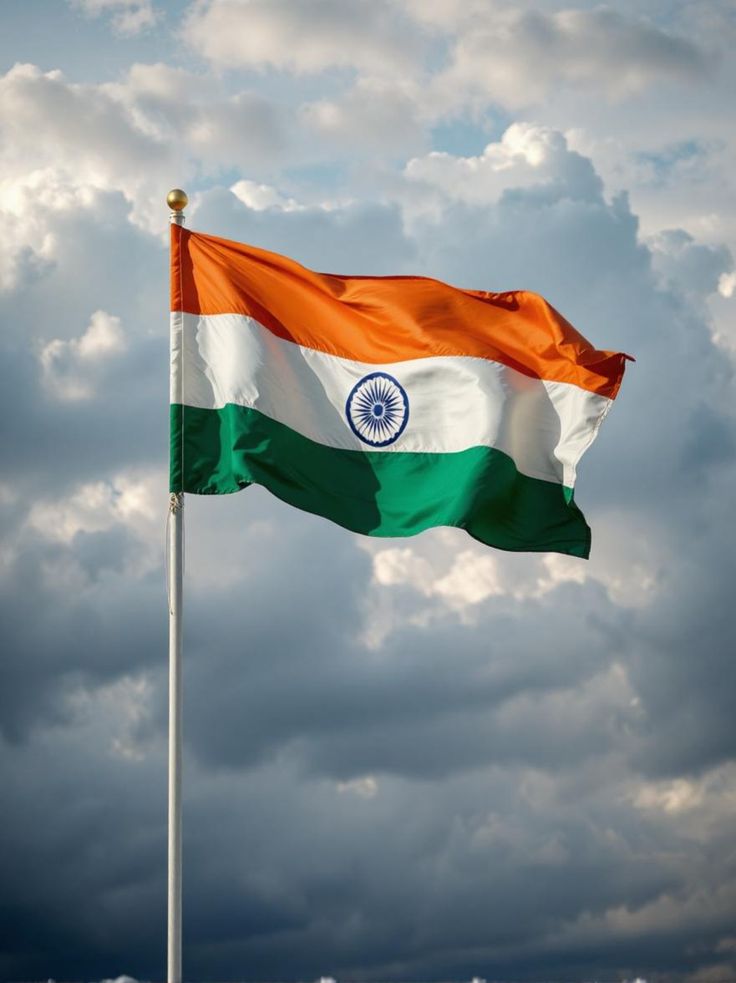
The Indian national flag is an emblem of sacrifice, peace, growth and progress. Its sight fluttering in the air fills the hearts of citizens with courage and pride, reminding us of the sacrifices our predecessors made for the country’s freedom. But have you ever wondered about the designer who created the flag we hold in utmost respect? Like many of you, I did not know — and my curiosity led me to a journey that uncovered a visionary and an unsung freedom fighter who was nearly lost to the pages of history.
Early life of the man who designed Indian flag
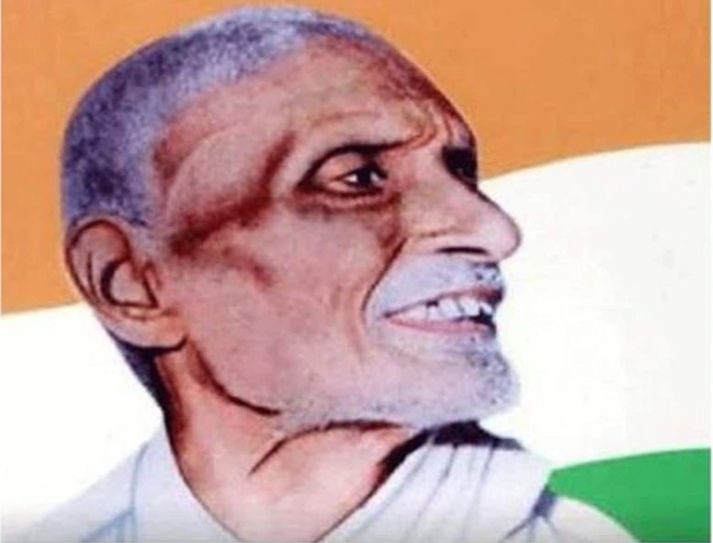
Meet Pingali Venkayya, the man behind our national flag. He was born on 2nd August 1876 in Bhatlapenumarru, a village near Machilipatnam in Krishna district, Andhra Pradesh. He was a curious and studious person who trained in geology and later worked as a lecturer and researcher; he was also known for his studies of cotton and minerals.
Encounter with gandhi and Inspiration of creating its own flag
As a young man, Venkayya joined the British Indian Army and served in South Africa during the Second Boer War, where he first encountered Mahatma Gandhi — a meeting that shaped his thinking. It was also during his attendance at Congress sessions that he felt the urgent need for an Indian emblem: seeing the Union Jack hoisted at nationalist gatherings convinced him that India needed its own flag.
Years of research and the flag meaning
Driven by this dream, Venkayya spent years studying flags and their meanings, producing many designs. In 1916 he published a book of proposed designs for a national flag. Over time he presented several drafts to Congress leaders. In 1921, when the Indian National Congress met in Bezawada (now Vijayawada), Mahatma Gandhi asked Venkayya to submit a flag design; Venkayya produced a tricolour bearing a spinning wheel (charkha) at its centre.
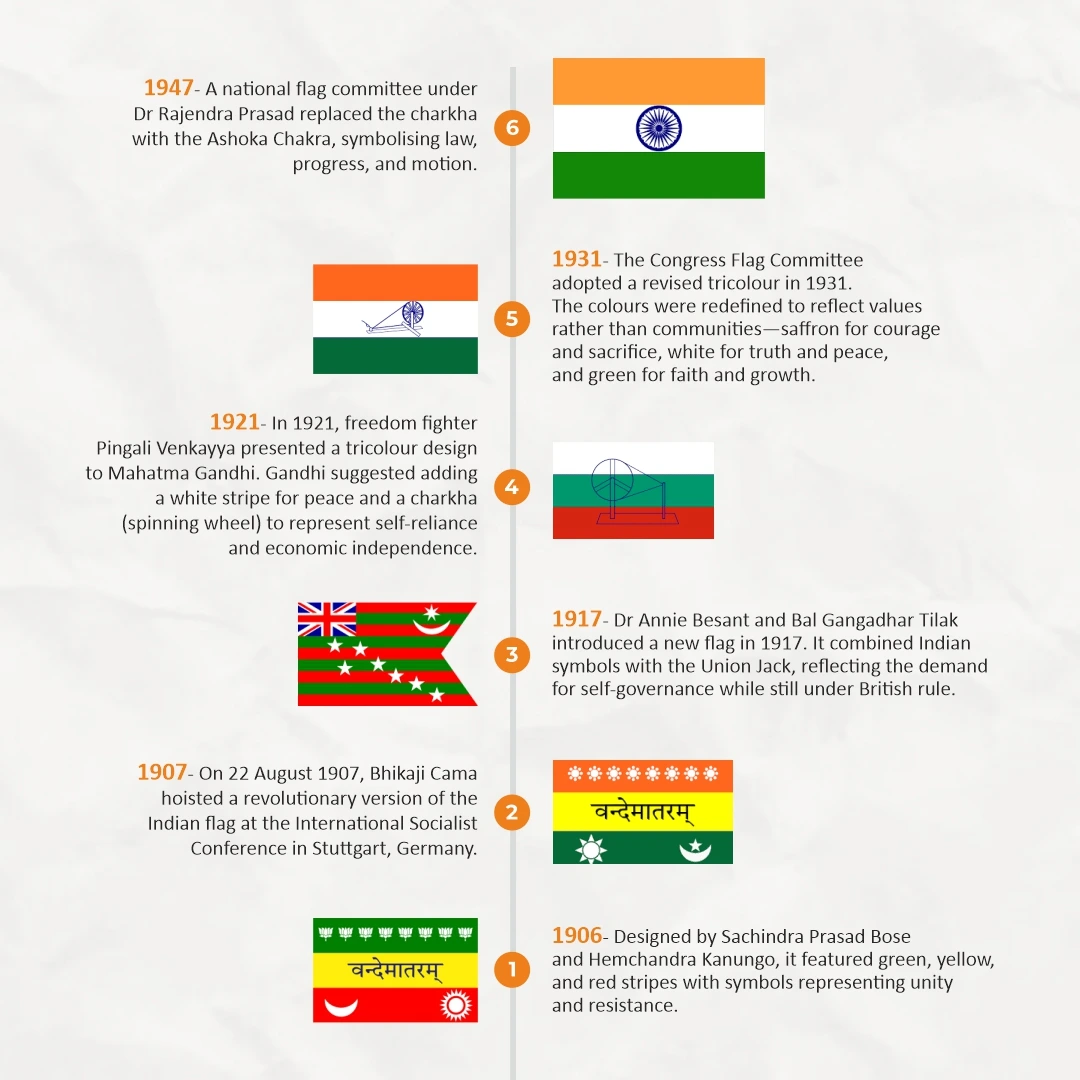
Each element of his design carried symbolism: the colours and the charkha represented sacrifice, peace and self-reliance, and the wheel stood for the movement for swadeshi and national unity. The design he proposed inspired later versions: by 1931 the Congress adopted a saffron–white–green tricolour with the charkha.
India Independence with modified flag
In July 1947 a committee of the Constituent Assembly (headed by Dr. Rajendra Prasad) recommended the Congress flag with a modification — the spinning wheel was replaced by the Ashoka Chakra (the 24-spoked wheel) so the symbol would represent the eternal wheel of law and be acceptable to all communities. The present flag in its final form was adopted by the Constituent Assembly on 22 July 1947 and came into official use on 15 August 1947.
Pingali Venkayya’s contribution is thus cemented in India’s history: his work provided the foundation for the flag that today stands for India’s unity, progress and ideals.
Image Credits: Pinterest