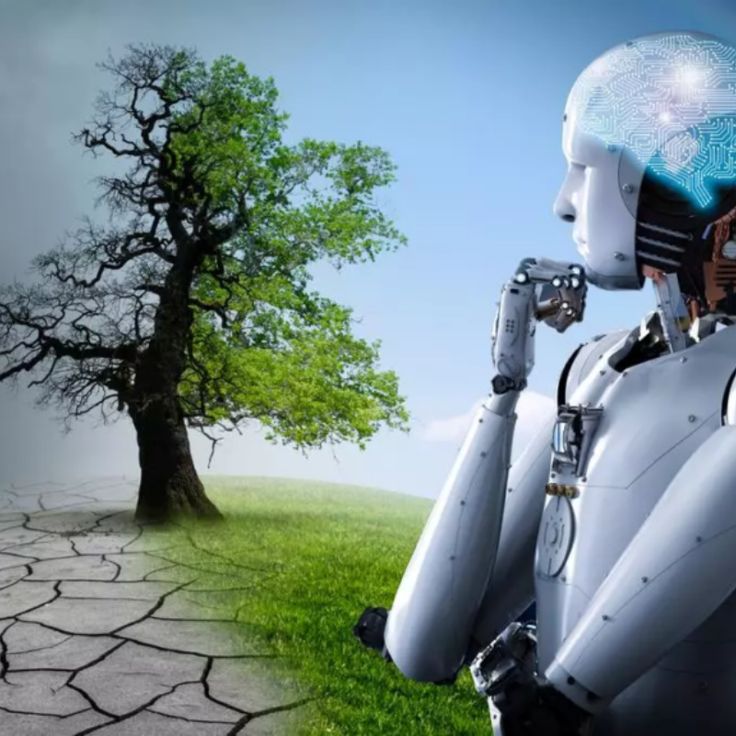
AI, once the stuff of science fiction, now weaves itself into the fabric of our everyday lives. In 2022, its rapid rise captured the world’s attention, with Generative AI drawing in nearly $34 billion in private investment. Today, an impressive 78% of organisations worldwide harness AI in at least one area of their business.
This illustrates the undeniable presence of AI in the world. Be it recording recommendations, coding, virtual assistants, or self-driving cars, there is no end to its applications. However, even after this, the majority of the population is still unaware of the role AI will play in the future.
Let’s explore how AI is transforming industries, unlocking new uses, and boosting human potential in ways we are only beginning to imagine.
What is AI?
AI, or artificial intelligence, refers to computer systems that can perform cognitive tasks typically associated with human intelligence. These systems can process information, learn from interactions, adapt to user input, and solve problems in ways that previously only humans could manage.
Benefits of AI for Human Development
Healthcare
The arrival of AI in healthcare is nothing short of revolutionary. It can carefully scan X-rays and CT scans, spotting subtle changes in the lungs that might escape even the sharpest human eye. Early detection paves the way for swift treatment and a faster patient recovery.

But AI’s role goes far beyond diagnosis. Scanning through vast amounts of complex data helps craft personalised treatment plans tailored to each patient’s unique needs, making care more efficient and timely.
Moreover, remote patient care services, aided by AI, enable patients to communicate, receive real-time attention, and share health data remotely, regardless of their location.
Education
Artificial intelligence has brought changes in various sectors, and education is one of them. A study by the Digital Education Council found that 86% of students admit to using AI in their studies. In addition, 24% use it daily, and 54% use it weekly.

By integrating AI into education, both teachers and students can eliminate repetitive tasks and focus on what truly matters, unlocking greater productivity and creativity in the classroom.
For example, AI can tailor learning journeys, automate grading, and create custom practice questions. Its widespread availability has opened the doors of education to more people than ever before. With instant feedback from tutoring bots, students save time and gain access to resources that once seemed out of reach.
Customer service

Happy customers are the heartbeat of any successful business. In the past, people would send emails and wait days for a response. Now, AI-powered chatbots and natural language processing deliver personalised replies in seconds, transforming the customer experience.
For instance, in online retail, virtual assistants recommend products based on user behaviour. This not only helps consumers but also businesses and enterprises. Using AI to answer customer queries and complaints lessens the strain on customer service staff, leading to better productivity.
Climate change
Climate change stands as one of the greatest challenges of our time. Melting glaciers and rising seas are urgent signals that we must act now to protect our planet’s future.

That’s why scientists are turning to AI to find new ways to combat climate change and reduce carbon emissions, such as accelerating the discovery of materials for sustainable technologies.
However, we should also consider the negative environmental impacts of AI. We can indeed use it to research and find solutions to mitigate environmental issues. But by recognising these trade-offs, we can critically evaluate how to use AI sustainably in developing solutions to climate change problems.
Image Courtesy: Pixabay