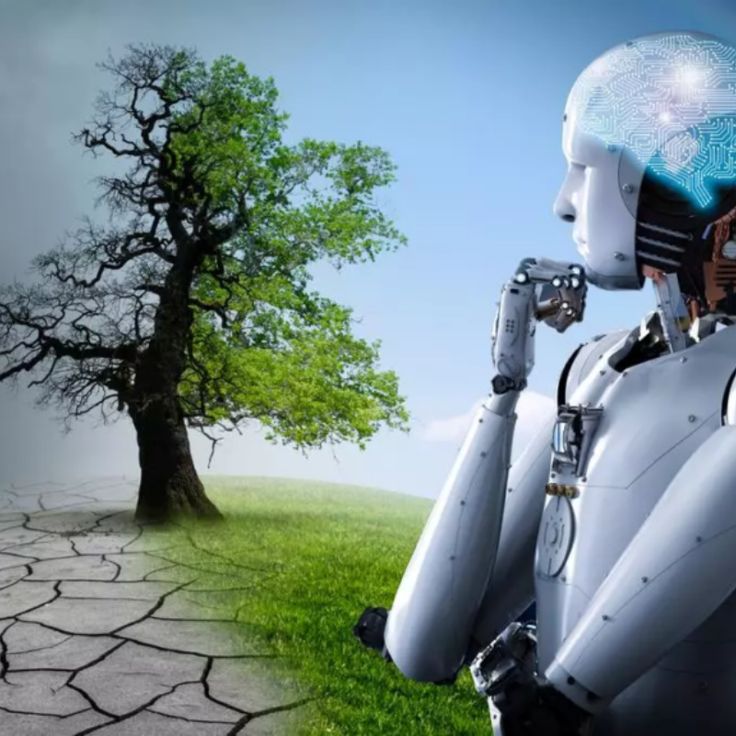

The India AI Impact Summit 2026 at Bharat Mandapam wasn’t just about the flash of new hardware or futuristic demos. It was defined by a very specific kind of nervous energy. For anyone currently in the IT world—or planning to enter it—the conversation has moved past "What can AI do?" to a much more pressing question: "What will be left for us to do?"
As the dust settles on the summit’s major sessions and the world’s tech leaders weigh in, a clear consensus is emerging. The IT industry isn’t necessarily being "eaten"—it’s being unbundled
The "Unbundling" of the 9-to-5
One of the most grounded perspectives came from Puneet Chandok (President, Microsoft India). He argued that AI won’t necessarily kill "jobs", but it will absolutely dismantle "tasks". Think of a traditional IT job as a bundle of wires; AI is currently snipping away the fraying, repetitive ones—debugging basic code, summarising endless meetings, or generating boilerplate documentation.

Chandok’s message to young professionals was a wake-up call: level up. He famously noted that people won’t lose jobs to AI; they will lose them to people who know how to use AI.
Make AI your partner. Think with it, build with it and make it work for you.
We aren't waiting for a revolution; we are already living in it. The "complementary" aspect is clear: AI is becoming the "super-intern" that handles the generic, repetitive grunt work, allowing the human "pilot" to focus on strategy, creativity, and high-value problem-solving.
The Entry-Level Squeeze: A Reality Check
However, we have to be honest—the "eating up" part of the narrative isn't just paranoia. There is a visible slowdown in entry-level hiring across the "Big Three" IT firms. While mid-level specialist roles are booming, the traditional "junior developer" role is under siege.
If an AI can write 80% of a basic script in seconds, the old path of "learning on the job" by doing simple coding tasks is disappearing.

As Sanjeev Bhikchandani of Naukri.com pointed out, the advice for freshers has changed: don't just learn to code; learn to prompt, curate, and validate. The "eating" isn't happening to the people but to the mediocrity of routine work. If your job can be done by a script, it eventually will be.
The "Sovereign AI" Shield
What makes the Indian context unique—and perhaps more hopeful—is our move toward Sovereign AI. IT Minister Ashwini Vaishnaw announced a massive expansion of our GPU "compute" capacity, making high-end tech available to startups for as low as ₹65 per hour.
This is where the job market might actually grow. By building "India-centric" models like BharatGen, we are creating entirely new categories of work: Indic-language trainers, AI ethicists, and "data sovereignty" experts. We are moving from being the world’s "back office" to being its "AI laboratory".
The Digital Safety Net: What if the Jobs Go?
But what happens if the sceptics are right and millions of jobs actually vanish? This is where India’s unique digital infrastructure comes into play. If AI creates massive wealth for companies while reducing the need for workers, the government’s plan involves using our Unified Payments (UPI) system as a buffer.

Because India has the world’s most advanced digital payment plumbing, the government is already looking at ways to provide a "Digital Safety Net". If mass displacement occurs, wealth generated by AI could be redistributed directly to citizens via Direct Benefit Transfer (DBT) using UPI. Whether it's "reskilling stipends" or a form of basic income, the technology that threatens jobs is the same technology that will fund our social security.
The Verdict
Is AI eating the IT industry? Only the parts of it that were robotic to begin with. The real threat isn't a machine in a server room; it’s the professional who knows how to use that machine better than you do. The future of IT isn't Human vs. AI; it’s Human + AI vs. The Status Quo. For those of us just starting our careers, it’s time to stop fearing the tool and start mastering it.
Image Credits: Pinterest & Google