
The AI Summit 2026 opened at Bharat Mandapam on 16 February and will run through 20 February. The gathering reflects India’s emergence as an AI developer rather than merely a consumer. It brings together heads of state, major tech CEOs, researchers, startup founders and civil-society leaders to reconcile inclusion and governance.
Why does this AI Impact Summit matter?

Innovation in AI has outpaced imagination—from generative images and videos to advances in head defence—and its integration across these pivotal sectors can significantly increase productivity for companies and citizens alike. Recognising this, world leaders and industry chiefs are meeting to discuss the technology’s future, from policy frameworks to procurement choices. The participation of leaders such as Narendra Modi and Emmanuel Macron signals that the summit’s policy conversations could reverberate across markets and research agendas.
Participation of tech giants from around the world
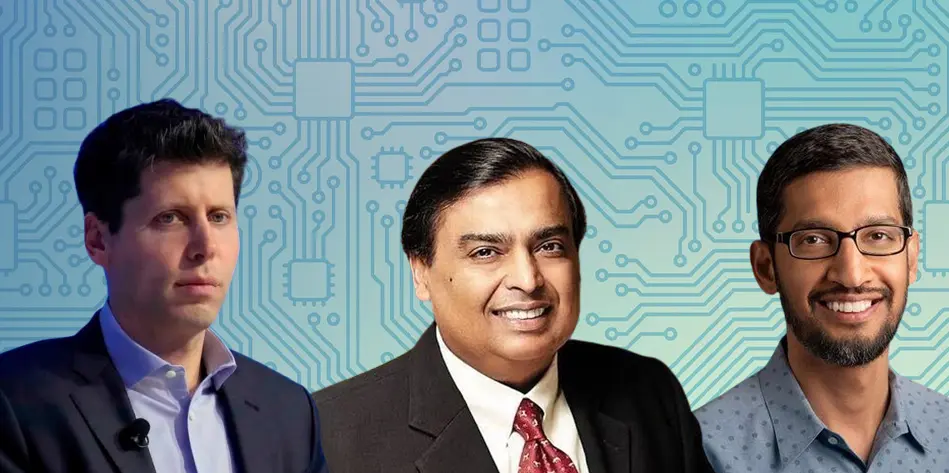
The summit will feature addresses from global technology leaders, including Sundar Pichai, Sam Altman, Dario Amodei, Mukesh Ambani, and Demis Hassabis. Their presence underscores India’s growing role in shaping AI’s future and highlights contributions that go beyond supplying data or training resources. Major organisations represented include Alphabet, OpenAI, Anthropic, Reliance Industries, and DeepMind.
Investment and infrastructure: a quick fact check
Several major cloud and AI firms have announced large infrastructure commitments to India; companies including Alphabet, Microsoft, and Amazon have been reported to have pledged a combined investment in AI and cloud infrastructure in the tens of billions of dollars through 2030. This momentum is accompanied by projected growth in Indian data centre capacity—analysts expect substantial expansion through 2027–2030 to meet rising AI and cloud demand.
The center of discussion: risks and equity

A major concern at the summit is AI’s impact on employment. While AI can automate repetitive, time-consuming tasks and create efficiencies, rapid adoption without comprehensive reskilling and social safeguards could displace workers. Geographic inequality is another pressing issue: much current investment concentrates in tier-1 cities, leaving tier-2 and tier-3 regions behind. Linguistic inclusion—ensuring AI systems work effectively in India’s many local languages—is expected to be a central theme. Delegates will also debate sustainability: the environmental footprint of large AI models and data centres must be balanced with the drive for innovation.
Takeaway
The true measure of the India–AI Impact Summit 2026 will be follow-through: sustained funding, transparent metrics for inclusion and sustainability, and accountable governance mechanisms. If leaders and companies convert discussion into action—for example, targeted infrastructure and training for smaller cities, clear timelines for linguistic coverage, and commitments to energy efficiency—the summit could mark not just Delhi’s moment on the global AI stage but a practical roadmap for shaping technology that benefits everyone.
Image Credits: Pinterest