From Kaushalya’s sleepless guard to a mother in Bengaluru googling fever remedies at 2 a.m., finding solutions for their ‘children’ have been the same. However, in modern times, the methods have surely changed.
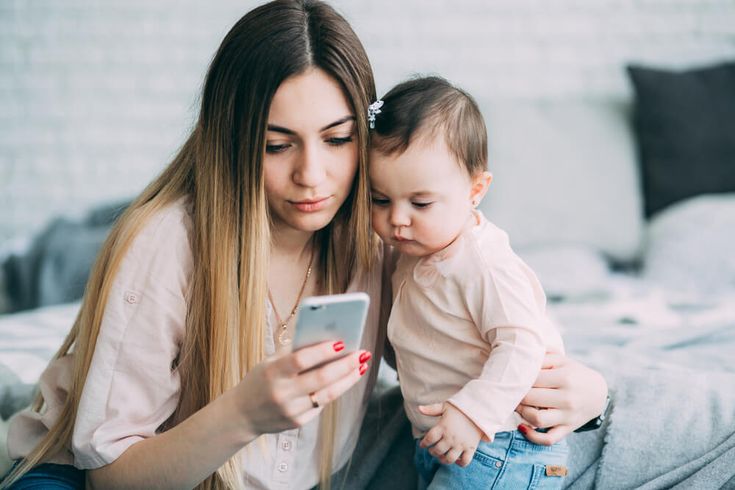
Today, somewhere in India, a new-age mother will unlock her phone, sitting beside her 4-year-old, possibly still in her workwear, to find “99.8 fever for child age 4”. Before the results load, she has already pressed her palm to his forehead twice. The search is a formality. She already knows she will not sleep tonight. Now this is the new definition of modern Indian motherhood. The relentless, anxious, infinite trail of SEARCH! Be it for cures, good schools, or balanced vocabulary to speak right with her child in modern times.
DIGITAL FOOTPRINTS
Open a typical Indian mother's search history today, and you will find an entire civilisation in miniature. It contains the full range of human fear and hope, compressed into autocomplete strings: "best CBSE school Noida sector 62", "how to talk to a teenager about Instagram", "symptoms of postpartum anxiety India", "can a working mother breastfeed successfully", and "egg freezing cost Mumbai 2026".
Read carefully. Each of the queries is a small act of ‘love’, ‘care’ and all that matters to 'Mommy dear’! So technology and mothers together trace the archaeology of a mother trying every single day to be enough.
FROM THE EPICS
In the Ramayana, when Kaushalya learns that Ram must leave for fourteen years of exile, she does not weep. Instead, she questions. She seeks omens, consults dharma, and looks for a way through the impossible. The ancient Indian mother was a searcher. Long before Google, she searched in the scriptures, in the stars, in a counsel of elders for whatever might keep her child safe.
Greetings to the mother
For generations, the proof of a child's love was a petite card, glittered to the hem while still wet, handed over with the gravity of a state document. Further toned down to a WhatsApp forward, a rose GIF, and "Happy Mother's Day Maa" in a font that looked like it had been designed on a basic handphone. Introduced to the Instagram Reel montage, set to Rahat Fateh Ali Khan or Arijit Singh, your childhood photos dissolving into the present in thirty seconds of algorithmic nostalgia.
In 2026, a generation of Indian children raised entirely on screens is finding new vocabulary for gratitude. Augmented reality cards that bloom into 3D rangoli patterns when held over a phone camera. Personalised video montages assembled by AI from years of family photos, voiced by the child themselves. One startup out of Pune sells "memory jars", which are QR-coded objects that, when scanned, play a curated video of a particular year of a child's life. The technology is different. The desperate desire to say 'I see you', 'I love you', and 'I remember' is unchanged.
MODERN CHALLENGES, ANCIENT PRESSURES
But this year's Mother's Day arrives against a backdrop more complicated than any heartfelt handmade card can address. India now has one of the fastest-growing markets globally for egg-freezing and fertility preservation, driven by women in their late twenties and thirties who are, quite literally, searching for more time. The search query "egg freezing age limit India" has grown sevenfold in the last three years. Delayed motherhood, once whispered about in drawing rooms, is now a public conversation – and it is mothers, or would-be mothers, having it on their own terms, Googling at midnight, in privacy, in preparation.
Then there is the mompreneur. A phrase that would have made no sense to our grandmothers but defines hundreds of thousands of Indian women today. The woman is running a homemade pickle business through Instagram DMs. The mother who became a parenting creator because no one online was speaking to her specific anxiety. So raising a child with learning differences in a city that still doesn't have enough inclusive schools. She searched for content that matched her life and found nothing, so she made it. She is both audience and author, consumer and community.
FROM THE EPICS
Kunti, in the Mahabharata, is perhaps the most modern of all ancient mothers. She was a woman who raised five sons under circumstances no rulebook could have anticipated, each child born into a different kind of impossibility. Instead of a single map, she navigated by instinct, all her heart’s love, and an almost terrifying willingness to keep going. Today's Indian mother is balancing her career and crèche and calendar invites and the inflation of school fees and might recognise something of herself in Kunti's exhausted, unbeaten face.
THE SEARCH THAT NEVER ENDS
Here is what the algorithm cannot index: the particular quality of worry that lives in a mother's body. The way a phone notification at an odd hour rearranges her heartbeat before she reads it. The manner in which she calculates, without noticing, the exact distance between herself and wherever her child is at any given moment.

Technology has given Indian mothers extraordinary tools such as telemedicine consultations at midnight, school apps that show her child’s attendance to the minute, and WhatsApp groups that are simultaneously the most anxiety-inducing and genuinely useful technology ever invented. But none of it replaces the original algorithm: the one running in her chest, unpatched and unupdated, the one that notices before anyone else that something is wrong, the one that has never needed a Wi-Fi connection.
It’s safe to say that the ‘tools have changed’, but the tab stays open.
This Mother's Day, somewhere between an AR rangoli and all the extraordinary modern scaffolding we have built around the ancient fact of motherhood. To believe that there is a woman on her phone at 2 a.m. with her palm on her child's forehead, waiting for results she already knows. She has always been searching. She always will be. That is what love looks like from the inside.