Graphic novels arrived late to Indian publishing, but they quickly made up for lost time. In under two decades, the form has tackled subjects that Bollywood and mainstream fiction often avoid. These five books show just how wide that range can get. Some borrow from folk art traditions centuries old. Others sit closer to underground comics or literary fiction. Together, they make a strong case for picking up a graphic novel when you want something both quick to read and hard to forget.
Bhimayana: Experiences of Untouchability, by Srividya Natarajan, S. Anand, Durgabai Vyam, and Subhash Vyam
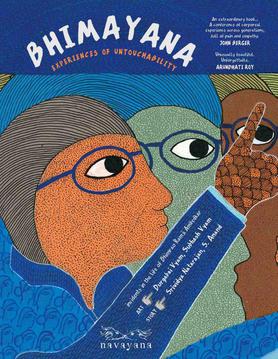
Writers Srividya Natarajan and S. Anand teamed up with Pardhan Gond artists Durgabai Vyam and Subhash Vyam for this 2011 book, published by Navayana. It draws on real episodes of caste discrimination faced by Dr. B. R. Ambedkar, the jurist who later drafted India's constitution, and sets them alongside present-day incidents of caste violence. What sets the book apart is its art. Durgabai and Subhash Vyam work entirely in the Pardhan Gond tradition, a form that usually appears on walls and cloth rather than in comic panels. There are no rectangular grids here. Trees, fish, and birds curl into the borders of scenes, and figures are built from fine lines and dots rather than clean outlines. The result pushes against the usual grammar of comics even while using it, which feels fitting given the book's subject.
The River of Stories, by Orijit Sen
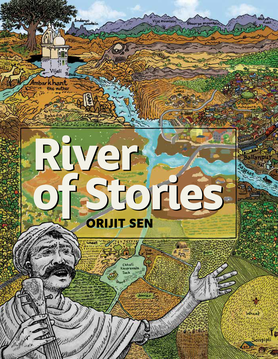
Orijit Sen published this book in 1994 with support from the NGO Kalpavriksh, and it is widely credited as India's first graphic novel. It grew out of Sen's time with the Narmada Bachao Andolan, the movement opposing large dams on the Narmada river, and it weaves together the displacement of local adivasi communities with older oral legends tied to the river itself. Sen's linework is dense and almost mural-like, packed with texture rather than clean commercial lines, and the layouts often break free of neat rectangular panels. The book fell out of print for years and circulated mostly as photocopies before being reissued, and it remains a starting point for anyone tracing how Indian comics learned to handle political subjects.
Corridor, by Sarnath Banerjee
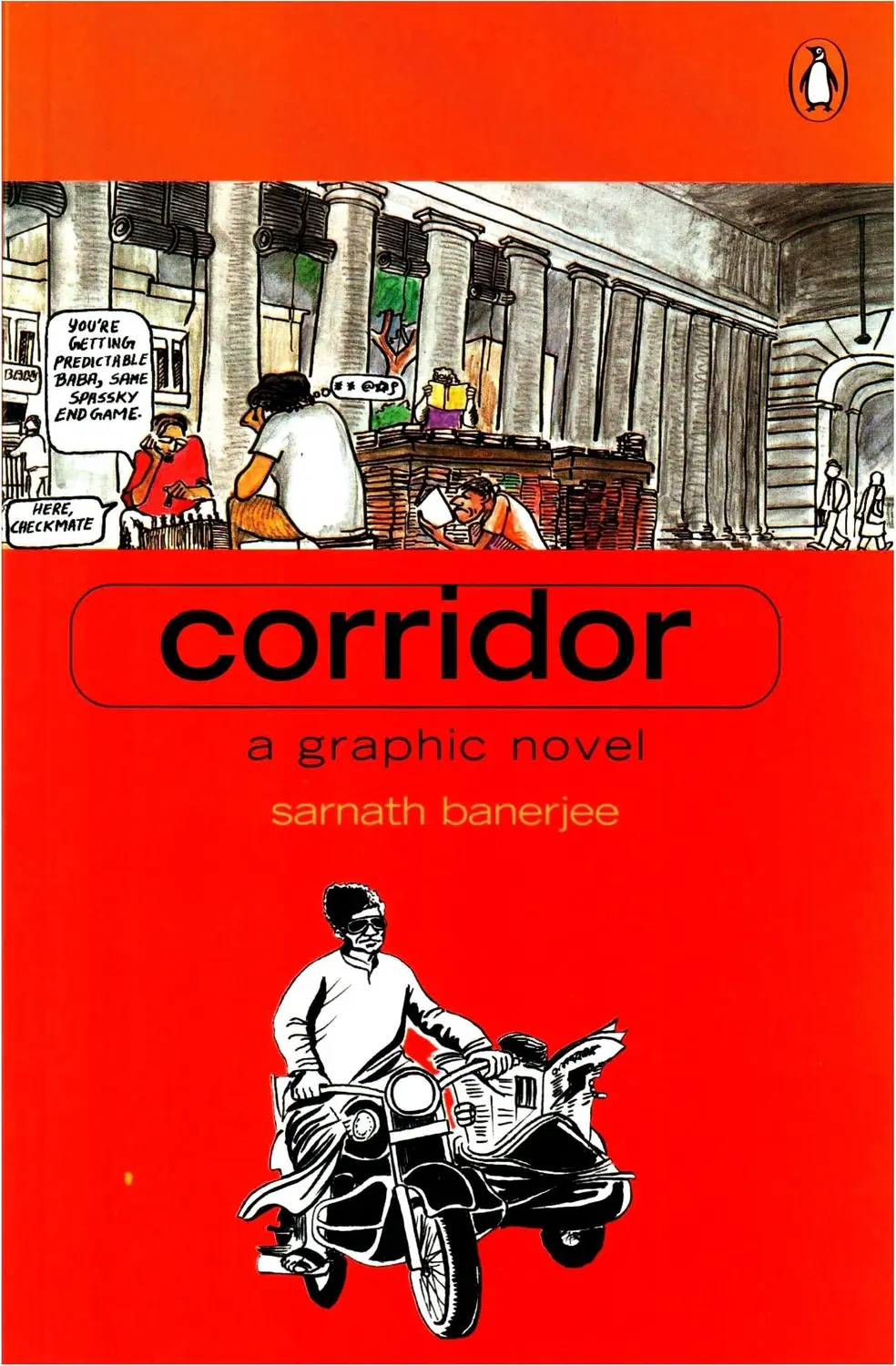
Sarnath Banerjee's Corridor came out in 2004 through Penguin India, and it is often called the first Indian graphic novel from a mainstream publisher. It centers on a secondhand bookshop in Delhi's Connaught Place, run by a dealer named Jehangir Rangoonwalla, and follows the customers who drift in and out, each carrying their own small obsession or heartbreak. Banerjee mixes hand-drawn panels with photographs and collage, giving the book a scrapbook feel rather than a polished comic-book look. The pacing borrows more from literary fiction than from typical comic storytelling, and the story reads like a set of overheard conversations rather than a single plotted arc, which is very much the point.
Kari, by Amruta Patil
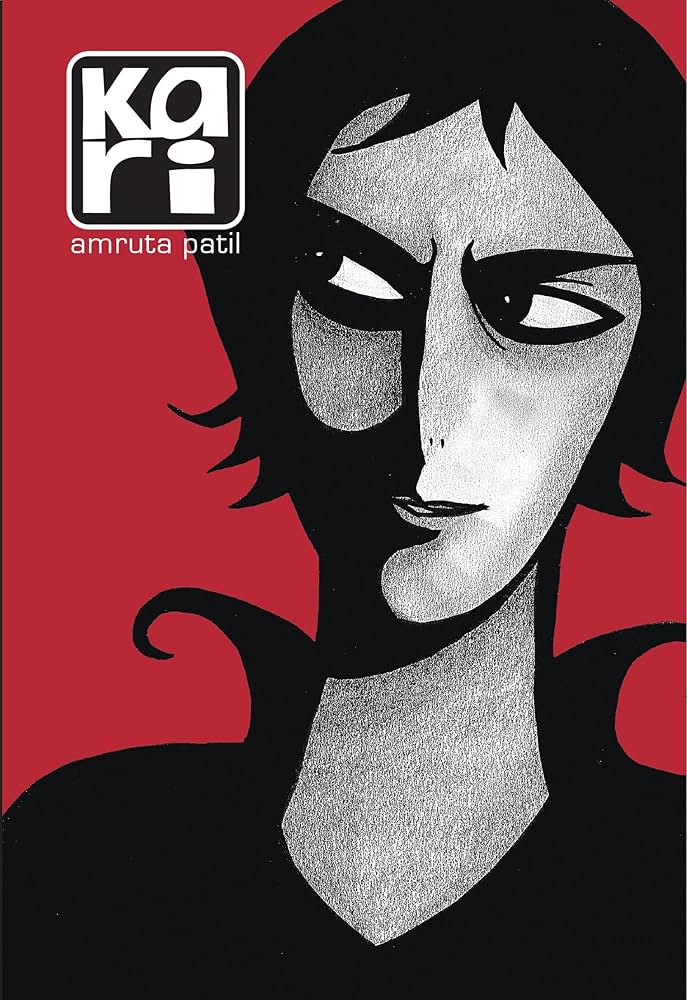
Amruta Patil's Kari, published in 2008 by HarperCollins India, follows a queer woman living in a fictional metropolis she calls Smog City, closely modeled on Mumbai, in the months after a painful breakup. Patil is often described as India's first female graphic novelist, and her work here mixes acrylics, charcoal, and collage rather than sticking to a single clean line style, giving the city itself a moody, almost breathing presence. The book doesn't pause to explain Kari's identity for the reader's comfort. It simply lets her exist, observant and a little adrift, which was fairly rare for Indian storytelling at the time, let alone Indian comics.
Delhi Calm, by Vishwajyoti Ghosh
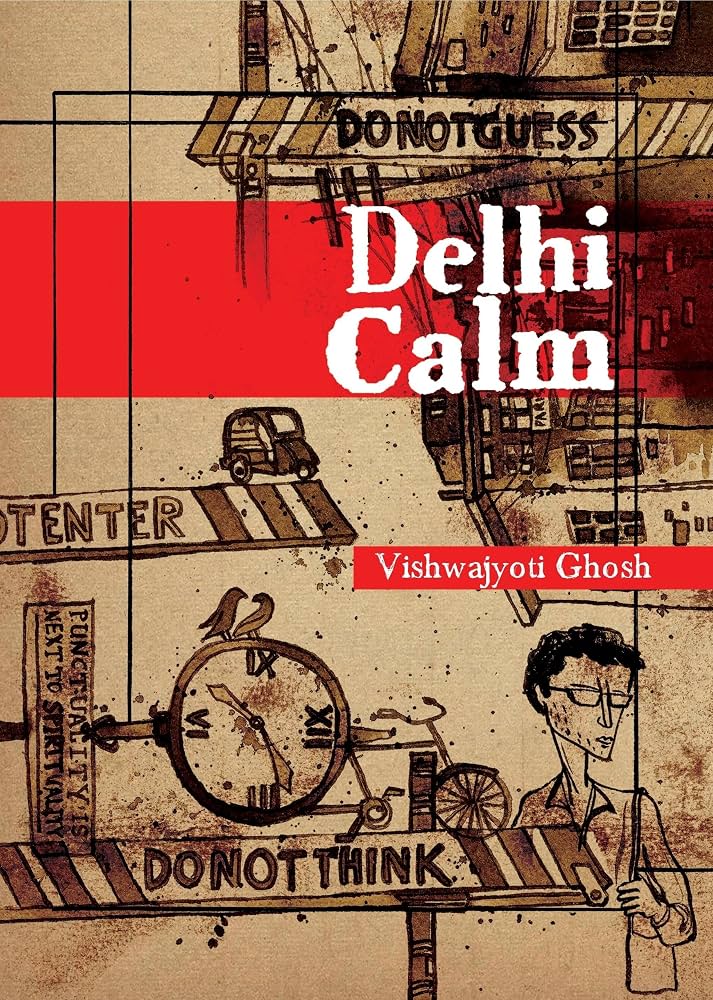
Vishwajyoti Ghosh set his 2010 graphic novel, published by HarperCollins India, during the Emergency, the 21-month stretch from 1975 to 1977 when civil liberties were suspended across the country. It follows a young newspaperman who loses his job and drifts into the underground movement resisting the government of the day. Ghosh never names real politicians directly, but the resemblance to Indira Gandhi and those around her is unmistakable. The art shifts between clean, poster-style compositions and rougher, more chaotic panels, echoing the gap between official slogans and what people actually lived through. It remains one of the few graphic novels to take on this chapter of Indian political history head-on.
Put these five books next to each other and a pattern falls apart rather than forms. There is no single Indian graphic novel style, and no single subject it keeps returning to. A tribal art form gets used to tell a story about caste. A dam protest turns into a piece of visual journalism. A secondhand bookshop becomes a lens for an entire generation of confused young men. A queer woman gets to be moody and unresolved on the page, years before Indian fiction caught up to her. A dictatorship gets remembered through masks and slogans instead of textbook dates.
That refusal to settle into one look or one subject is probably the biggest thing these books have in common. Each one had to build its own visual language from scratch, since there was no local tradition of graphic novels to lean on yet. Read together, they trace a rough map of Indian comics finding its feet, one very different book at a time. Pick any single title from this list and you are not just getting a good story. You are getting a small piece of that experiment.