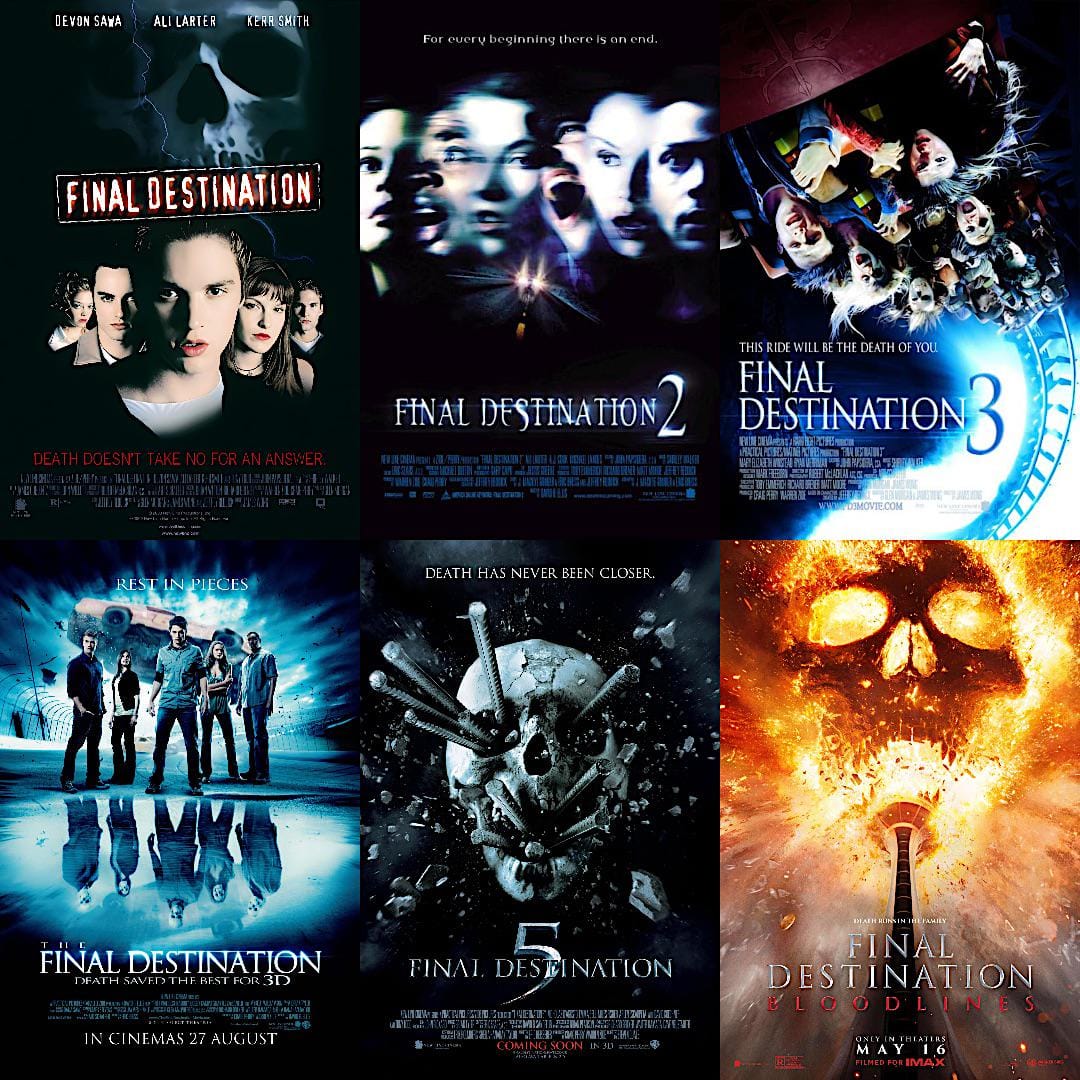
Since 2000, the Final Destination franchise has built its entire identity around a single, unshakable rule: you cannot cheat death. Produced by New Line Cinema, the series spans six films released over 25 years, from the original Final Destination in 2000 to Final Destination Bloodlines in 2025. Each installment follows the same premise—a character experiences a sudden premonition of a disaster moments before it happens, saves themselves and a handful of others, and briefly believes they've beaten fate. They haven't. Death, treated as an unseen, unstoppable force rather than a visible killer, simply finds another way to collect what it's owed, picking off survivors one by one through increasingly elaborate, almost mechanical chains of accidents. Here's a closer look at each installment, and how they stack up.
Final Destination (2000): The One That Started It All
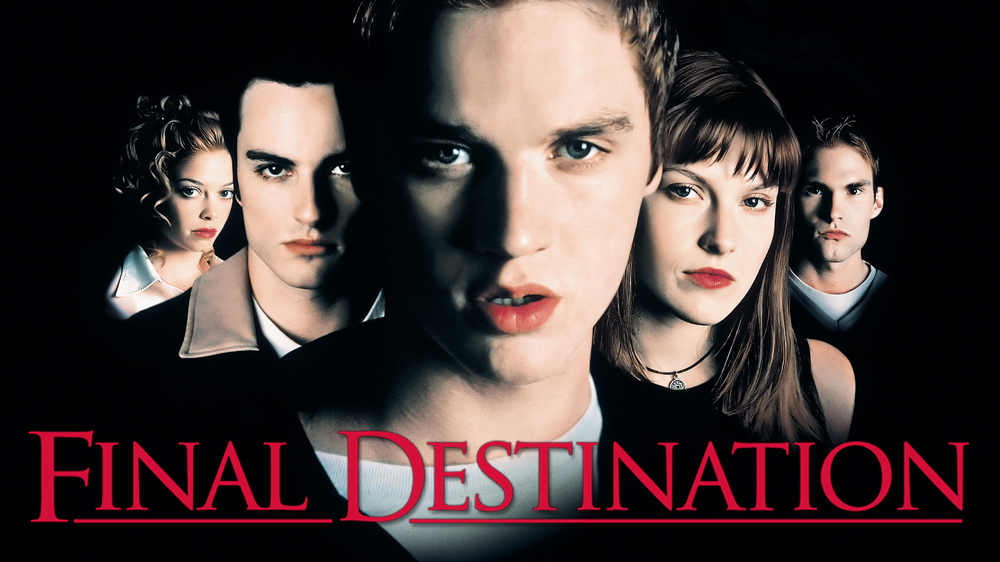
Everything begins with Alex Browning, a high school student boarding Volée Airlines Flight 180 for a senior class trip to Paris. Moments before takeoff, Alex is struck by a terrifyingly vivid premonition—the plane exploding mid-air, killing everyone on board. The vision sends him into a panic, causing enough of a scene that he, along with a handful of classmates and a teacher, gets removed from the flight before it departs. Minutes later, the plane explodes exactly as he foresaw. What follows is where the franchise's true premise kicks in. The survivors, having escaped their fate once, slowly realize they weren't supposed to live and Death has no intention of letting that mistake stand. One by one, they begin dying in eerie, elaborately staged "accidents," each one following the exact order they would have died on the plane. It's a simple premise executed with real tension.
Final Destination 2 (2003): Highway Havoc and Higher Stakes
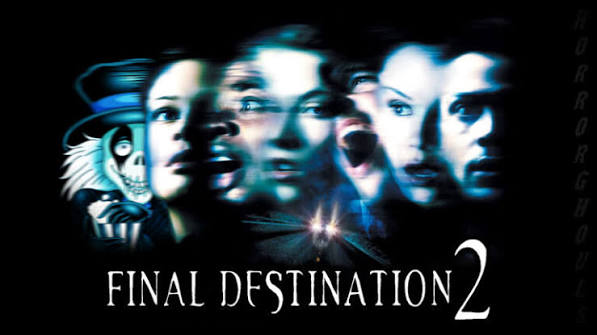
Picking up a year after the Flight 180 tragedy, this entry kicks off with a college student named Kimberly Corman who experiences a terrifying vision of a massive highway pileup on Route 23. By blocking the entrance ramp with her car, she saves state trooper Thomas Burke and a group of strangers from the crash. When Death begins picking off the survivors one by one, Kimberly seeks help from Clear Rivers, the sole surviving victim from the first movie who has checked herself into a psychiatric ward for protection. The story cleverly connects back to the original disaster by showing how the ripple effects of the Flight 180 survivors inadvertently saved this new group in the past. The movie escalates the franchise's signature mechanics with longer, more elaborate Rube Goldberg-style accidents—including the famously terrifying log truck collapse.
Final Destination 3 (2006): Roller Coasters and Photo Clues
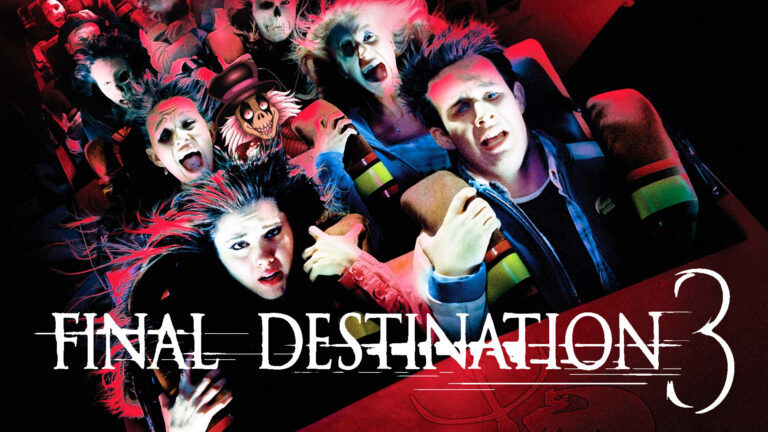
Shifting away from the recurring cast, the third installment follows high school graduate Wendy Christensen, who suffers a horrifying premonition of a roller coaster derailing at a local amusement park. Her sudden panic causes her and several classmates—including her friend Kevin Fischer—to be thrown off the ride just before the fatal crash occurs. Shortly after, Wendy realizes that the photos she took at the carnival before the accident contain hidden, ominous clues predicting exactly how each survivor is going to die. Moving from one victim to the next, Wendy and Kevin try to decode the pictures to intervene before Death catches up. Leaning heavily into mid-2000s slasher tropes, the film trades long-term mythology for fast-paced suspense, dark humor, and memorable, over-the-top set pieces.
The Final Destination (2009): Speedway Disasters and Cheap Thrills
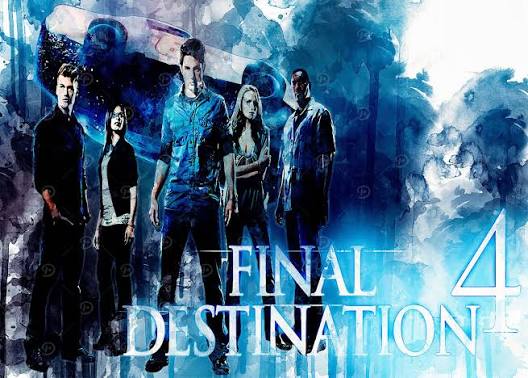
The fourth chapter centers on college student Nick O'Bannon, who experiences a gruesome premonition of a race car crash at the McKinley Speedway that causes the stadium structure to collapse. Nick snaps out of the vision and convinces his girlfriend Lori and friends Hunt and Janet to leave, along with a few other spectators. When the real-life crash occurs moments later, Death starts targeting the survivors in the exact order they would have perished in the bleachers. Designed to capitalize on the late-2000s 3D trend, the film leans into campy visual gimmicks and fast pacing.
Final Destination 5 (2011): High Tension and an Unforgettable Twist
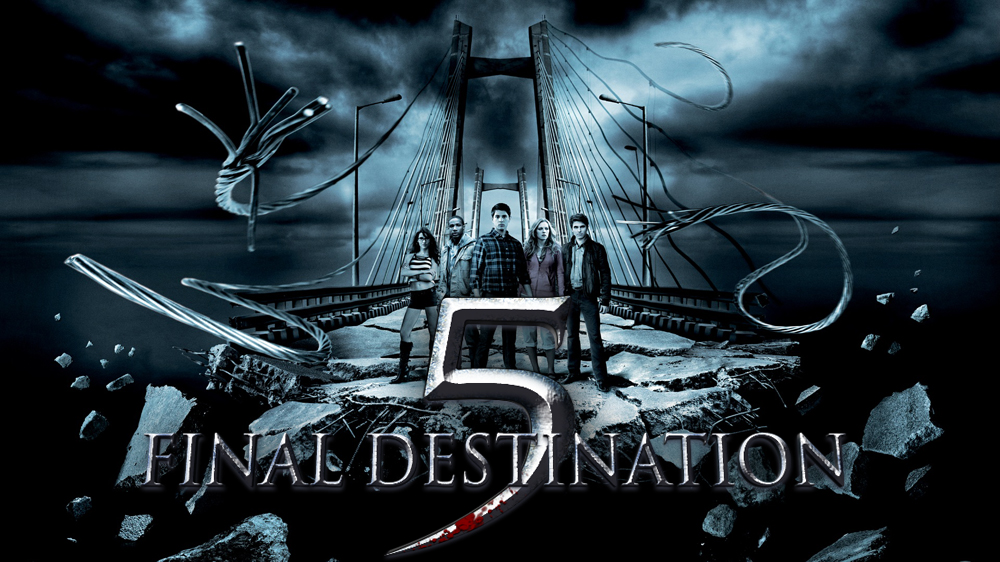
Reinvigorating the entire franchise, the fifth entry follows Sam Lawton, who receives a bloody vision of a massive suspension bridge collapsing while on a corporate retreat with his coworkers, including his ex-girlfriend Molly and his friend Peter. After rescuing several colleagues from the bridge collapse, the survivors are met by the mysterious mortician William Bludworth, who introduces a dark new rule to the lore: a person on Death's list can claim someone else's remaining lifespan by taking their life. This moral dilemma turns former friends into desperate threats, elevating the psychological tension above simple gore. Balancing razor-sharp suspense, inventive set pieces, and a legendary twist ending that reframes the entire timeline, it stands out as one of the strongest chapters in the series.
Final Destination: Bloodlines (2025): Generational Rules and Family Legacy
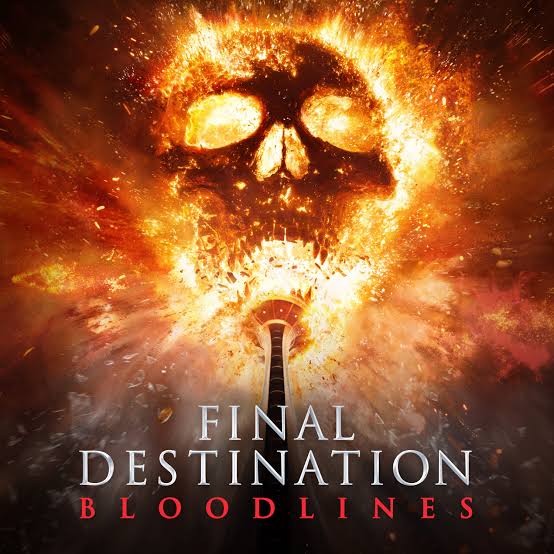
The latest installment breaks away from the usual single-event setup by tying Death’s design directly to a family tree. When college student Stefani starts experiencing terrifying premonitions, she traces the visions back to a disastrous building collapse that her grandmother narrowly escaped decades earlier. Realizing that dodging fate back then created a generational ripple effect, Stefani must protect her family as Death works to clean up the long-overdue list across multiple generations. By shifting the emotional core toward family dynamics and legacy rather than a group of random strangers, the film offers a fresh perspective while honoring the rules established across the original five movies.
Final Verdict: An Unstoppable Horror Legacy
Ultimately, the Final Destination movies prove that a great high-concept premise can stand the test of time if you keep finding fun ways to reinvent it. It’s a franchise built on suspense, irony, and the absurd predictability of human error. Even with its occasional missteps, the series has earned its place as a cult horror staple. It’s rare for a slasher series to keep audiences hooked for over twenty years without losing its core identity, but as long as people remain paranoid about bizarre freak accidents, Death’s design will always have an audience.