Christopher Nolan has made a film about time before, and about memory, and about dreams. Now he has made one about the oldest story there is. The Odyssey is his adaptation of Homer's epic poem, and it is easily his most ambitious project. It is also his most emotional one.
Nolan drew heavily on the 2017 translation of the Odyssey by classicist Emily Wilson, known for its clear, direct language and its attention to the humanity of every character, not just Odysseus. That choice shapes the whole film. This is not a stiff, dusty telling of Greek myth. It feels alive.
A Story We Know, Told With New Eyes
Everyone knows the shape of this story. A king tries to get home after a long war and the journey takes years longer than it should. Nolan does not try to hide or twist that outline. Instead he trusts the material, and he trusts the audience to sit with a tale that has survived for thousands of years for good reason.
What he adds is his own sense of structure and scale, and this is very much a Nolan film in that sense. The story is not told in order. It jumps between different points in Odysseus' journey and moves back and forth in time, the way his films like Memento, Inception and Oppenheimer have done before. Nolan has said openly that he wanted to honour how nonlinear the original poem already is, since Homer himself does not tell the story start to finish either. The approach takes a little getting used to in the early stretch, as you piece the timeline together in your head, but it ends up pulling you in more, since you are always working to place each scene in the larger picture.
What Stays and What Is Left Out
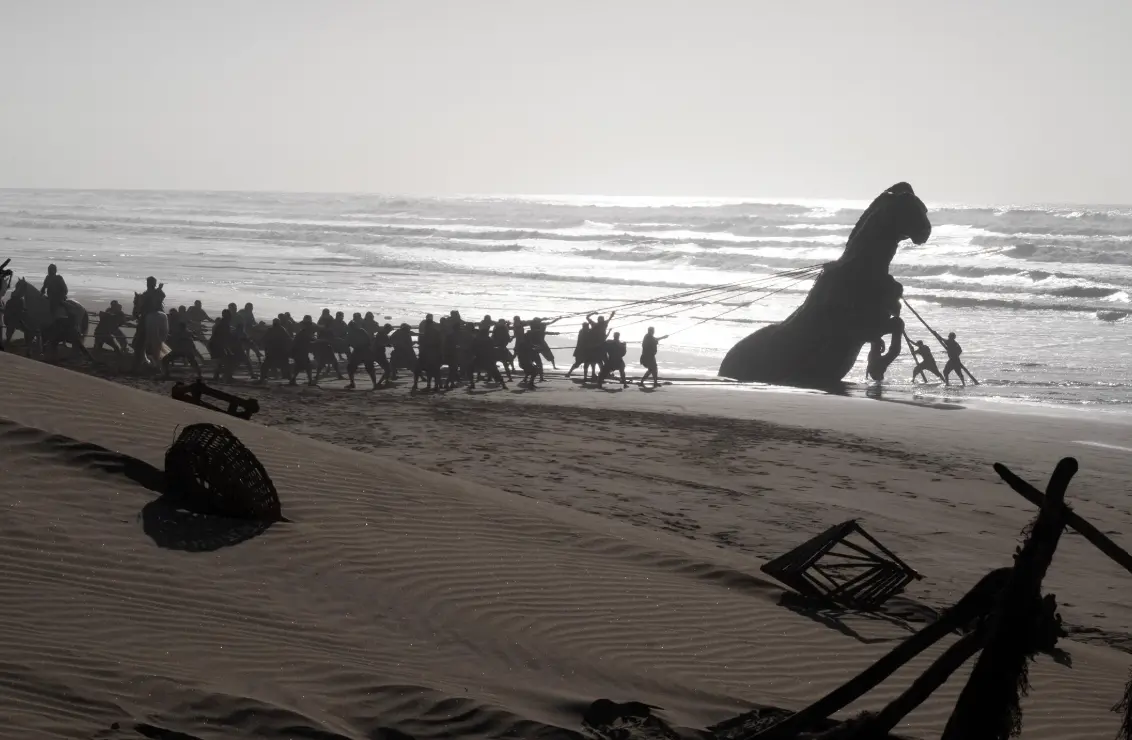
Fans of the original poem will notice that not everything makes it to the screen. Some episodes are trimmed, some side characters get less room than they do on the page. This is probably unavoidable for any film trying to compress a sprawling epic into under three hours. What is missing does not feel like carelessness though. Nolan seems to have picked the moments that matter most for a modern audience and given those room to breathe, rather than rushing through a checklist of famous scenes.
The result is a film that works as its own thing, not just a faithful copy of the book. It captures the spirit of the poem, the exhaustion of war, the ache of homesickness, the strange mix of wonder and danger in the unknown, even where it departs from the text.
A Cast That Earns Its Size
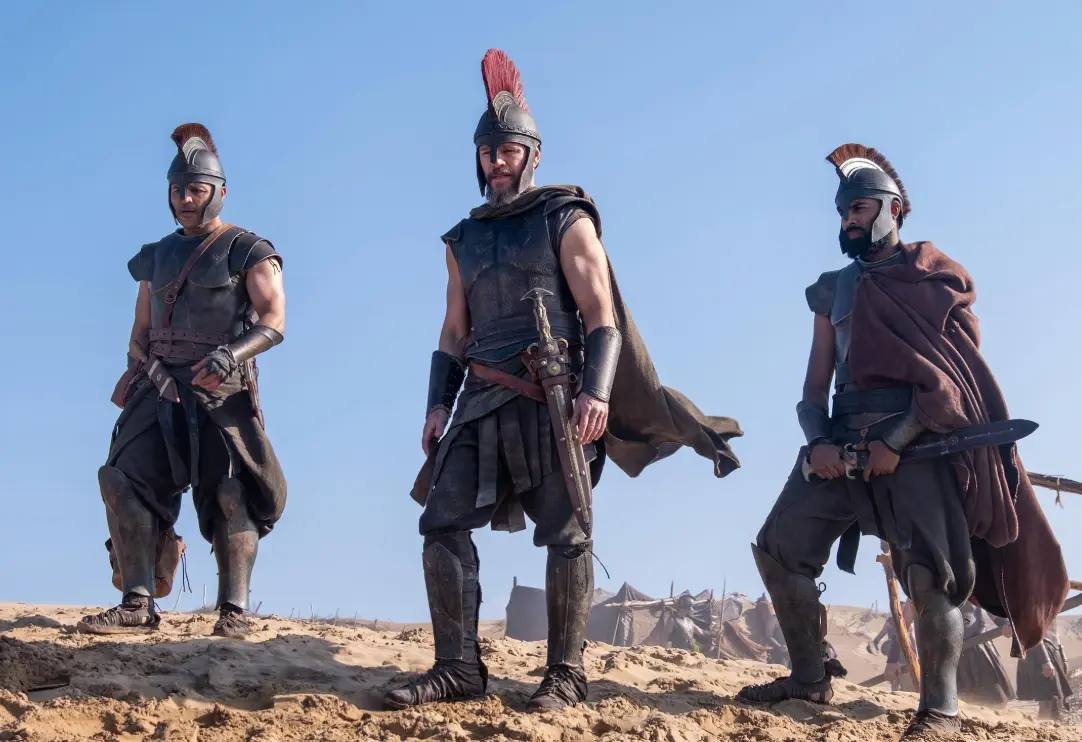
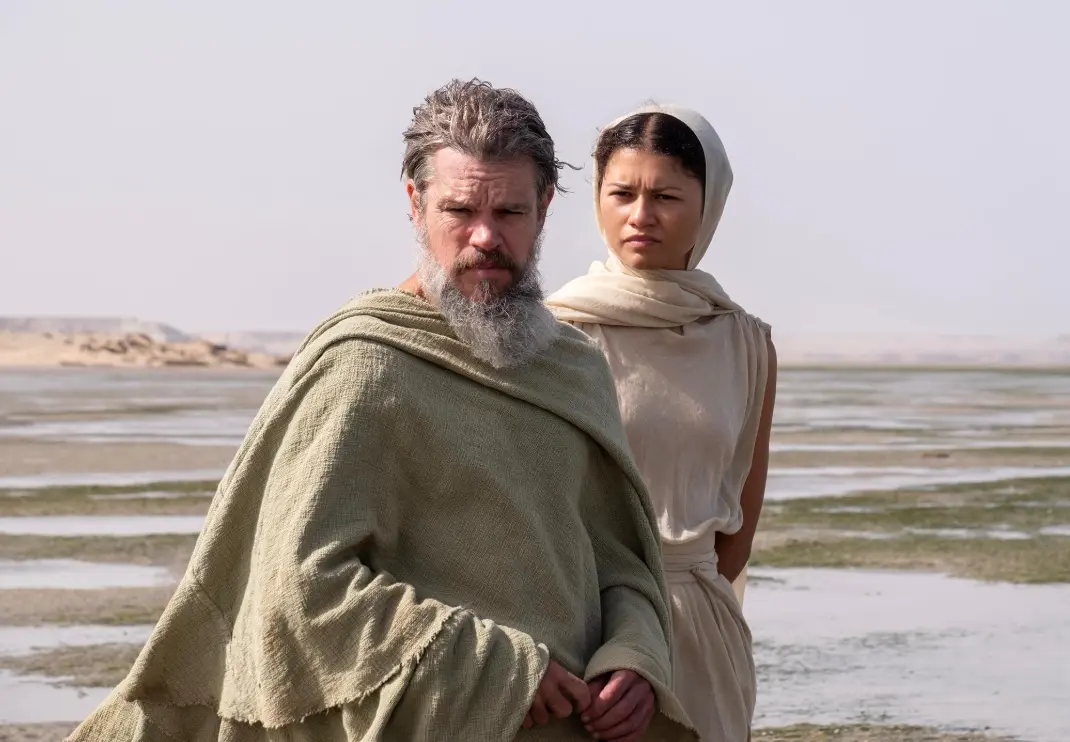
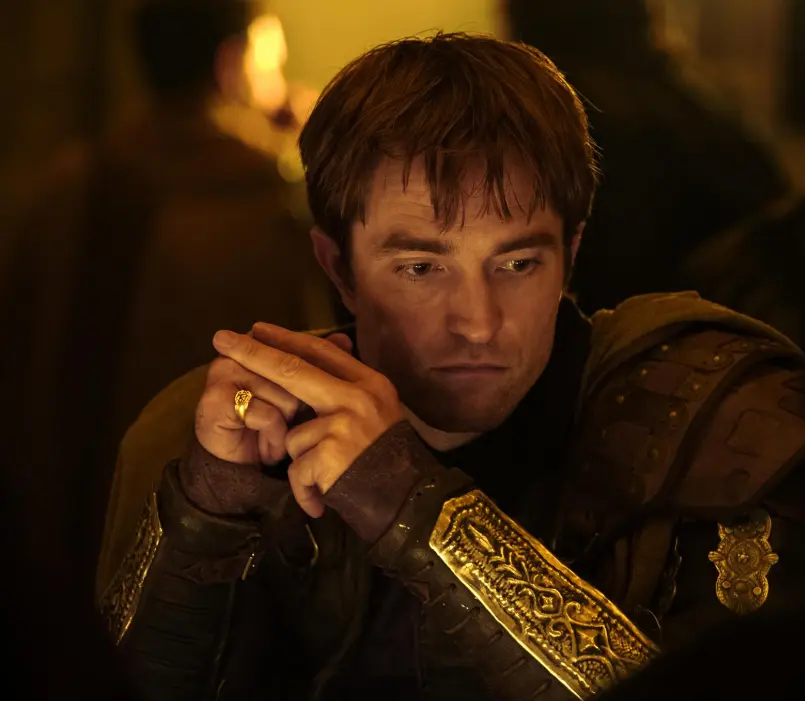
The film has one of the biggest casts Nolan has ever assembled, and every actor pulls their weight. Matt Damon anchors the film as Odysseus with a performance that is tired and steady rather than showy, and a late scene of his is where the film truly earns its emotional payoff. Anne Hathaway plays Penelope with a similar restraint, giving the character far more inner life than she usually gets in retellings of this story. Tom Holland brings real warmth to Telemachus, and Zendaya, Charlize Theron, Robert Pattinson, Lupita Nyong'o, Jon Bernthal and Samantha Morton all leave a mark, even in smaller roles. Nobody feels wasted here, which is not something every ensemble epic can claim.
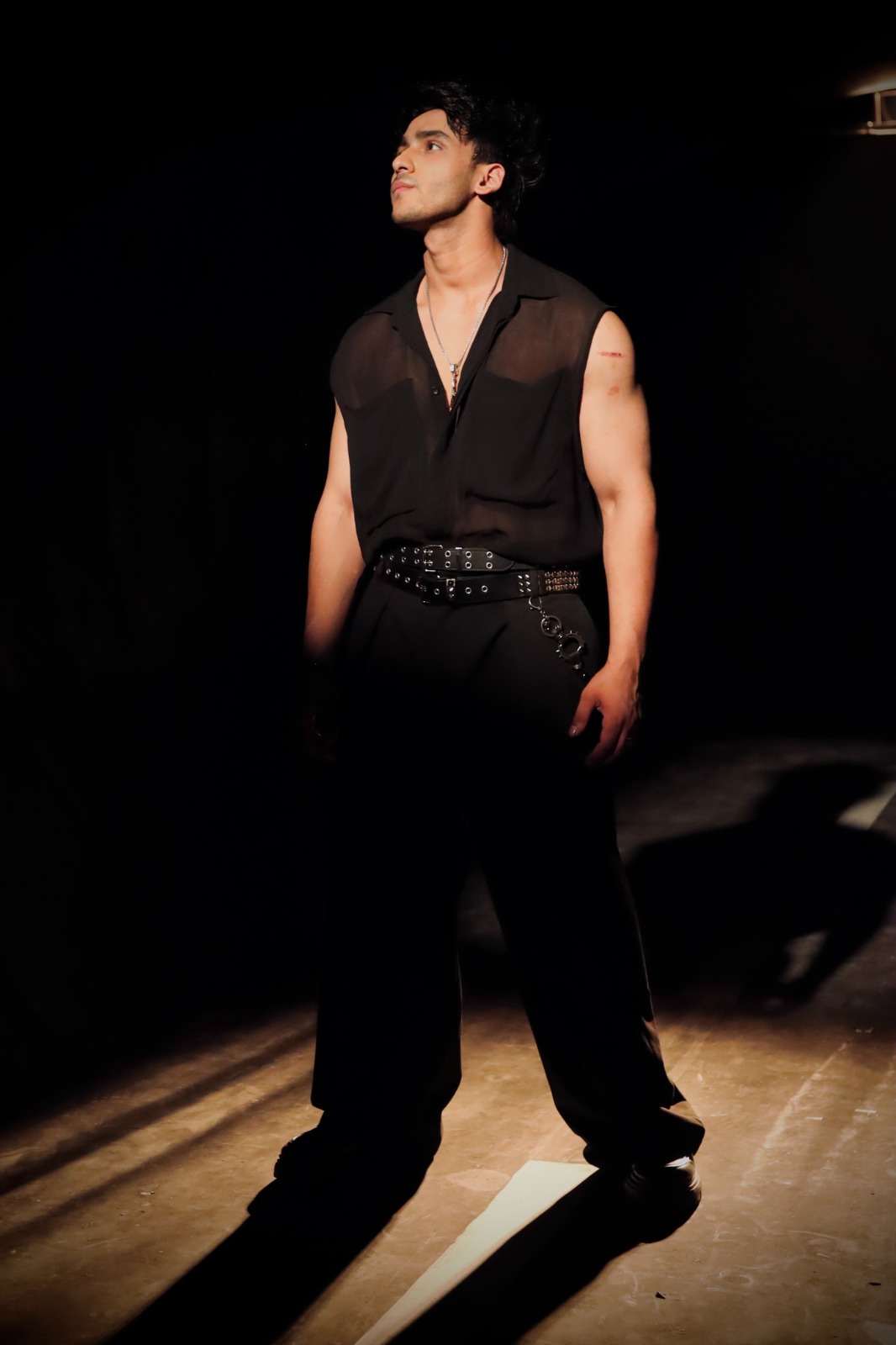
British Indian actor Himesh Patel deserves a special mention too, playing Eurylochus, Odysseus' second in command, with a mix of loyalty and defiance that makes him one of the more interesting presences on the ship, and a rare and welcome sight of Indian representation in a film this size.
One casting choice that stands out is Travis Scott, who turns up in Ithaca as a bard performing for Penelope's suitors, spinning his own version of the Trojan War for the court. It is a small role, but a fitting one, since the film keeps circling back to the idea of stories being passed down by word of mouth long before they were ever written. Scott also co-wrote and performs the song that plays over the closing credits, which ties his presence in the film to its very last moment as well.
Familiar Nolan, Yet Something New
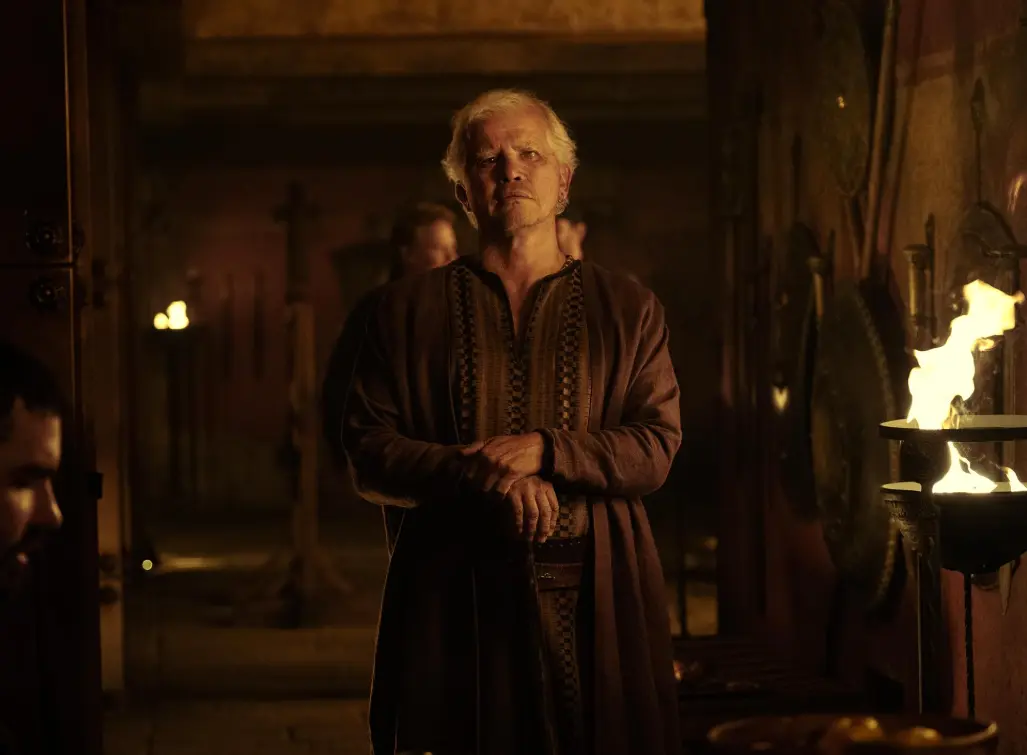
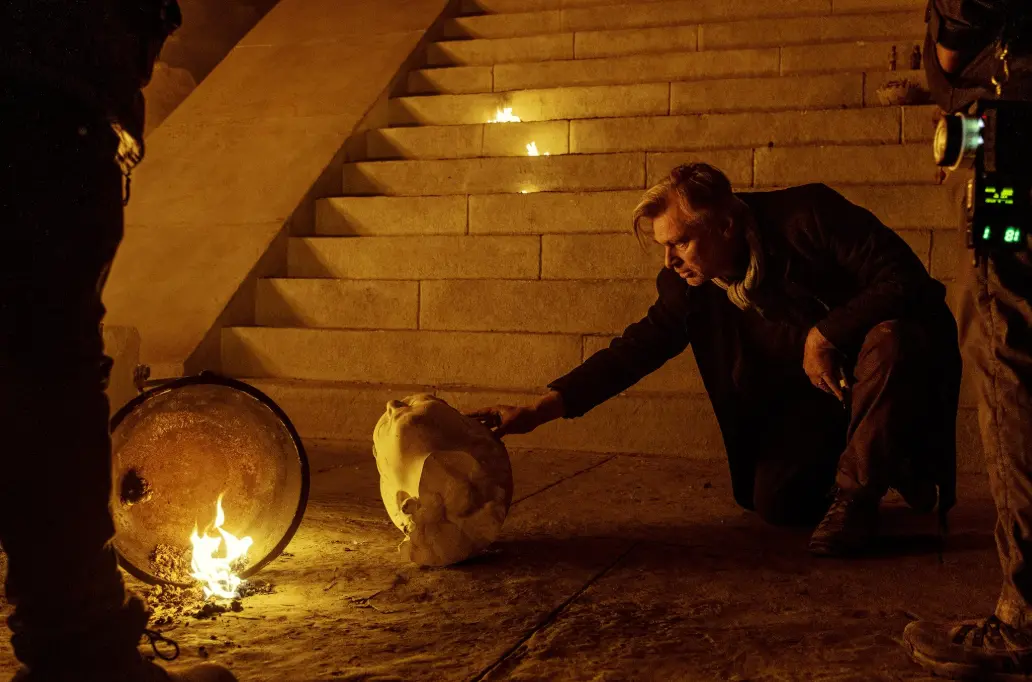
This is the strange trick of the film. It feels unmistakably like something Nolan would make, in its scale, its seriousness, its love of practical filmmaking over digital effects. But it is also unlike anything he has made before. He has never worked in myth or fantasy, and that newness shows in the way the film handles wonder, in the gods, the monsters and the sea itself, treating all of it with a kind of grounded awe rather than spectacle for its own sake.
As a modern adaptation, it succeeds because it does not try to modernise the story with winks or irony. It simply tells an old story with total sincerity, and lets its themes of homecoming, grief and endurance speak for themselves. At heart, this is an anti-war film, less interested in glorifying battle than in showing what it costs the people who survive it.
Where and How to Watch It in India
The Odyssey released in India on July 17, 2026, alongside its worldwide release, in English, Hindi, Tamil and Telugu. The film was shot entirely on IMAX cameras, and its true 70mm IMAX film presentation, the format Nolan designed it for, is not available anywhere in India since the country has no commercial 70mm IMAX screen. Indian audiences can still watch it on digital IMAX, with 34 such screens across the country, including several IMAX with Laser screens that show it in 4K.
Beyond IMAX, the film is also playing in Dolby Cinema, 4DX, ScreenX and other premium large formats such as EPIQ, PXL and ONYX at major chains like PVR, INOX and Cinepolis, as well as on standard multiplex screens. For the best experience, IMAX is the recommended choice, followed by Dolby Cinema or 4DX. A regular screen with 4K projection and Dolby Atmos sound is still a solid option wherever premium formats are not available.