For a long time, the rules around men’s jewellery were unspoken but widely understood. A watch. A wedding band. Maybe a signet ring if you came from the kind of family that had one. That was largely it. In 2026, those rules are gone, and what has replaced them is something far more interesting.
A Shift That Has Been Building for Years
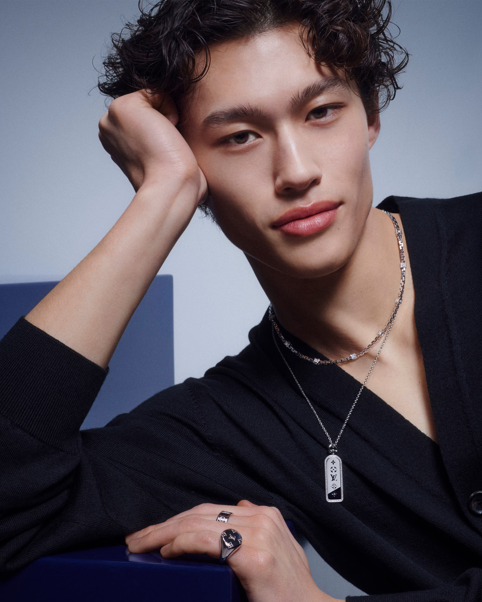
Men’s jewellery is now one of the fastest-growing segments in the global accessories market. It has been moving in this direction for several years, pushed along by a generation of men who grew up watching musicians and athletes wear chains, rings, and bracelets as naturally as any other part of their wardrobe. What has changed recently is that it is no longer confined to music or sport. It has crossed over into fine jewellery, tailoring, and the kind of everyday dressing that most men do without thinking.
Luxury houses took notice. Louis Vuitton launched its first dedicated men’s fine jewellery collection in 2024. David Yurman followed with a high-end men’s line that same year, including pieces in platinum set with tanzanite and diamond. Cartier, which has dressed men in rings and chains for decades, has seen renewed interest in its men’s pieces. The market is responding to a real demand, not a trend cycle.
The Chain as Everyday Essential
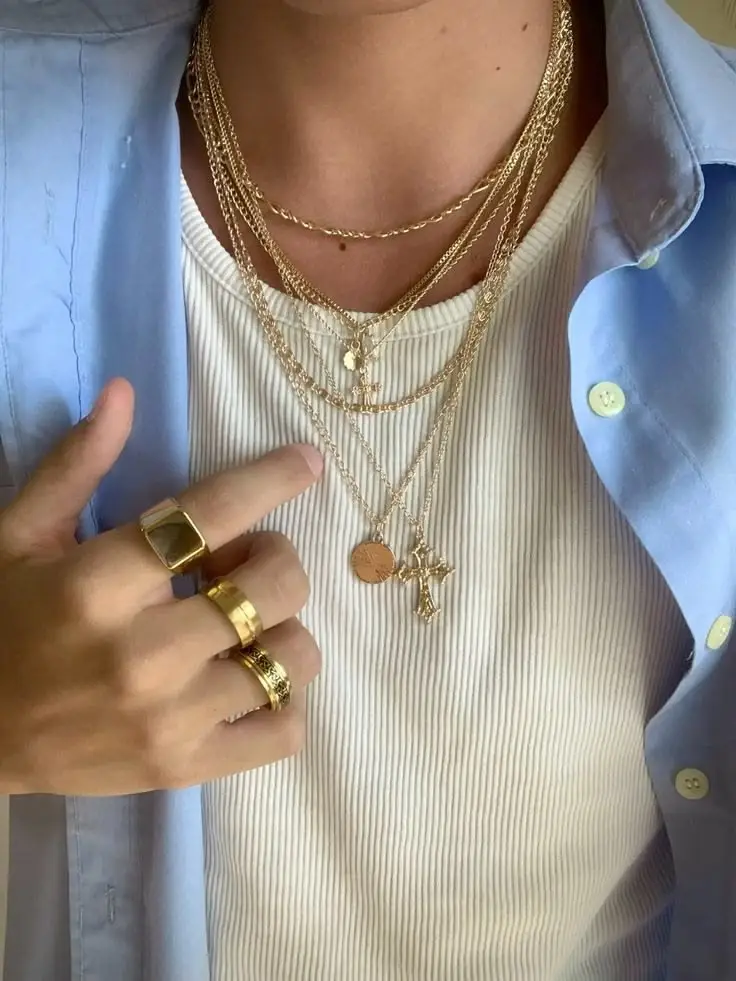
The chain has become the backbone of men’s jewellery in the way that a plain white shirt is the backbone of a wardrobe. It works alone or layered, dressed up or worn with a plain tee. Cuban link chains, rope chains, and Franco styles dominate, typically in gold tones, though silver remains a strong choice for those with a cooler, more minimal aesthetic.
Layering is the key move right now. The most common approach is wearing two chains of different lengths, usually with around two inches of separation so each piece is visible on its own. Adding a pendant at one of those lengths gives the look a personal anchor. At the 2026 Golden Globes, Timothee Chalamet wore a head-to-toe black Chrome Hearts velvet set and finished it with a Cartier Panthere pendant necklace, a diamond bracelet, and a diamond eternity band. The jewellery was doing as much work as the clothes.
Rings Are Being Worn Differently
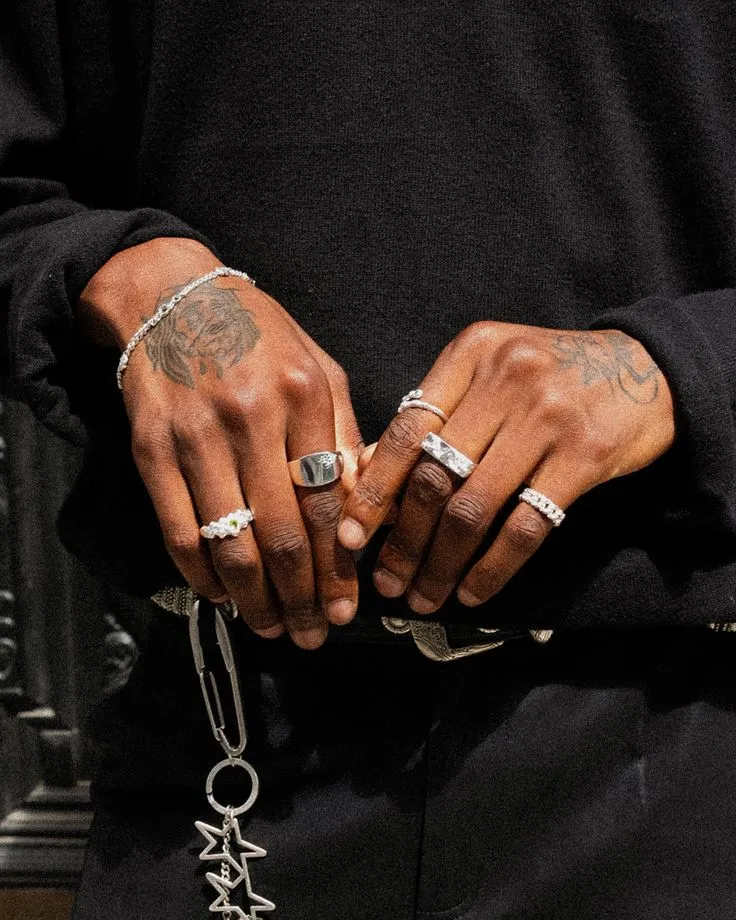
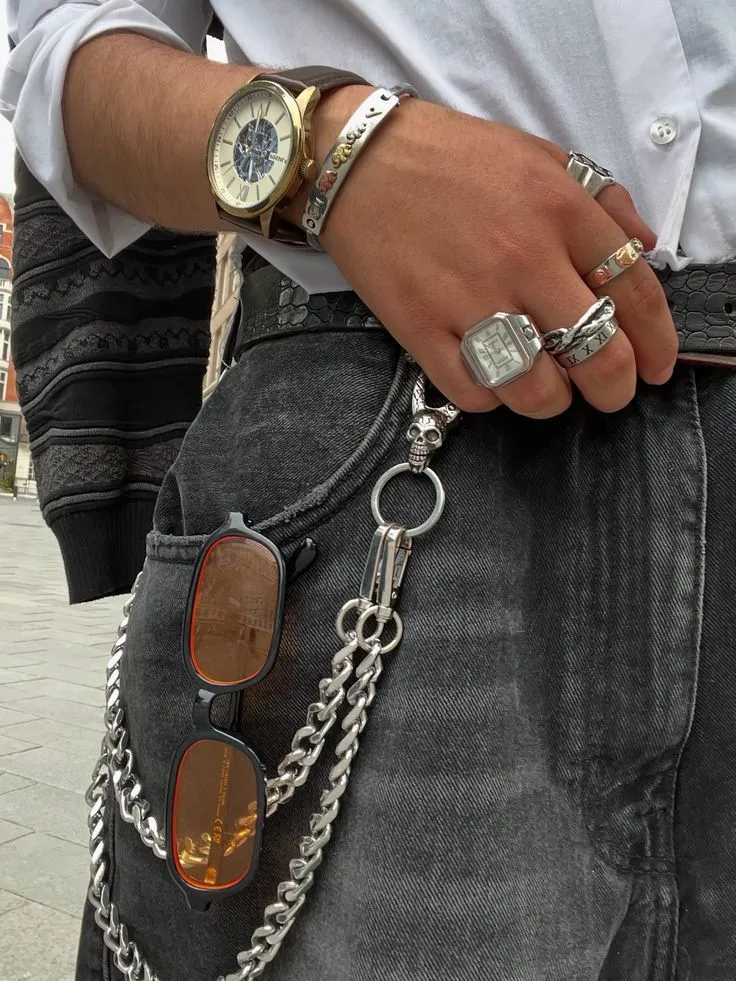
The signet ring never fully disappeared, but it has been completely reimagined. Where it once meant family crests and inherited formality, it now means something more personal and expressive. Oversized shapes, textured metalwork, geometric motifs, enamel details, and gemstone insets have all found their way onto men’s fingers. Harry Styles made the stacked ring approach his own for years, and award season 2026 confirmed that ring stacking has crossed over into mainstream men’s dressing. Red carpet photographers now routinely capture close-up shots of men’s hands, something that would have seemed unusual just a few years ago.
The stacking formula that works best mixes textures and widths. A smooth band next to an engraved statement piece, a thin minimal ring on one finger beside a chunkier signet on the next. The effect looks collected rather than considered, which is exactly the point.
Pearls, and the Dismantling of Old Rules
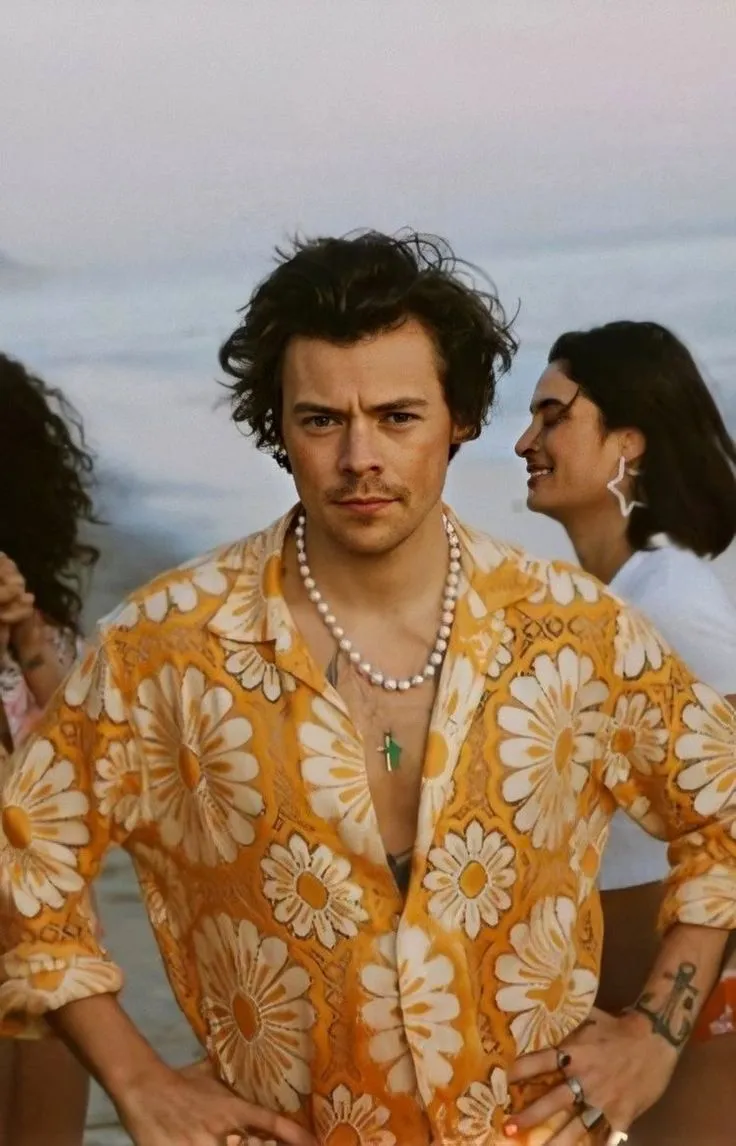
If there is one piece that captures how much the conversation around men’s jewellery has shifted, it is the pearl. Harry Styles wore a single pearl earring to the Met Gala years ago and was photographed as though it were a provocation. Now pearls on men feel unremarkable, which is itself a kind of progress. Baroque pearls mixed with gold, dark Tahitian pearls combined with industrial metals and leather, pearl chokers worn close to the neck. All of these are showing up on men who are simply getting dressed.
This is not a coincidence. Historically, men were the ones who wore jewellery with the most extravagance. Think of the courts of European kings, the Mughal emperors, the Renaissance portraits where the men are as decorated as anyone else in the frame. What is happening now is not new so much as it is a return, after a long detour through a much narrower definition of how men should look.
How to Start, if You Have Not Already
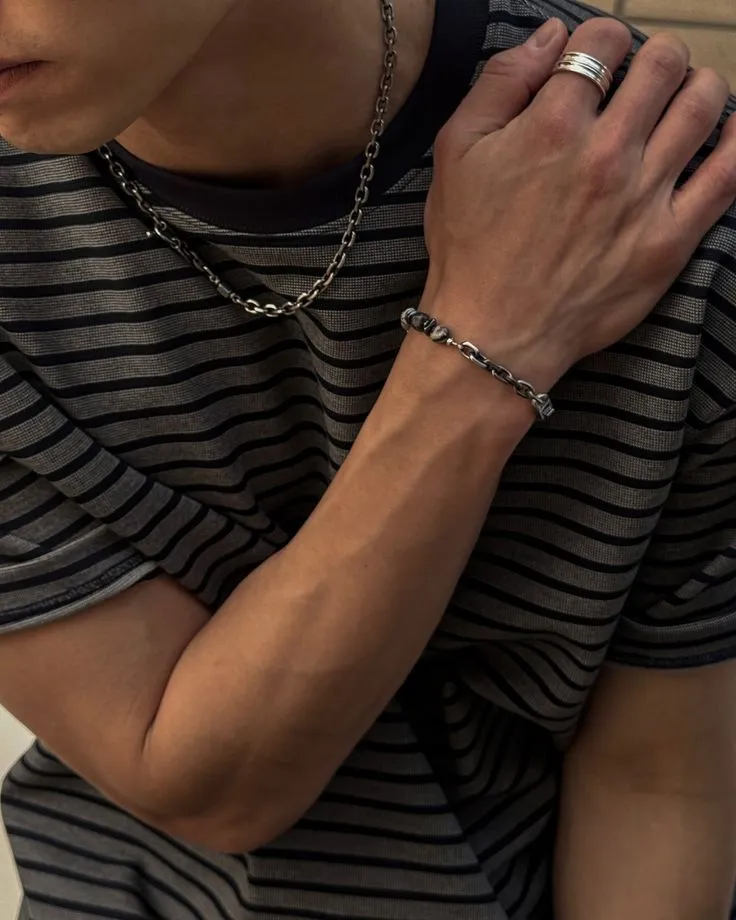
The simplest entry point is a single chain worn over a plain shirt. It requires no commitment, no coordination, and almost no thought. From there, a signet ring on one finger. From there, whatever feels right. The men whose jewellery looks the most considered are usually the ones who have built their collection slowly, piece by piece, choosing things that feel personal rather than things that feel on-trend.
Brands worth knowing at the accessible end include Miansai, Hatton Labs, and Tom Wood. At the fine jewellery level, David Yurman and Cartier have deep men’s offerings that repay attention. And at the more personal, made-to-order end, independent jewellers who work in signet rings and engraved pieces are where the most interesting things are being made.
The language of men’s jewellery has expanded. The vocabulary is bigger, the rules are looser, and the range of what looks good is wider than it has been in a very long time.