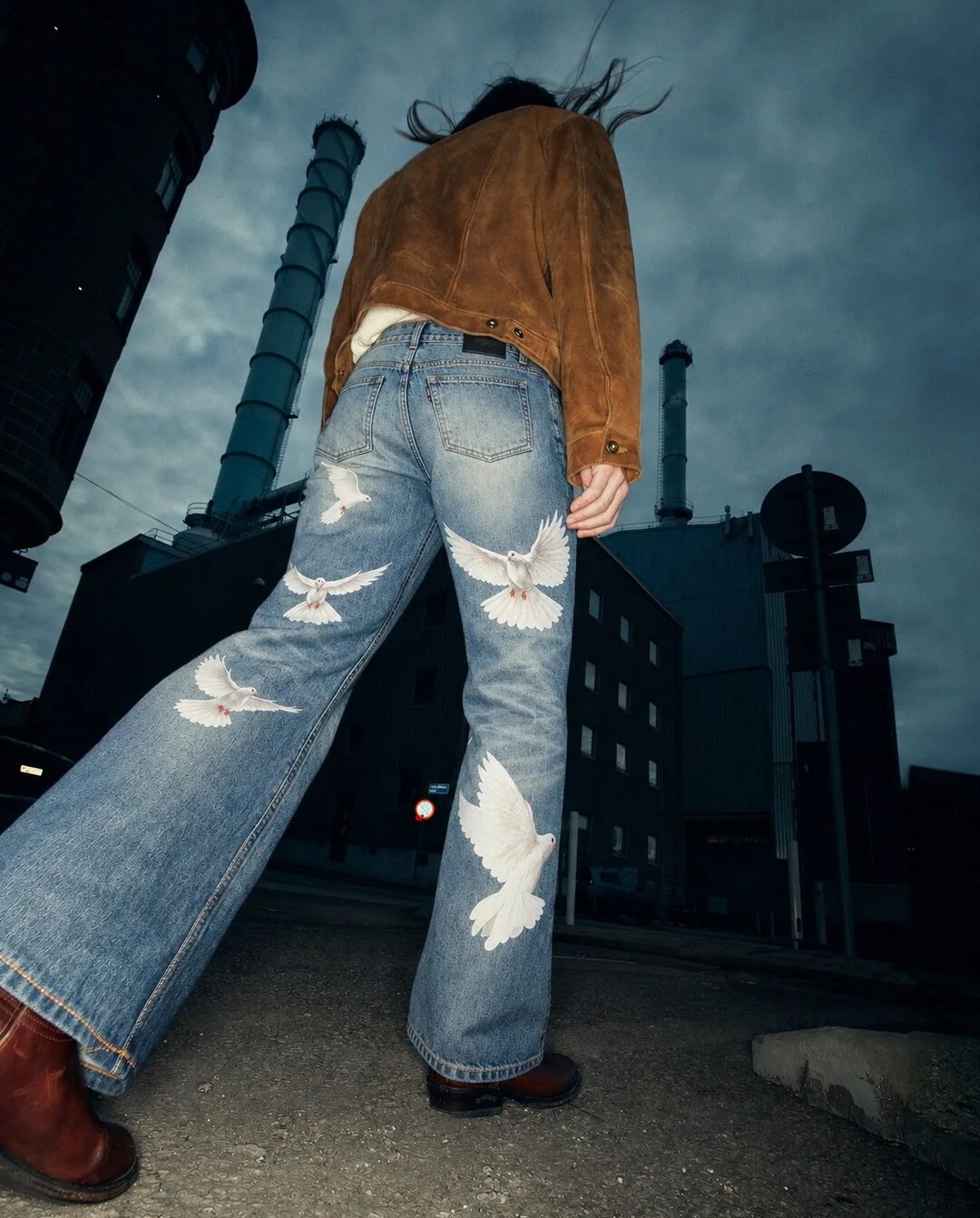
Denim began as sturdy workwear, a fabric made to survive manual labour. Today it has become one of fashion’s favourite blank canvases. In a wardrobe where most clothes are mass-produced and look the same on every shelf, a pair of jeans that has been painted, stitched or patched by hand carries something a shop-bought pair cannot: a choice made by a person.
That choice is now visible across India. From artists who paint scenes onto denim jackets to designers who stitch kantha and chikankari onto jeans, customised denim has moved from a weekend DIY project to a form of self-expression that many people wear with pride. Here is how it got here, what is happening now and why it matters.
Denim as a Canvas — How It Started
The idea of painting on jeans is not new, but it had its biggest moment during the pandemic years. Painted jeans spread through social media, with celebrities such as Bella Hadid and Hailey Bieber photographed in them, and independent artists selling custom pieces through Depop, Etsy and Instagram. Artist Juliet Johnstone is a good example: she began painting jeans after running out of canvases, and her designs sold out on Instagram within minutes.
In India, a few artists were already doing the same thing. Mumbai-based Nikita Sagar, a self-taught artist, paints surrealist, pop-art-inspired scenes on denim jackets, each telling a chapter of an ongoing story about an astronaut travelling to new worlds. Charuta, who runs Adagiobymy, paints and embellishes jackets inspired by Indian goddesses, adding costume jewellery for a touch of nostalgia. Their work showed that hand-painted denim in India did not have to copy the West. It could carry its own stories.
What Changed in 2026 — Embellishment Takes Over
This season the conversation has widened from painting to embellishment of every kind. On the autumn/winter 2026 runways, Dior sent out jeans decorated with scalloped, curtain-like swags, Stella McCartney showed crystal-studded denim, and Bode teased an embellished collaboration with Levi’s. The trend has already reached the high street, with sequin jeans at Zara and eyelet-detailed denim at & Other Stories. The common idea is that jeans are no longer a plain basic but a surface to be decorated.
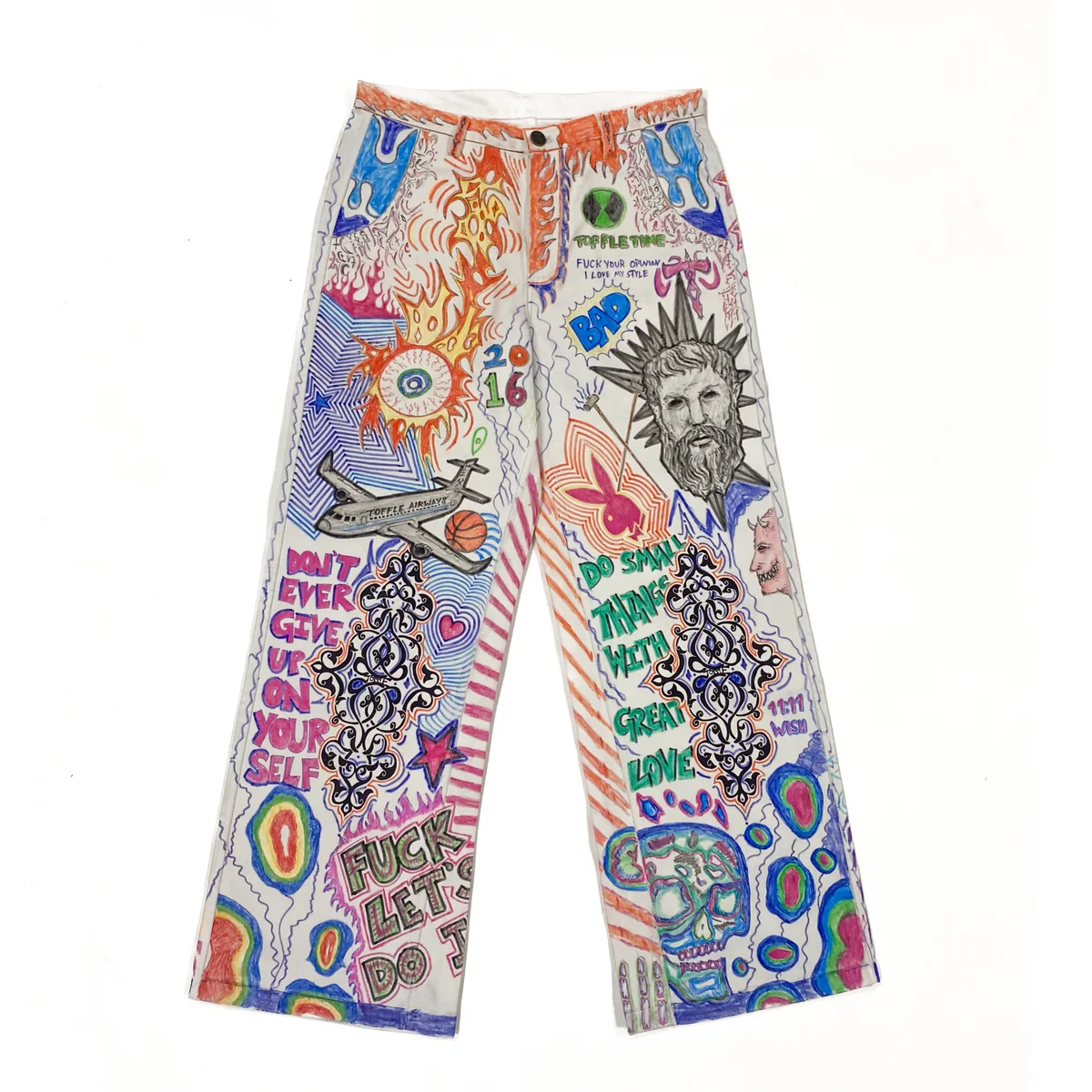
It is important to be clear about what this shows. The 2026 trend is about embellished and customised denim in general, of which hand-painting is one part. That is also what makes the story interesting: painted jeans have become one voice in a larger conversation about personalising what we wear.
The Indian Way — Craft Meets Denim
What makes India’s version of this trend different is its use of its own craft traditions. Delhi-based label Rkive City works with post-consumer and upcycled denim and applies chikankari and kantha to jeans and jackets, alongside screen printing and patchwork. Saras Handloom Denims uses handwoven denim from Telangana and embroiders floral motifs onto it. Divyam Mehta layers colour-blocked mulberry silk patches with floral kantha embroidery, while labels such as Chorus and Payal Pratap lean towards delicate cross-stitch flowers. Kartik Research makes patchwork jeans from upcycled denim using natural indigo, kantha and block printing.
On social media, self-taught designer Diya Joukani has gone viral wearing her own embroidered denim, the kind of look that makes customising feel like something anyone can try. As Harper’s Bazaar India put it in its look at the Indian denim scene, denim has become a medium for storytelling rather than a fabric of convenience.
Why It Is Self-Expression
Three reasons stand out. The first is individuality. Fast fashion produces thousands of identical pieces, and a customised pair is a quiet way of standing apart from them. Several of the makers above say this directly, treating one-of-a-kind clothing as a response to the sameness of mass-produced style.
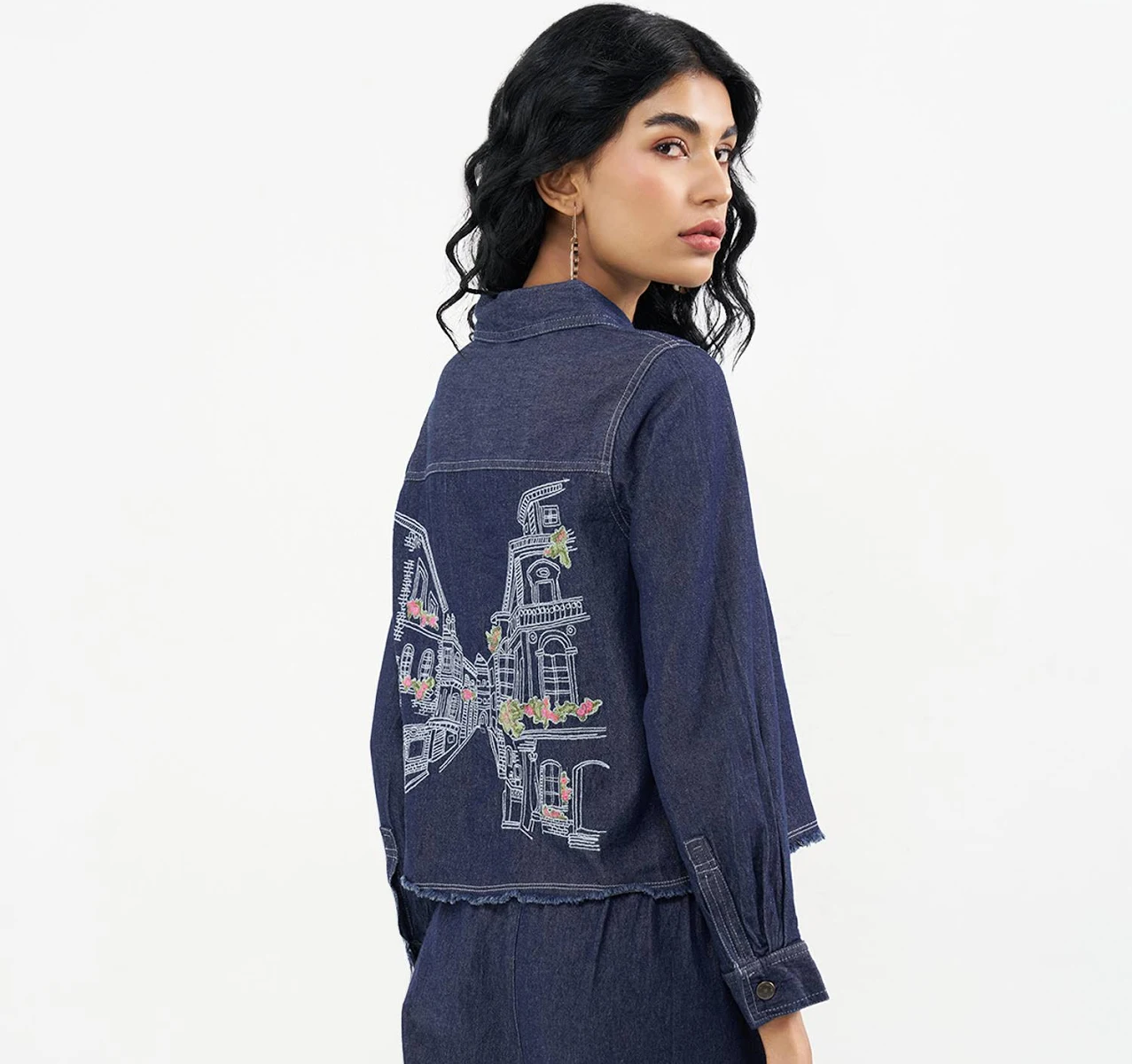
The second is identity and roots. For many Indian artists, painting or stitching onto denim is a way of blending Western streetwear with Indian symbols, goddesses, tribal motifs and textile techniques. One Toronto-based artist featured in the Indian press describes her work as a response to feeling caught between two identities, and denim became the place where both could sit together.
The third is sustainability. Many of these labels start with old or discarded denim, giving it a second life instead of sending it to landfill. Upcycled and customised, an old pair of jeans becomes something its owner is far less likely to throw away.
If You Want to Try It
Hand-painting is more approachable than it looks. Wash and fully dry the jeans first to remove factory coatings and dirt, and use paint made for fabric. Test it on a hidden seam before starting. To keep the artwork fresh afterwards, wash the jeans inside out, on a gentle cycle in cold water, and let them air dry. If painting feels daunting, brands such as Denimals in Kochi customise denim on demand through embroidery, screen printing and bedazzling.
Final Thought
A pair of jeans changed by hand holds a person’s choices in a way a bought pair cannot. Whether it is a painted astronaut, a kantha-stitched pocket or an old pair given new life, customised denim shows that Indian style is not only about what we buy, but about what we make of it.