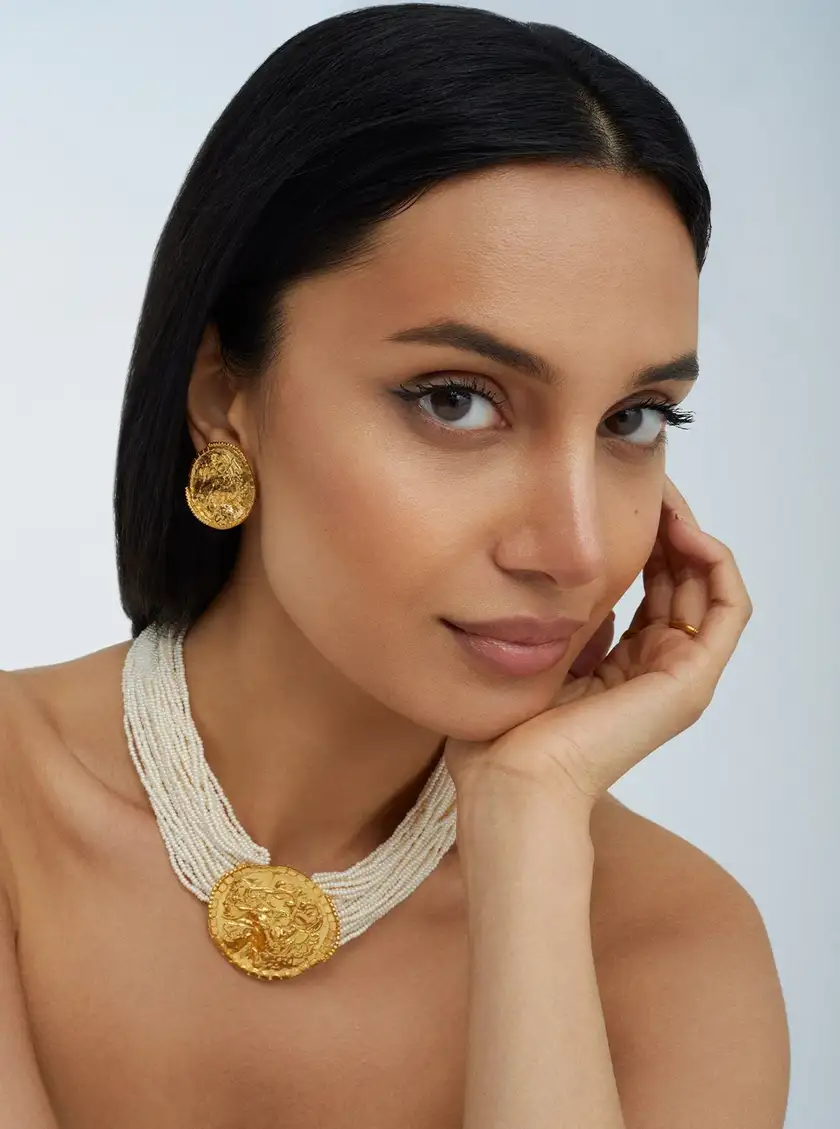
The month of October in India brings a lineup of festivals that prompt us to revisit our festive wardrobes and choose outfits that perfectly serve the festive vibe while feeling both comfortable and traditional. Among these, Karwa Chauth stands out as an auspicious festival for married women who observe a fast for their husbands' long life, traditionally from sunrise to moonrise.
So, this year, during Karwa Chauth, which falls on 29th October, dressing up for a day when you and your better half celebrate your bond and pray for each other's well-being should feel celebratory, both in emotion and ensemble. For that, we have brought together outfits that strike the perfect balance between traditional wear and jewellery, along with a modern touch that feels sophisticated, celebratory, and comfortable.
5 Outfit and Jewellery Combinations to Try
The festival of Karwa Chauth places married women at the centre of the celebration, as they embrace the occasion by choosing outfits that blend tradition with their personal style, reflected through their ensembles and jewellery. Pairing them requires a creative and thoughtful perspective, from opting for a timeless red saree and traditional jewellery to experimenting with soft, earthy colours and statement jewellery. We will take you through multiple combinations that allow you to style your look with both tradition and the intent to shine in your Karwa Chauth outfit.
Red Saree + Choker Necklace Timeless Elegance
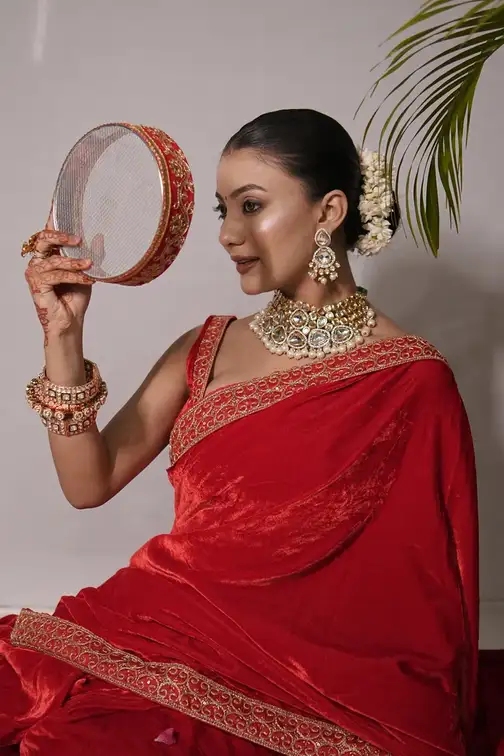
A timeless staple of the festive season, the elegant red saree always remains a popular choice for a Karwa Chauth outfit. However, you can make a slight deviation from the traditional ensemble this time by keeping the look minimal and opting for a saree featuring delicate golden designs, whether geometric or floral, paired with a matching blouse featuring a golden outline. Style it with a traditional golden choker necklace encrusted with diamonds to anchor the focus of your outfit.
Fuchsia Pink Lehenga + Emerald Polki Choker
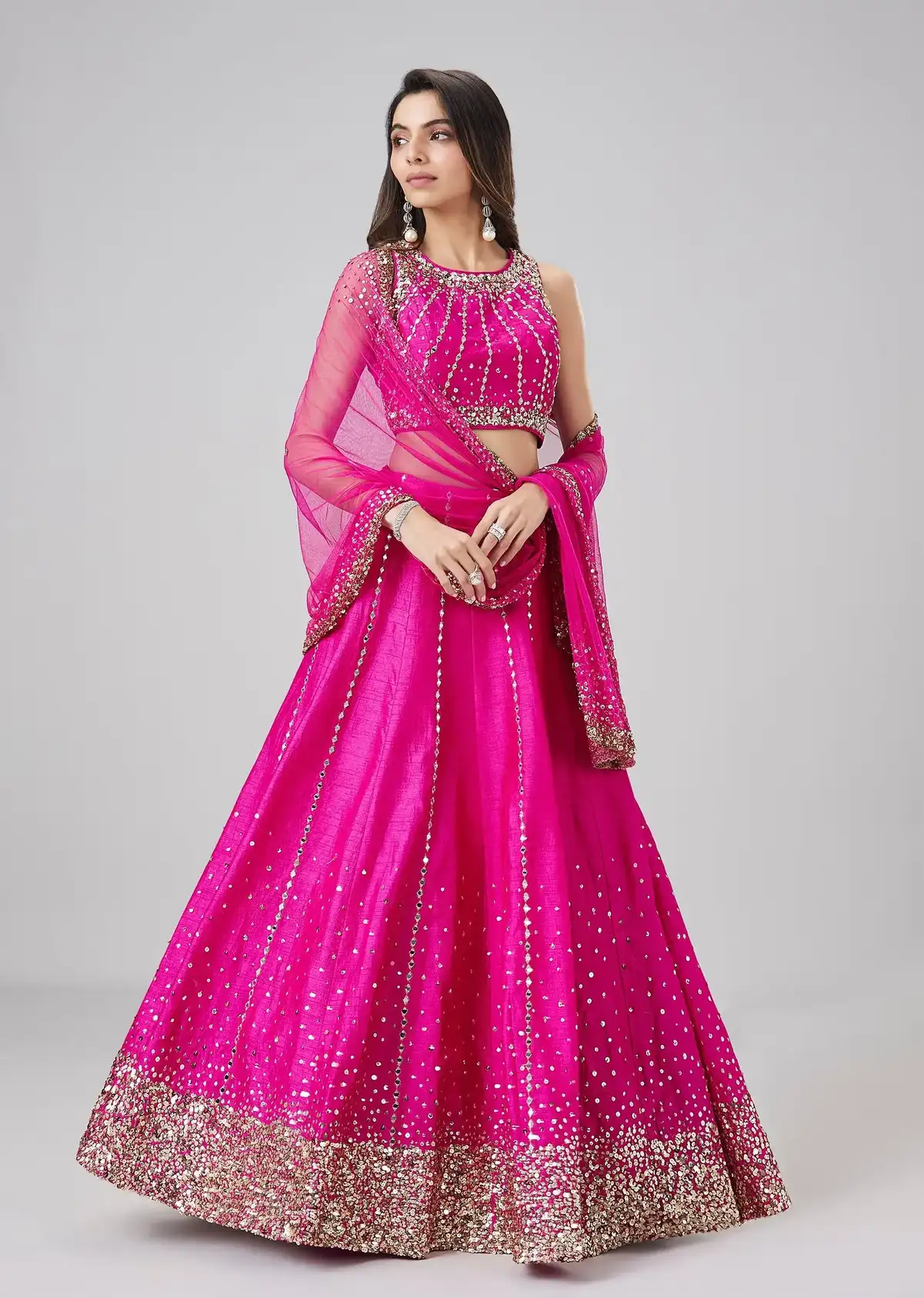
Celebrating Karwa Chauth in an outfit that feels soft yet impactful, a fuchsia pink or magenta-coloured lehenga can be a great choice. Its vibrant palette, along with modern mirror embellishments on both the lehenga and the blouse, complemented by similar detailing along the border of the chunni, offers a bright, modern, and photogenic look. This can be further elevated with a polki necklace featuring green emerald drops, paired with a delicate matching maang tikka that adds a contrasting colour to the ensemble.
The Regal Court: Mustard Yellow Silk Anarkali + Heavy Chandbalis
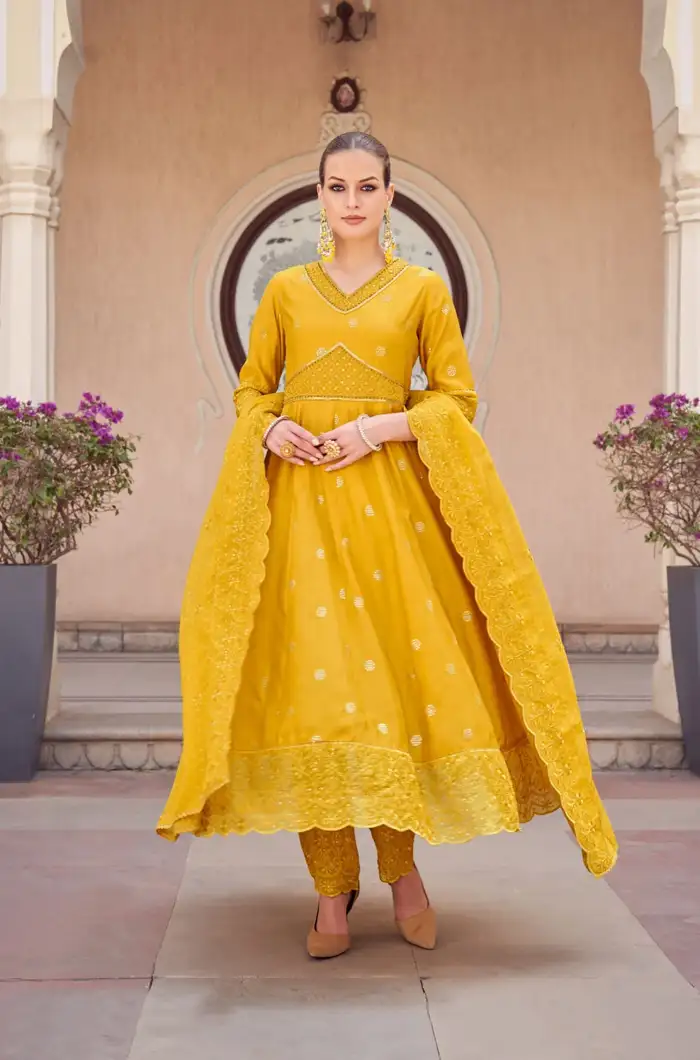
Embracing Karwa Chauth in an Anarkali brings structure to your festive ensemble and creates an opulent look with the mustard and marigold palette of silk fabric. The fabric adds a glistening shine while allowing more freedom of movement than a saree. The clean neckline also provides an opportunity to draw attention to the face by incorporating heavy chandbalis and an embroidered neckline to enhance the overall look.
The Modern Classic: Royal Blue Sharara + Georgette Kurti
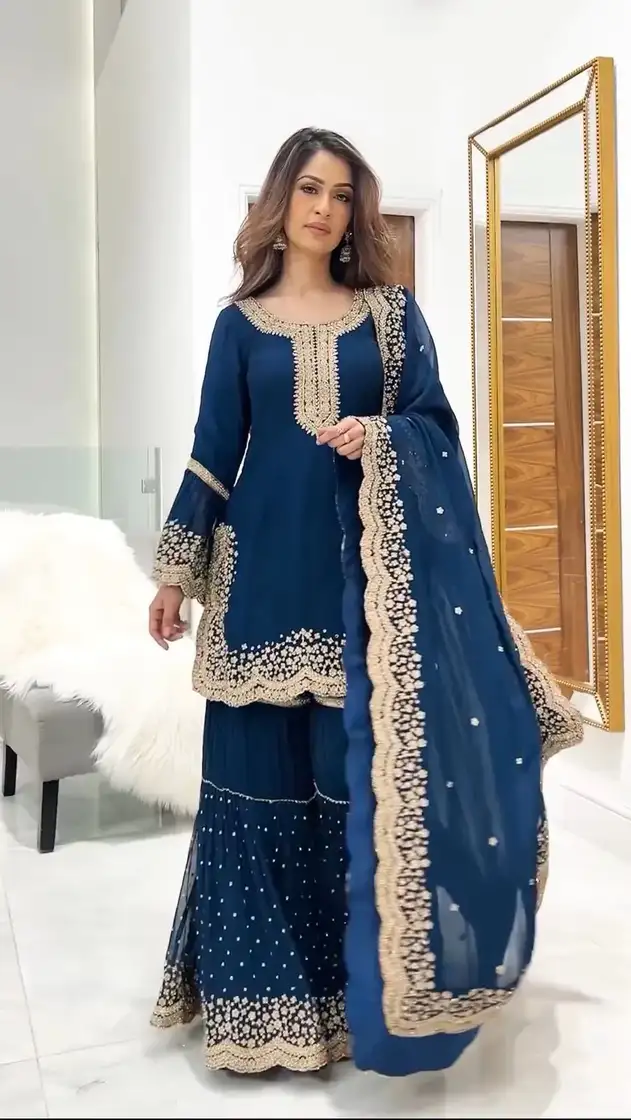
Blending modern charm with a classic aesthetic, a georgette kurti and sharara in royal blue, navy, or deep indigo perfectly complement the celebratory vibe while keeping the look effortless. A matching dupatta with embroidered borders completes the ensemble. Its beauty lies in its simple, modern charm, enhanced by floral designs on the kurti that allow pearl bangles and statement rings to stand out.
The Heritage Aesthetic: Emerald Green Lehenga + Antique Silver Jewellery
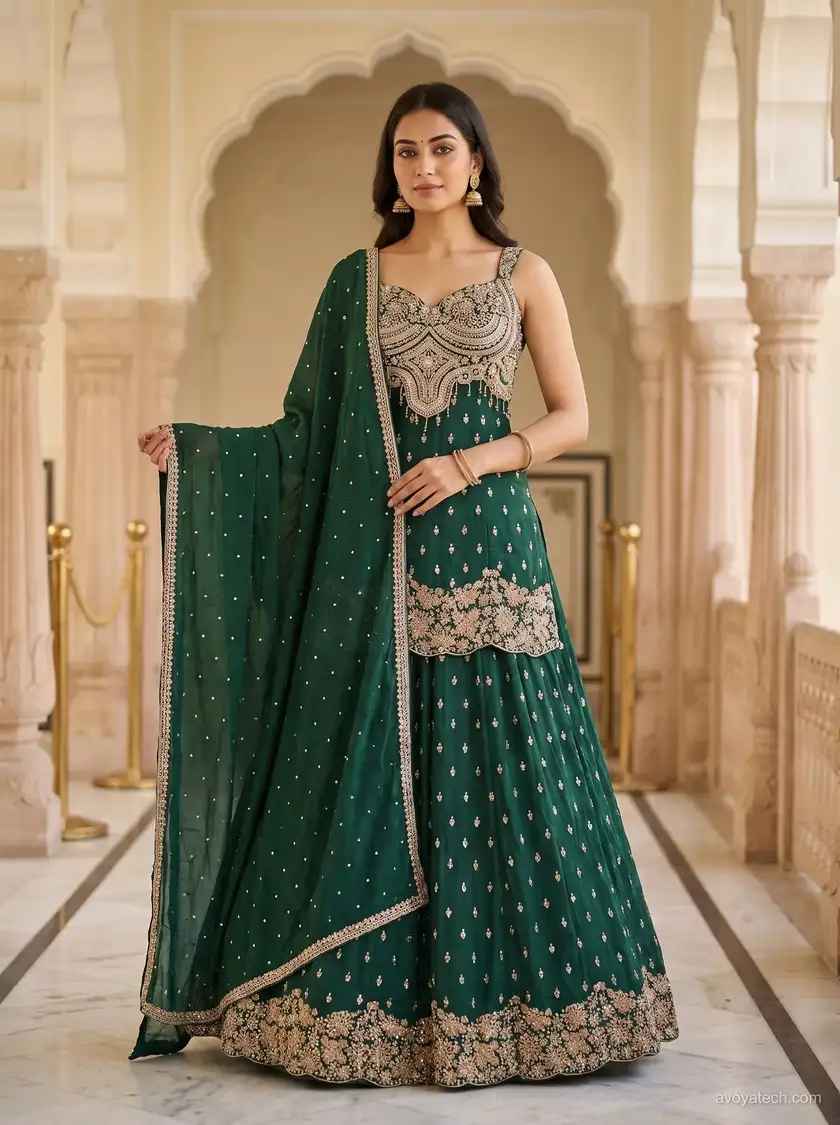
Moving away from minimalism, if you want to mark the celebration with a bold and maximalist yet culturally rooted look, an emerald green lehenga with heavily embellished Zardozi embroidery can be a great choice. Featuring a V-neck choli, a woven and mirrored flared lehenga skirt, and a matching organza or net dupatta styled with rustic silver jewellery, this ensemble can make a regal statement and emphasise the festive vibe.
Final Thought
The festival of Karwa Chauth celebrates the devotion and love shared between husband and wife. While the occasion traditionally involves women fasting for their husbands' well-being, some couples nowadays choose to observe the fast together. The festival is also known for its traditional dressing, styling, and jewellery, with married women embracing the occasion by wearing outfits and accessories that symbolise their married lives and make them feel as beautiful as they did on their wedding day.