Jigsaw puzzles used to live in the back of a closet, pulled out on rainy weekends and packed away once finished. That is changing. Across living rooms and studio apartments, completed puzzles are showing up framed on walls, treated less like a pastime and more like a piece of art you made with your own hands.
The artist’s name is the point

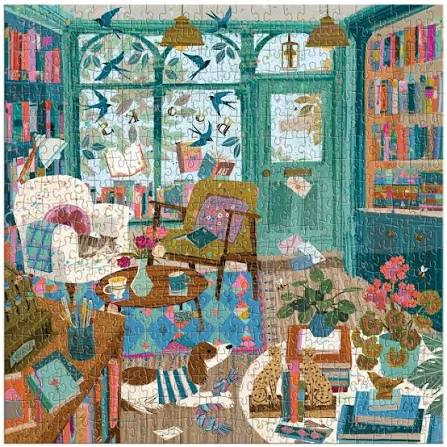
The shift is being driven by the artwork itself. Instead of stock photography or generic landscapes, many puzzle makers now commission original illustrations from working artists, and the artist’s name appears right on the box. Piecework Puzzles has built its identity around this idea, working with illustrators to create scenes that feel like small, whimsical worlds rather than pictures pulled from a stock library. Cloudberries, a British brand, has taken a similar route, pairing bold gradients and modern illustration styles with a pledge to never use AI-generated art, choosing instead to work directly with independent artists.
Built to be looked at, not just finished
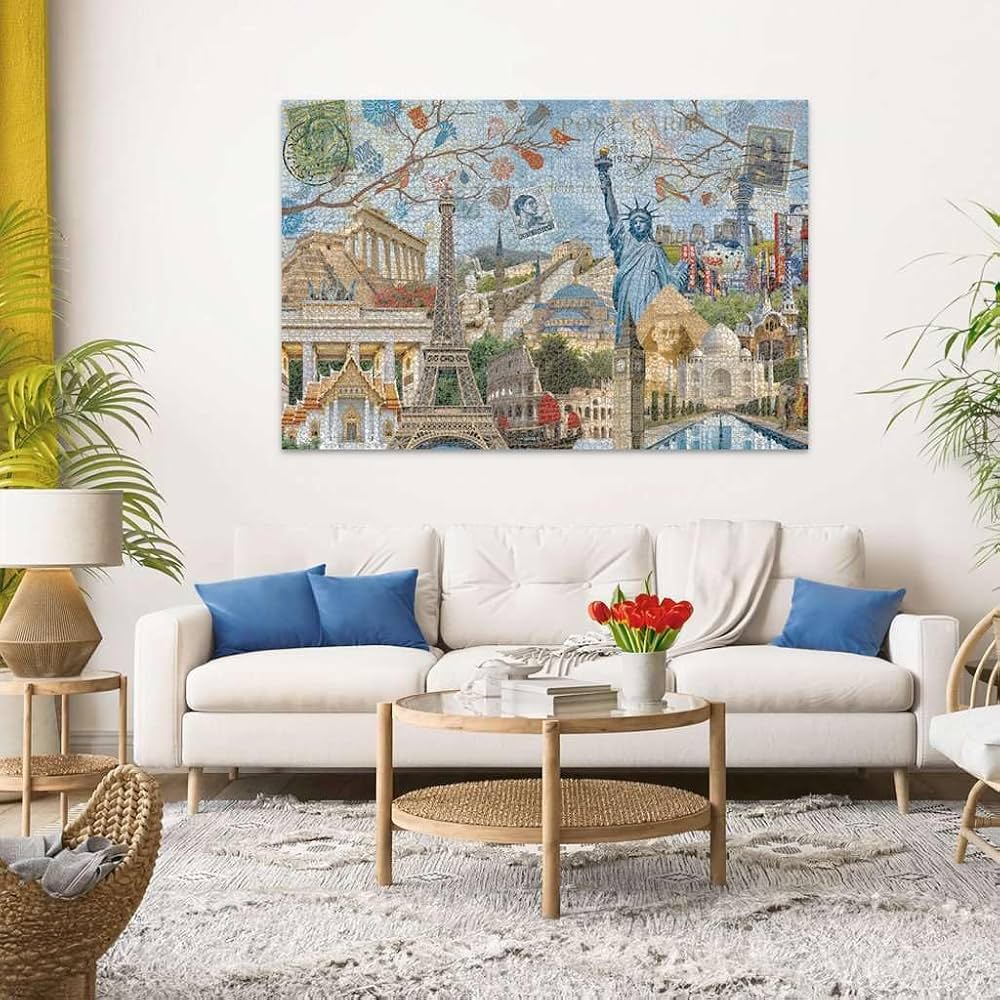
Craftsmanship matters just as much as the image. Ravensburger, making puzzles since 1891, has built its reputation on thick, glare-free board and pieces that click into place with real precision—qualities that matter once the puzzle is meant to hang rather than be boxed away. The company even sells frame kits designed to turn a finished puzzle straight into a piece of wall decor. Clementoni, the Italian brand behind the long-running Museum Collection, takes a more classical route, reproducing paintings by Van Gogh, Klimt, and Renoir at puzzle scale, so finishing one feels a little like owning a print of a painting most people only see in a gallery.
A collection built one puzzle at a time
Galison has leaned into this collectible quality from another direction. Founded in 1979 out of work with museums, the company partners with named illustrators and estates, including Andy Warhol and Frank Lloyd Wright, and credits every artist on the box—a practice that is still rare in a category where artwork is often left unattributed. The result functions less like a single purchase and more like a small, ongoing art series.
The reward of putting something together
Part of the appeal is simply the act of doing it. Puzzling asks for attention without demanding a screen, and the slow, repetitive motion of sorting and fitting pieces has become a welcome contrast to a day spent scrolling. What used to end when the last piece went in now often continues. Instead of separating the pieces and returning them to the box, more people are reaching for puzzle glue and a frame.
That final step changes what a puzzle is for. It is no longer only about the hours spent at the table. It is about what stays on the wall once the table is cleared, a piece of art that happens to have come apart first.