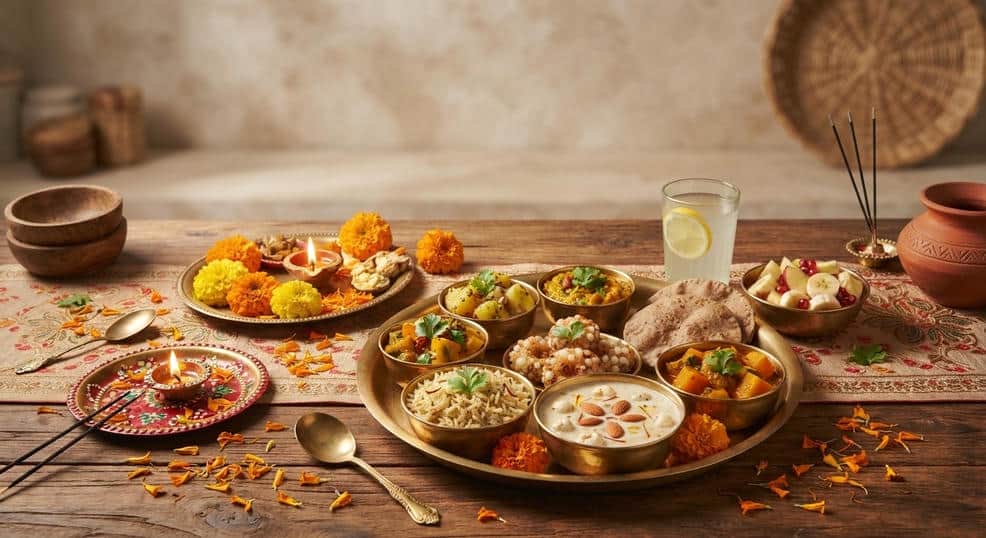
The arrival of winter in the Hindu calendar begins with the celebration of Goddess Durga across nine days called Sharad Navratri. It will begin from 11th October and go till 19th October, where nine different forms of Goddess Durga are honoured through fasting and ritual. From keeping fast for the whole nine days to the first and last day, or adopting only a sattvic diet during the period, devotees follow different methods to show their devotion — but often get confused about what to eat and what to avoid during fasting.
To clear the doubt and ensure your devotion remains true to all the rules and regulations of Navratri, we bring a guide that specifically distinguishes the suitable from the avoidable ingredients, along with recipes that allow you to immerse yourself in devotional fasting without compromising nutrition through the period.
The Fasting Rules — What Is Commonly Observed
While fasting rules during Navratri vary from region to region, the practices adopted universally are something all devotees can follow to ensure the fast remains pure. The sattvik principle prohibits the intake of non-vegetarian food, garlic, onion, everyday salt, regular grains, pulses, alcohol and processed foods. In some regions even tomatoes are avoided — but this depends on the tradition you have been following for years. One rule that applies across all traditions without exception: replace regular iodised salt with sendha namak (rock salt), which is considered pure and fasting-friendly.
Complete Eat and Avoid Table
|
What to Eat |
What to Avoid |
|
Kuttu ka atta, Rajgira flour, Singhare ka atta, Sama ke chawal |
Regular grains — wheat, rice, maida, suji, besan |
|
Potato, sweet potato, arbi, raw banana, lauki, pumpkin, cucumber |
All regular pulses and lentils — dal, chana, rajma, moong |
|
Milk, curd, paneer, ghee, butter, cream, chaas, khoya |
Onion and garlic |
|
All fresh fruits, all dry fruits, makhana |
Non-vegetarian food and eggs |
|
Sugar, jaggery, honey |
Alcohol and tobacco |
10 Essential Navratri Vrat Recipes — Main Meals, Snacks, Sweets and Drinks
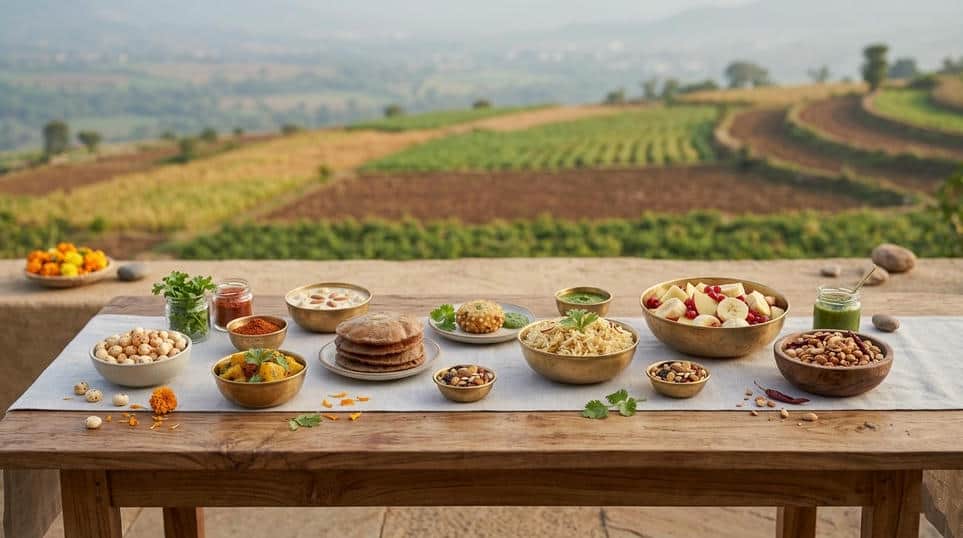
1. Sabudana Khichdi
The iconic savoury of Navratri is very popular in North India. Its recipe includes tapioca pearls, peanuts, potato, green chillies, jeera and sendha namak to cook a dish that easily nourishes the body while keeping it light and easy to digest. Ensure to soak the tapioca pearls in water for at least 4–6 hours, ideally overnight, before cooking to prevent stickiness during preparation.
2. Kuttu Ki Poori / Kuttu Ka Paratha
Extensively used during Navratri, buckwheat is the new staple of your fast that replaces daily grains and is used to prepare poori and paratha, served with a potato curry or simple curd. Its preparation requires only buckwheat flour and ghee for poori. For paratha, add mashed boiled potato to the dough to make it easier to roll without cracking.
3. Singhare Atte Ka Halwa
Many devotees are unaware of the prohibition on suji during Navratri, which is often mistakenly offered as prasad in Kanya Puja. To replace this sweet dish, you can simply prepare singhare atte ka halwa — which requires only ghee, water and sugar to create a similar sweet dish that can be used both as prasad and as a fasting staple.
4. Sama Rice Khichdi (Vrat Ki Khichdi)
Barnyard millet — Sama rice — is the main ingredient of one of the most fulfilling dishes in a fasting diet. Similar to a regular khichdi except for a few adjusted ingredients, its recipe requires only sama rice, ghee, jeera, green chillies, potato and sendha namak to provide a light and comforting meal.
5. Makhana Kheer
An indulgent dish that offers both taste and nutrition during fasting, bringing this recipe into your Navratri diet would be both easy and healthy. Slow-cook fox nuts in full-fat milk, followed by the addition of sugar, cardamom and dry fruits. It not only fills you but also nourishes you with its rich nutritional properties.
6. Aloo Ki Sabzi (Vrat Wali)
Simple yet tasty, Navratri fasting feels incomplete without Aloo Ki Sabzi complemented by buckwheat poori or paratha. Its preparation consists only of ghee, jeera, potato, ginger, green chilli and sendha namak, while avoiding garlic and onion — served across most occasions of Navratri as the most dependable fasting main.
7. Rajgira Ladoo / Amaranth Laddoo
A dish often served as prasad and distributed among neighbours, Rajgira ladoo holds an important place in Navratri. Its preparation includes popped rajgira, sugar and jaggery, whose sweet and soft texture places it as a reliable snacking food through the fasting days.
8. Dahi Aloo (Curd Potato Curry)
For those looking for a change from dry Aloo Ki Sabzi, Dahi Aloo offers a lighter and more cooling alternative. Boiled potatoes are cooked in a smooth curd-based gravy with jeera, green chillies, ginger and sendha namak — without onion or garlic. The curd keeps the dish easy on the stomach during fasting and pairs well with sama rice khichdi or kuttu ki poori for a complete meal.
9. Makhana Chivda (Vrat Namkeen)
One of the most practical recipes for the entire fasting period, Makhana Chivda fills the gap that regular namkeen cannot. Fox nuts are dry-roasted in ghee with sendha namak, black pepper and jeera to create a crisp, light snack that keeps energy up between meals. It can be prepared in advance at the start of Navratri and stored for all nine days, making it the most convenient addition to any fasting kitchen.
10. Thandai / Chaas / Lassi
Hydration is one of the most overlooked aspects of Navratri fasting, and milk-based drinks are the easiest way to address it. Thandai — chilled spiced milk with dry fruits — keeps energy steady through a long fasting day. Chaas, made with curd, sendha namak and jeera, soothes the stomach and prevents acidity. A simple sweetened lassi provides both calcium and protein in one glass. Coconut water is also fully permitted during vrat and is especially recommended through the warm October days of this year's Navratri.
5 Health Tips for Fasting
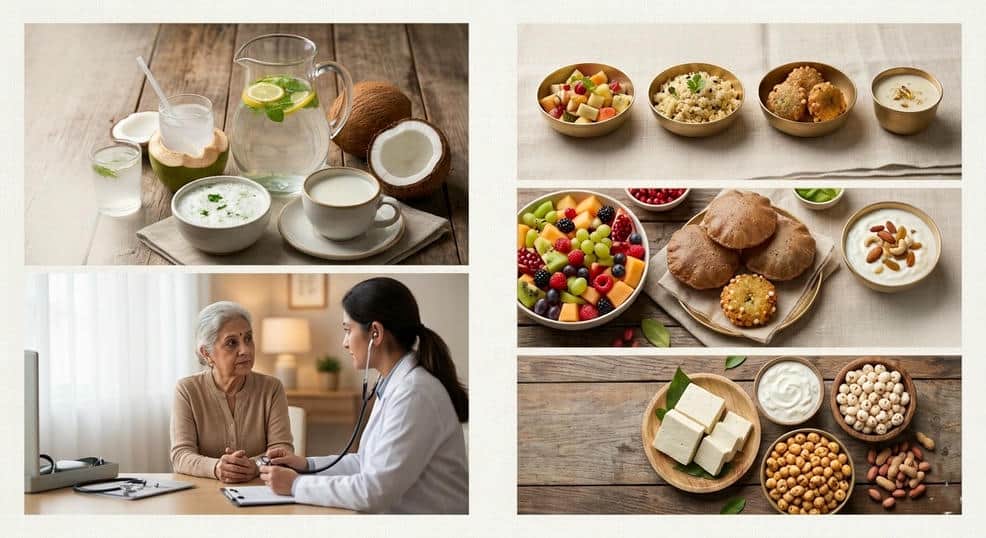
1. Hydrate constantly: The most common fasting mistake. Drink water, coconut water, chaas and milk throughout the day. Excessive tea and coffee can lead to acidity and dehydration — avoid them during fasting.
2. Eat smaller meals more frequently: Rather than one large meal, eat lighter portions through the day. This prevents energy crashes, acidity and the post-fast digestive shock from eating heavily after a long gap.
3. Do not overdo fried food: Kuttu ki poori and sabudana vada are traditionally fried — but eating fried vrat food at every meal defeats the sattvic principle of fasting and causes heaviness. Balance fried items with fruits, curd and dry fruits.
4. Include protein: Fasting removes regular dals and pulses — compensate with paneer, curd, makhana, peanuts and milk to prevent fatigue across 9 days.
5. Who should not fast strictly: Complete fasting is not recommended for people with uncontrolled diabetes or unstable angina. Pregnant, nursing, elderly people or those with health conditions should avoid strict fasting. Always consult a doctor if you have a health condition.