

It's an old argument whether poetry is closer to music or to prose. The debate continues because, honestly, the two were never separate. Songs carry poems forward when books go out of print, when classrooms forget those, and when the years begin to pass by. The boundaries between lyrics and literature blur further when songwriters themselves are recognised as poets, as in the case of Bob Dylan when he was awarded a Nobel Prize in literature. Here are five songs that show how poetry continues to find new life through music:
1. “Golden Hair” by James Joyce, adapted by Syd Barrett (and later Slowdive)
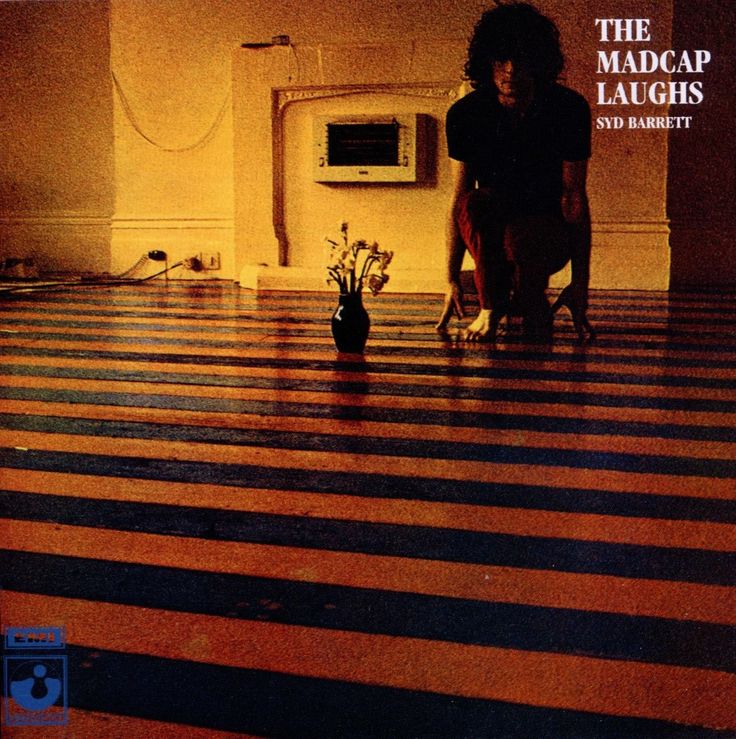
James Joyce wrote “Golden Hair” in 1907 as part of Chamber Music, a collection of thirty-six short lyric poems he produced in his early twenties, before Ulysses made him famous. The poem is tiny: a young man calling to a girl with golden hair, asking her to come away with him. It reads like something half-remembered from a dream. Joyce was obsessed with music throughout his life, and these early poems were deliberately written to be sung. He said so himself.
Syd Barrett, founding member of Pink Floyd, set “Golden Hair” to music in 1970 on his solo album, The Madcap Laughs. Barrett’s version is sparse and delicate, just acoustic guitar and voice, with soft overdubbing that gives it a dreamlike quality. He barely changes the words. Instead, he slows everything down until the poem feels like it is dissolving. Barrett was already struggling with his mental health at the time, and there's something in his recording that sounds genuinely lost, which fits Joyce's dreamy imagery in ways a more polished version never could.
Slowdive returned to the same poem in 1991, burying Joyce’s words beneath layers of distortion and reverb. The lyrics become hazy and distant, blending into the atmosphere of the song itself. Where Barrett sounded delicate, Slowdive made the poem feel submerged, like hearing someone call to you from underwater.
Reading the poem, you notice the rhyme scheme and the precision of the language. Hearing either version, you stop noticing. The words become texture.
2. “Richard Cory” by Edwin Arlington Robinson, adapted by Simon & Garfunkel
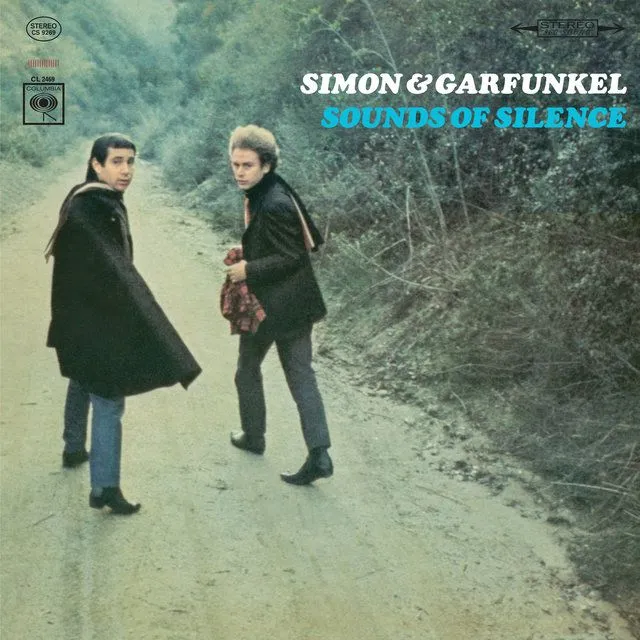
Edwin Arlington Robinson published “Richard Cory” in 1897. A New England poet, Robinson spent years struggling financially in New York while writing poems about the residents of a fictional small town called Tilbury Town. He understood failure from the inside. "Richard Cory" is about a man everyone in town admires – wealthy, graceful, and polite – and it ends with one line that the reader doesn't see coming.
Paul Simon adapted it in 1966 for Sounds of Silence, Simon and Garfunkel's second album. Simon kept Robinson's core story but rewrote it entirely in his own language, adding a factory-worker narrator who envies Cory's life, curses his own powerlessness, and then learns what happened. Where Robinson’s poem is restrained and emotionally distant, Simon’s version feels bitter and deeply personal. He brings out the working-class resentment that Robinson only hinted at.
Robinson had largely faded from public memory by the 1960s. Simon’s adaptation brought thousands of listeners back to the poem. That is a pattern worth noticing.
3. “I Felt a Funeral in My Brain” by Emily Dickinson, adapted by Andrew Bird and Phoebe Bridgers

Emily Dickinson wrote “I felt a funeral in my brain" sometime in the 1860s. Like most of her work, she never published it. The poem describes losing one’s mind from the inside: mourners marching in circles, a drum endlessly beating, a plank breaking, a person falling through the floor of their own consciousness. Nobody in the 1860s was writing like this. Dickinson’s dashes and her habit of capitalising seemingly random nouns make her poems feel like dispatches from somewhere strange.
In 2022, Andrew Bird and Phoebe Bridgers collaborated on “I Felt a Funeral, in My Brain", a musical adaptation of Emily Dickinson’s poem of the same name. Their version is slow and spare, preserving much of Dickinson’s original text rather than rewriting it. Bridgers’ voice against Bird’s arrangement gives the poem a grief that feels intensely present tense. Dickinson was describing something internal and abstract; Bird and Bridgers make it sound like a specific loss.
The poem unsettles you intellectually. The song unsettles you emotionally.
4. “I Will Wade Out” (Crepuscule) by E.E. Cummings, adapted by Björk as “Sun in My Mouth”

E. E. Cummings wrote “I Will Wade Out” in 1924, also published under the title "Crepuscule". It is a short, intensely physical poem about a speaker wading into burning flowers, taking the sun into their mouth, and leaping into the air with closed eyes. The language feels impulsive and alive. Cummings strips away conventional punctuation and lets the lines spill into each other.
Björk adapted it as “Sun in My Mouth” for her 2001 album Vespertine. She keeps much of Cummings’ imagery intact, building the song around a harp, soft electronica, and her voice. The connection goes deeper than the lyrics. “Vespertine” refers to the evening, while “crepuscular” means twilight, making the album feel spiritually connected to the poem itself.
“Sun in My Mouth” sounds intimate, almost private, which suits a poem about desire and surrender. Where Cummings rushes forward on the page, Björk slows the same words down until they feel less like hunger and more like devotion.
5. “The Rime of the Ancient Mariner” by S.T. Coleridge, adapted by Iron Maiden
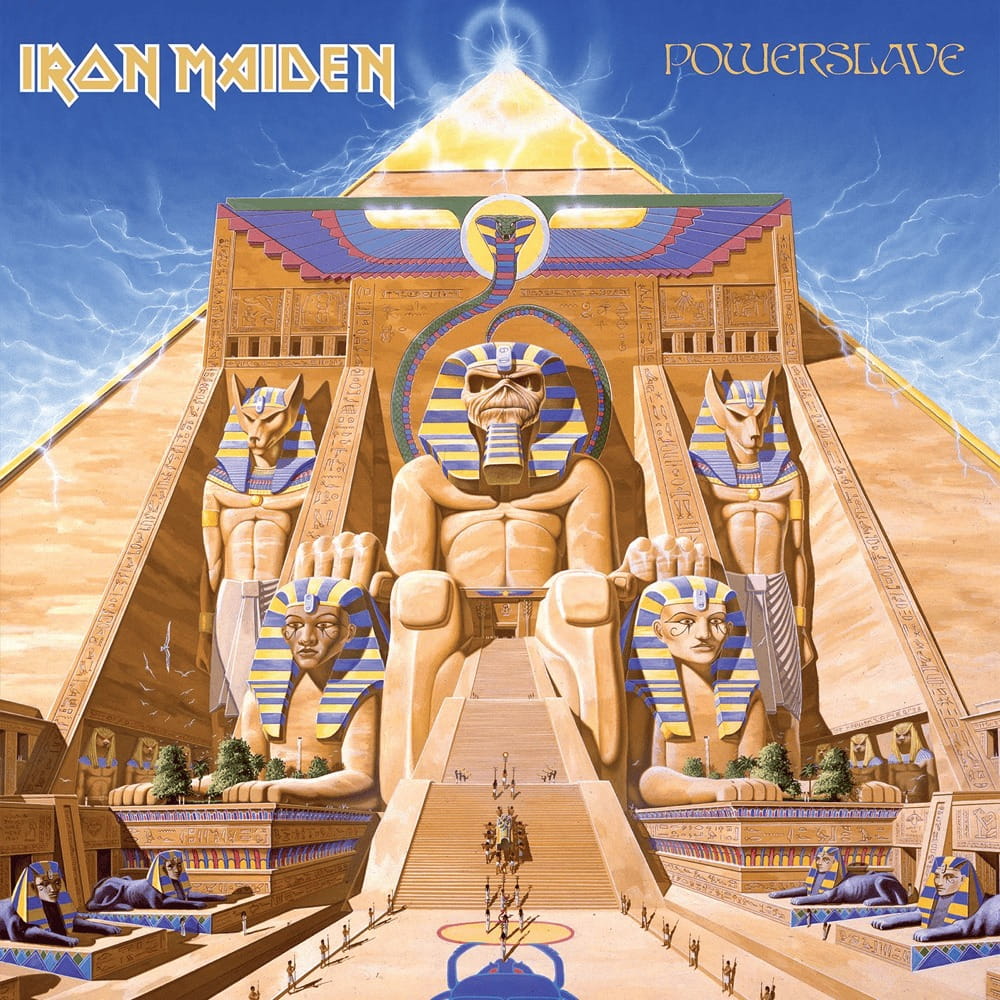
Samuel Taylor Coleridge published “The Rime of the Ancient Mariner” in 1798 as part of Lyrical Ballads, a collection he co-wrote with William Wordsworth that initiated British Romanticism. The poem is long, nearly 143 stanzas, and tells the story of a sailor who shoots an albatross without reason and spends the rest of the poem paying for it. The poem’s sense of guilt never loosens its grip.
Iron Maiden released their adaptation in 1984 on Powerslave. Bassist Steve Harris compressed Coleridge’s narrative without losing its structure: the crime, the punishment, the sea of the dead, the brief salvation, and the curse that never fully lifts. Heavy metal and Romantic poetry turn out to share similar instincts. Both are drawn to intensity and grandeur, both take suffering seriously, and both are often accused of excess.
The poem takes about forty-five minutes to read aloud. The song takes fourteen minutes to play. Two verses from the poem are directly quoted in the song lyrics. A generation of metal fans went back to Coleridge because of Iron Maiden. Some of them were surprised by how much they already knew.
The Thread That Runs Between Them
Poetry and music have always borrowed from each other. Before printing presses, poems travelled as songs. The separation came later when poetry moved on to the page and stayed there. What these five adaptations share is that none of the musicians treated the original poems as relics. They treated them as material, still alive, still movable, still capable of meaning something new in different hands. That is how poems survive. Not in libraries alone, but in the voices of people who heard something in the words and could not leave them alone.