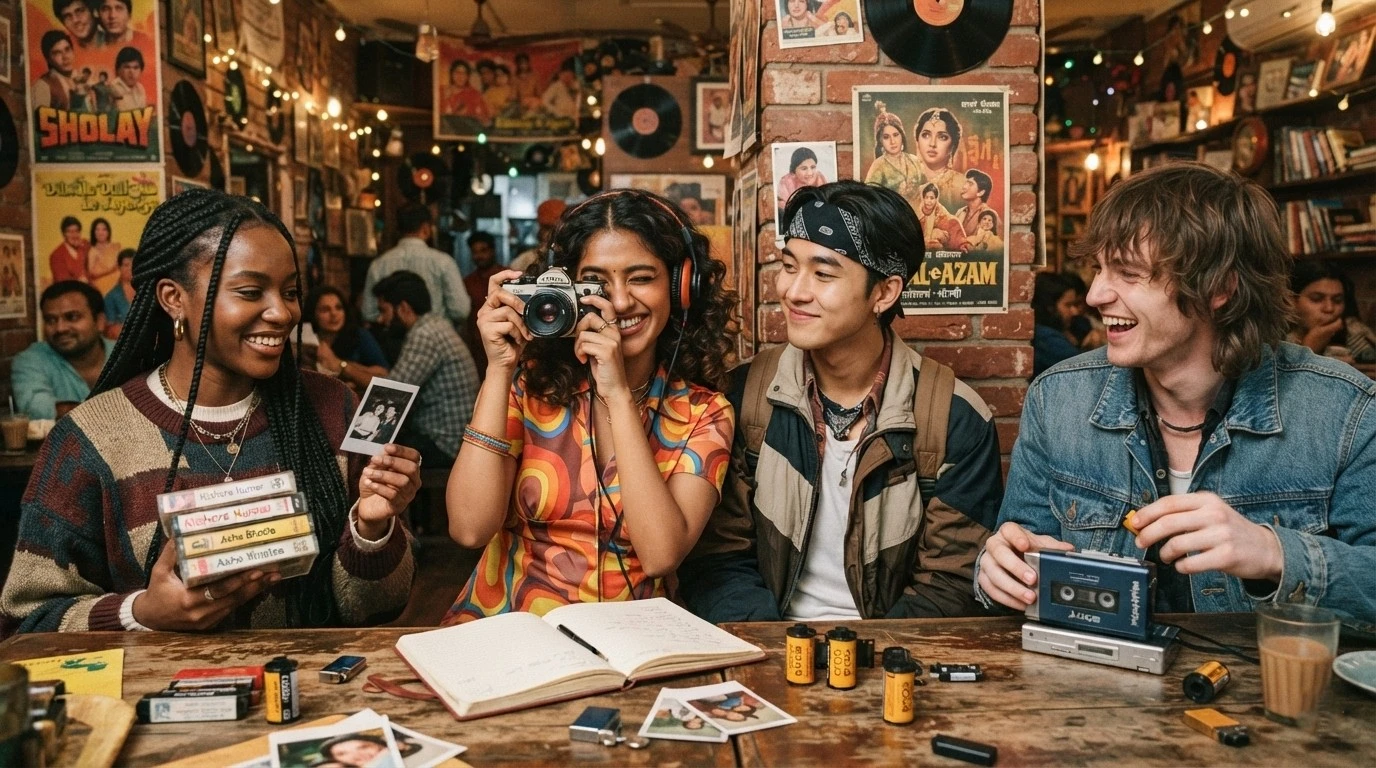
As the world moves forward with new technology that shapes our lives, something peculiar and contradictory is emerging in the fast-moving digital landscape. Gen Z—whose whole life is surrounded by digital innovation—are the ones leading this transition. From reinterpreting Y2K accessories in contemporary fashion settings to using analogue cameras to listening to the retro music of the golden era, they are not just leaning into the past but blending it with contemporary tools. This raises the question of why the most dynamic, creative, independent, and authentic generation is choosing the remnants of the past in this rapid, tech-driven landscape.
Why Gen Z Is Bringing Back the Remnants of the Past
From a distance, it may seem like another transient trend that will fade away with time. But the real reason traces back to a feeling of saturation—with AI-based content, algorithm-driven choices, a world where physicality has been reduced to a hand-sized screen, and a nostalgic culture they saw growing up. The concept is not to abandon contemporary life but to redefine it by immersing oneself in processes that demand time in place of mindless and restless scrolling. By embracing imperfection, breaking the algorithm, and physically possessing objects, Gen Z is seeking experiences they may only have seen in films or heard about from their parents.
Gen Z's way of bringing nostalgia into the present is defined by reinterpretation — a saree styled with a crop top, a 1980s image recreated through AI, a 1990s music remix woven into a contemporary film. All tap into a feeling of longing for something that feels natural and personal—something that is difficult to find in an era driven by AI and algorithms.
Old Bollywood—A Window to the Past We Choose Over the Algorithm
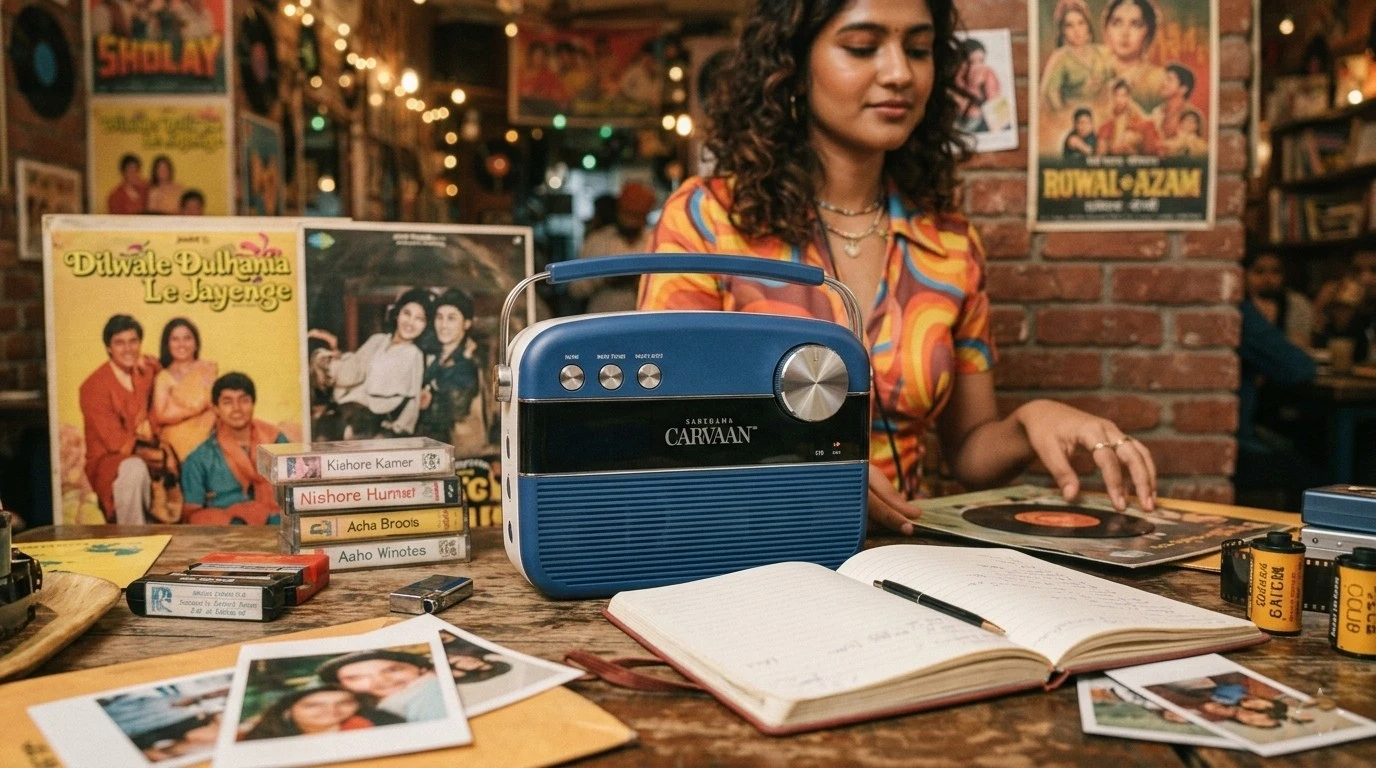
Though old Bollywood songs have long served as a way to relive the past, their current rise is not something entirely new. What is different is that this generation engages with them more openly — using old songs to make Reels, curate playlists, and connect with lyrics that give voice to feelings the present moment struggles to articulate. The trend is confirmed by the rising popularity of retro Hindi music on Spotify and the growing sales of Saregama Carvaan — a portable digital speaker pre-loaded with thousands of old Hindi, Tamil and Telugu songs that became a cross-generational bestseller. The comeback of cassette tapes and vinyl records, which Gen Z actively collect, further reflects the desire for tangible possession — an experience largely lost in the digital era.
Analogue Camera — Imperfection Is the New Aesthetic
A flaw is proof of craft shaped by human hands rather than produced by a machine. The analogue camera reminds us of those imperfect aesthetics that feel both personal and familiar — much like the photographs of our childhood. This growing trend has even become a business idea: a group of engineers founded Film Cam India, an Instagram-based venture that refurbishes and sells analogue cameras to India's expanding community of film photography enthusiasts.
Film development studios and labs have since opened across Mumbai and Delhi, highlighting the market's response to the trend. The intent is not simply to sell nostalgia or recreate old-era images, but to operate with presence, slowness and a sense of community that adds genuine value to the result — concepts that have become increasingly rare in a world of countless digital images that diminish the significance of each one.
Retro Fashion — Wearing the Past as a Statement
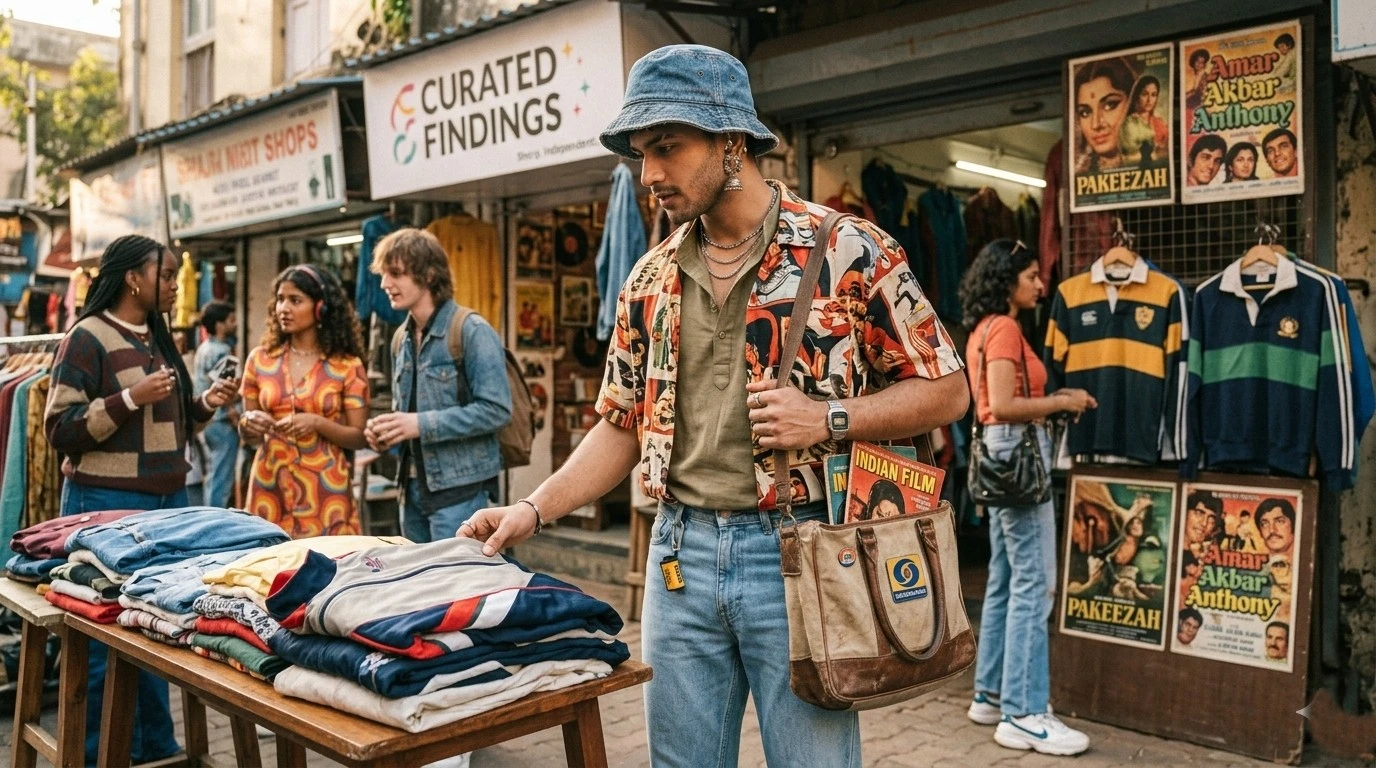
If analogue cameras reclaim the act of seeing, retro fashion reclaims the act of being seen. Y2K staples — low-rise jeans, chunky sneakers, bucket hats and bold chain necklaces — have returned with renewed energy. Boot-cut and slim flare jeans are edging out wide-leg silhouettes. Denim-on-denim, once dismissed entirely, is firmly rehabilitated. Vintage track jackets and rugby shirts are replacing the athleisure defaults of the previous decade.
In India, this movement carries a distinctly local character. Gen Z is not importing Western nostalgia wholesale — they are fusing it with their own cultural vocabulary. Kurtas paired with sneakers, sarees worn with crop tops, jhumkas layered over streetwear. Platforms like Curated Findings and Relove have grown on the back of this appetite for pre-loved fashion, while The Souled Store has turned retro Bollywood iconography — old film posters, Doordarshan logos, classic album covers — into sell-out merchandise lines. Thrifting, once a budget necessity, has become the ultimate cultural statement.
Final Thought
The inclination toward the past is a reaction against contemporary digital surroundings that feel disconnected and unreal. The inability of the present to fulfil the void Gen Z is experiencing drives this generation to find solace in a nostalgic past that engages all those senses that the current moment often fails to reach. From evergreen old song playlists and grainy low-quality images to the reinterpretation of classic fashion, this generation is pulling past trends into the contemporary setting to break mindless consumption and honour the emotion behind their longing—for authenticity, comfort, and slowness.