
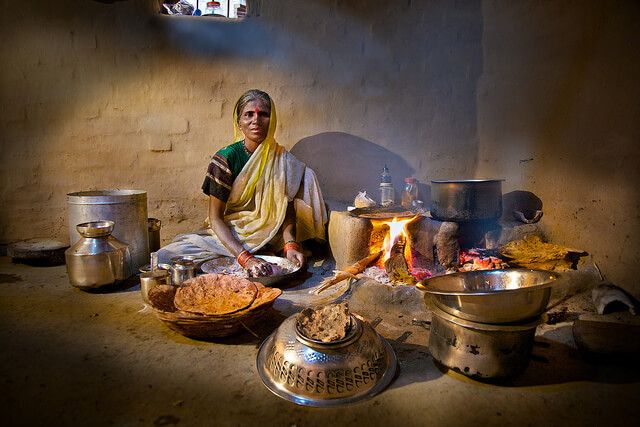
A culture does not just reflect through craft, architecture, and folk tales but is very much defined by its regional cuisine. Food has the ability to make people cover miles just to taste a dish where it was discovered, despite its availability in a nearby restaurant. People still prefer to taste a dish from a place that offers not just food but authenticity, experience, and a taste that cannot be attained in any modern dining setting.
However, what were once the staples of our ancestors' everyday lives have now reached a stage of extinction. This is not just a loss of a recipe but a loss of heritage shaped by environment, nutritional value, and lifestyle—a heritage that holds centuries of history and culture. The reason behind its disappearance has not occurred due to the destruction of recipes in fire and flood but something more alarming and structural that has gradually caused these dishes to fade. We have brought you a few such cuisines on the verge of extinction—with their recipes, importance, and the reasons that led to their disappearance.
Three Reasons India Is Losing Its Food Memory
There are several factors that have contributed to the erosion of regional cuisine from the contemporary food landscape, but the three pivotal causes behind their extinction are
Shift from Joint to Nuclear Family
In the joint family, members lived in close proximity and every activity was done through shared labour. As the mother and grandmother cooked, one member stayed beside them to help and received the teaching of traditional cuisine. The contemporary landscape driven by nuclear families has shattered this custom and caused the disappearance of many recipes in the process.
Commercial Crop Production
Today, the production of crops is decided by commercial demand rather than a natural setting or regional staple ingredient requirements. This has led to a significant impact on the natural habitat of a region, resulting in the unavailability of ingredients required to prepare certain dishes.
Time-Consuming Process
Regional cuisine preparation requires both hard labour and time, as the process consists of traditional cooking methods that young people tend to avoid, leaning instead toward more readily available instant and processed food.
Paba—Ladakh
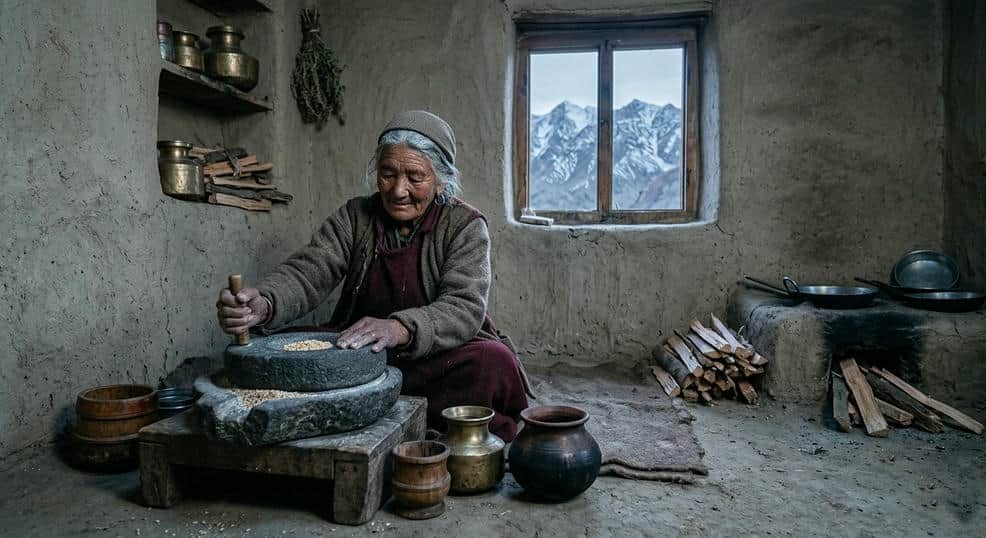
This barley-based dish is designed to sustain life at the high altitude of Ladakh. Its preparation requires barley — a crop that grows at high altitude — which assisted inhabitants in spending their lives in an environment where the production of wheat and other staples is not possible.
However, the commercial supply chains of the contemporary landscape have made wheat flour, processed food and other ingredients available even to the remote areas of the Himalayan region. This enables people to incorporate more affordable and convenient food into their lives rather than the time-consuming Paba, which has led to the decline of its cooking in households. Today only a few homes still indulge in its preparation, placing it firmly on the endangered cuisine list.
Khichdi Dawud Khani — Lucknow
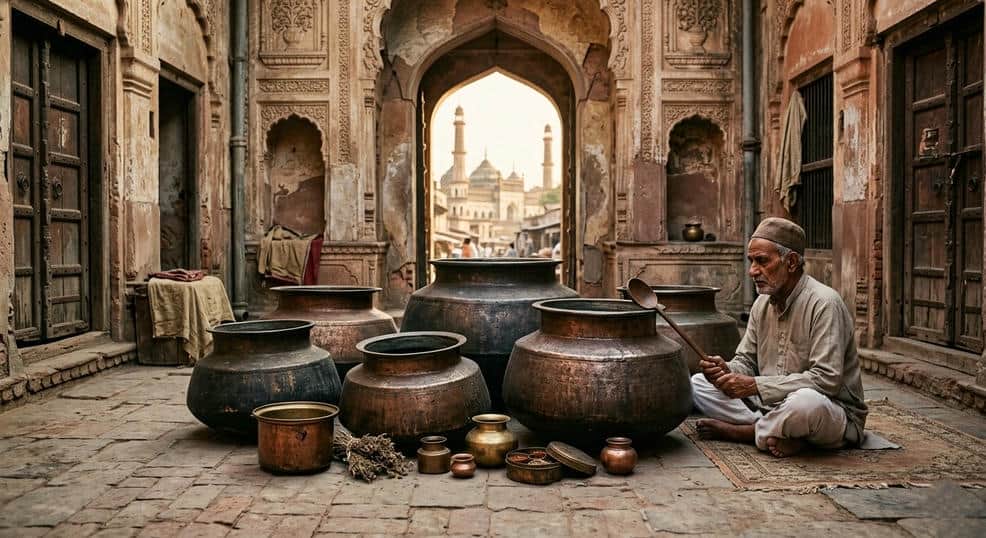
A dish of the Mughal period, heavily favoured for its complex process and layered flavour, it has now been lost to history due to its intricate preparation and recipe that was once passed down from one royal cook to another.
Its complex preparation consists of ingredients like meat, lentils, pureed spinach, eggs, saffron, onion, ginger and more — all requiring simultaneous cooking in different vessels to prepare each distinct layer of the dish. Since the dissolution of royal households in the 20th century, the knowledge of the royal khansama ceased to be passed down, and now only fragments of the dish remain in certain households due to its time-consuming and heavily laboured cooking process.
Chingri Korola Purpuri — Bengal
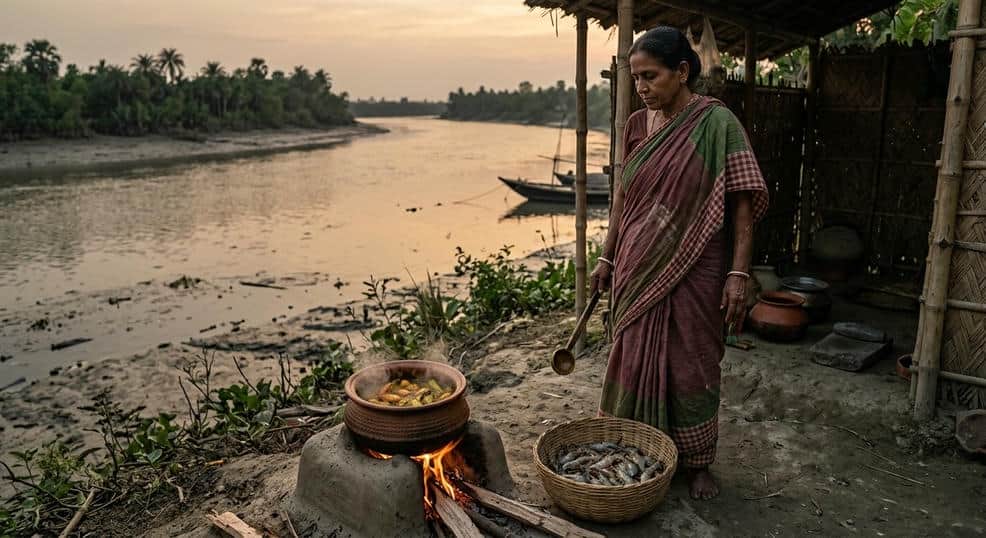
A lesser-known cuisine of Bengal and Bangladesh, this dish combines Chingri (prawns) and Korola (bitter gourd) in a preparation known for its quintessential balance of bitterness and sweetness. The dish relies heavily on freshwater river prawns and a process in which a base of spices, onion and chillies is prepared on a low to medium flame, followed by the addition of Chingri and Korola cooked together until the flavours merge.
However, the accumulation of waste into rivers has disturbed marine life, and the resulting polluted water has led to a decline in the freshwater prawn population. The loss of the dish's essential ingredient has eventually meant the loss of a cuisine embedded in the culture for centuries.
Kolhapuri Kesari Mutton — Kolhapur
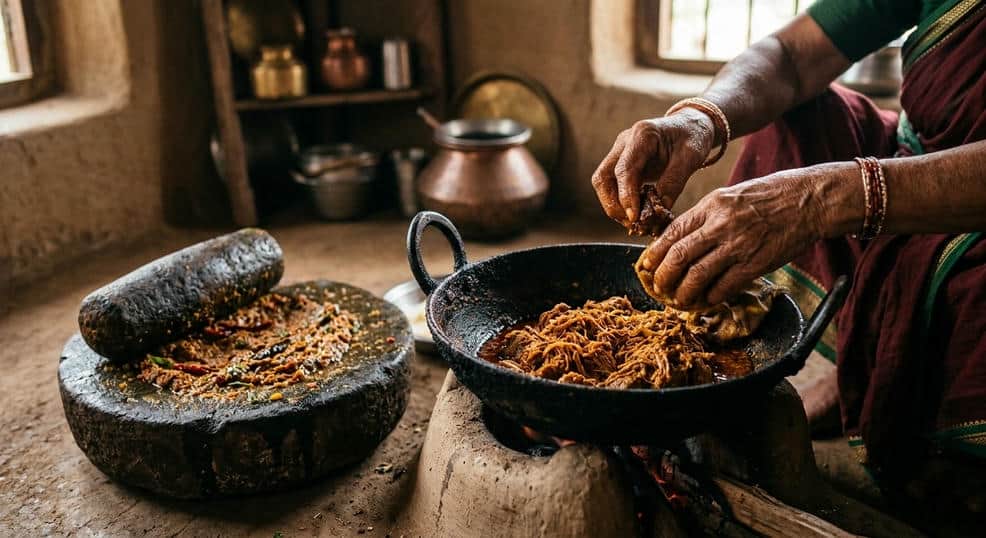
A traditional preparation from the kitchens of Kolhapur in Maharashtra, the Kesari Mutton is a slow-cooked, shredded leg of mutton — deep-fried until crisp and folded into bold Kolhapuri masalas. The term "Kesari" refers to the saffron-like colour and texture the dish acquires through its preparation. What makes this dish extraordinary — and endangered — is the knowledge it demands: the specific hand-ground, stone-processed Kolhapuri masala blend that cannot be replicated by packaged alternatives, and the final stage requiring continuous effort until the meat reaches the exact right consistency. This knowledge lives in the hands of a diminishing number of older women in Kolhapur's traditional neighbourhoods, most of whom have no kitchen apprentice beside them.
Koshur Haakh — Kashmir
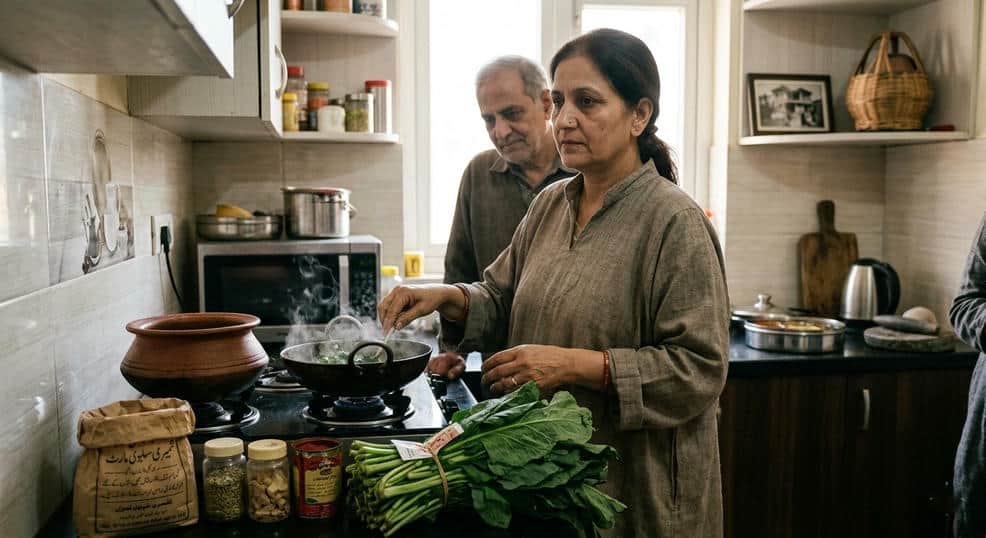
Koshur Haakh is one of the most elemental preparations of Kashmiri cuisine — collard greens cooked in mustard oil with fennel seeds and Kashmiri spices, once a daily staple of Kashmiri Pandit households eaten simply with rice. Its preparation demands a specific knowledge: when the mustard oil has reached its correct smoking point, the precise ratio of fennel to dry ginger, and the texture of the greens at the precise moment they are done. This knowledge was not taught — it was absorbed by standing beside a grandmother in a Srinagar kitchen across many winters. The displacement of the Kashmiri Pandit community in 1990 fractured that transmission permanently for thousands of families, scattering the cooks from the land where the ingredients grew and the kitchens where the dish belonged.
Final Thought
The importance of regional cuisine goes beyond its taste, as it plays a pivotal role in carrying the culture of a region to the rest of the world. But the shift in the modern world has led to the extinction of these cuisines due to the availability of processed food, instant cooking products and the loss of traditional recipes. Even though modern dining and restaurants try to offer a similar experience, the difference in preparation and method leaves a significant gap in the taste and authenticity. Therefore, the preservation of regional cuisine holds as much importance as any cultural craft or architecture—because all are tools that encourage the connection between people and the culture they come from.