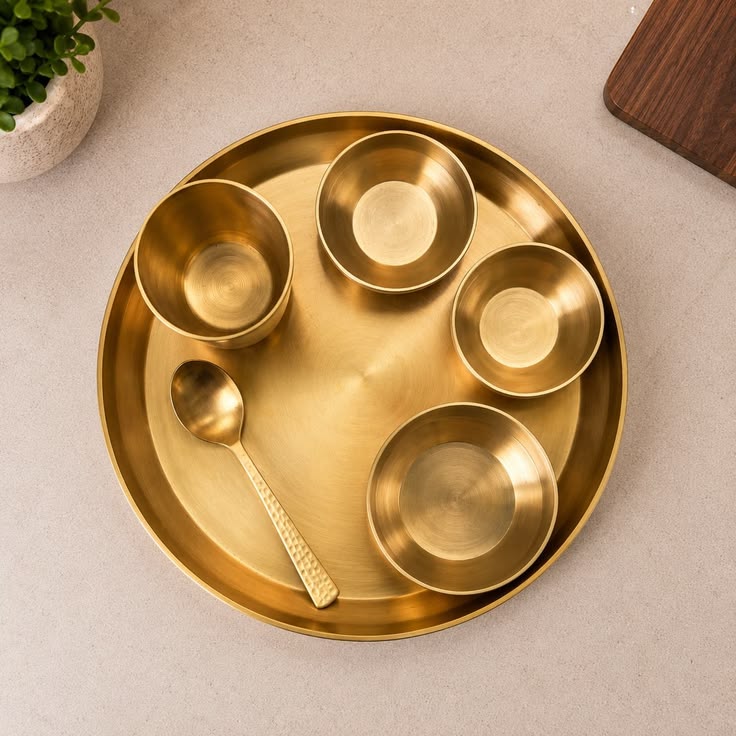
Once upon a time, the sound of a metal plate being placed on the floor meant something other than dinner. It meant family, ritual, and a meal prepared with care. In many Indian homes, that plate was kansa, a traditional alloy of copper and tin, which cast a warm, golden-brown glow on the culinary memory of the country.
The Origin of the Thali
The tradition of eating food from a thali is very much a part of India. The word 'thali' is related to 'sthali', an early cooking vessel, and the practice of presenting an entire meal on a platter arose independently in different regions and groups. From bronze to kansa, thalis have been crafted from diverse materials and have become an integral part of Indian dining traditions.
Kansa was prized not only for its look but also for its strength and cultural importance. For generations, Indian homes have used kansa plates, bowls and serving vessels for everyday meals and festivals and special occasions. Ayurveda and other traditional Indian practices also associated certain metals with mindful and wholesome eating.
The Whole Meal
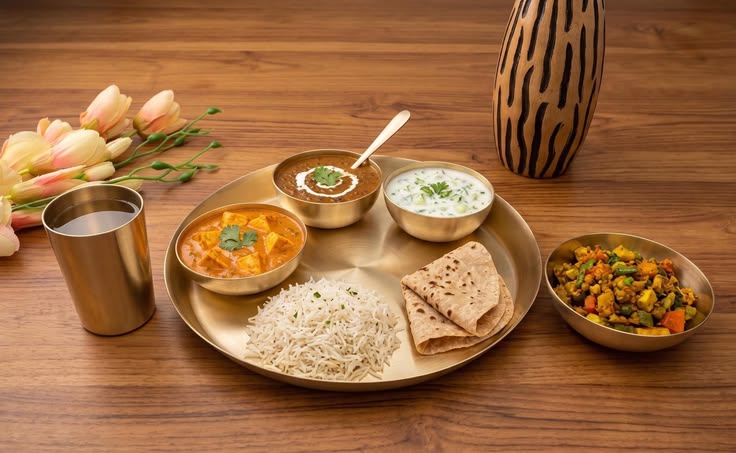
Eating was an experience with a kansa thali. Rice, dal, vegetables, roti, chutney, pickle, sweets and other accompaniments may have their own mini bowl or space. The arrangement combined colour, fragrance and variety and reflected India’s tradition of generous and diverse meals. But more than a matter of function, the thali promoted a particular pace of eating. Instead of one dish ruling the table, a variety of tastes – sweet, sour, salty, spicy and bitter – could be shared in one sitting.
When Kansa Left the Kitchen
Stainless steel, aluminium and ceramic became more common as lifestyles changed. They were lighter, easier to maintain and easier to get hold of. Therefore, Kansa tableware was gradually removed from everyday dining and relegated to the festival cupboards or kept as family heirlooms. The craft itself also felt the heat, as traditional metalworking was displaced by mass-produced tableware. What was once a normal part of Indian dining started to take on the aura of something nostalgic and old-world.
Kansa's Reawakening
The story is turning out to be interesting today. Interest in traditional craftsmanship, sustainable living and the aesthetics of Indian dining are all growing, and this has brought kansa back into contemporary homes. Designers and tableware brands are reinterpreting the material in the form of thalis, bowls, glasses and serving pieces that are a marriage of traditional forms and contemporary sensibilities. For a younger generation, eating from kansa is more and more about reconnecting with heritage and making the dining table feel special.
From Homes to Hotels and Restaurants
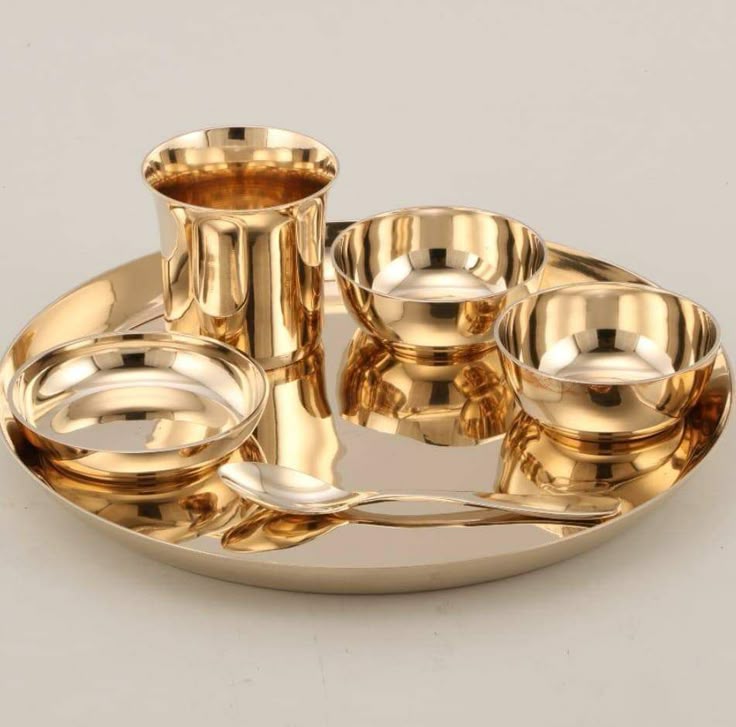
Now the revival is spreading out of domestic kitchens and into the hospitality industry. The Kansa thali has now become a part of the growing trend of experiential dining that is being adopted by premium Indian restaurants, heritage properties and luxury hotels. Here the vessel is incorporated into the story. A regional menu in a Kansa thali brings the feeling of a traditional Indian household to diners, with the polish and presentation they would expect from today’s hospitality. The gleam of the metal, the individual bowls and the abundance of dishes make for a visual and sensory experience even before the first bite. This also provides an opportunity for restaurants and hotels to celebrate India’s regional food traditions rather than presenting Indian cuisine as one single category.
Heritage, Revisited
The story of the Kansa thali is thus not merely a tale of an old utensil’s revival. It is about rediscovering Indian dining traditions and reinterpreting them in contemporary terms. What once sat quietly in a grandmother’s kitchen is now finding a home on curated restaurant tables and in elegant hotel dining rooms. Kansa has transformed from everyday tableware to a symbol of heritage, craftsmanship and experiential Indian dining—showing that some traditions never really die; they just wait for the next generation to discover them.