When a global brand as carefully driven as Victoria's Secret picks an ambassador, it is about narrative. Triptii Dimri is that narrative — and India is simply where the story happens to be written right now.
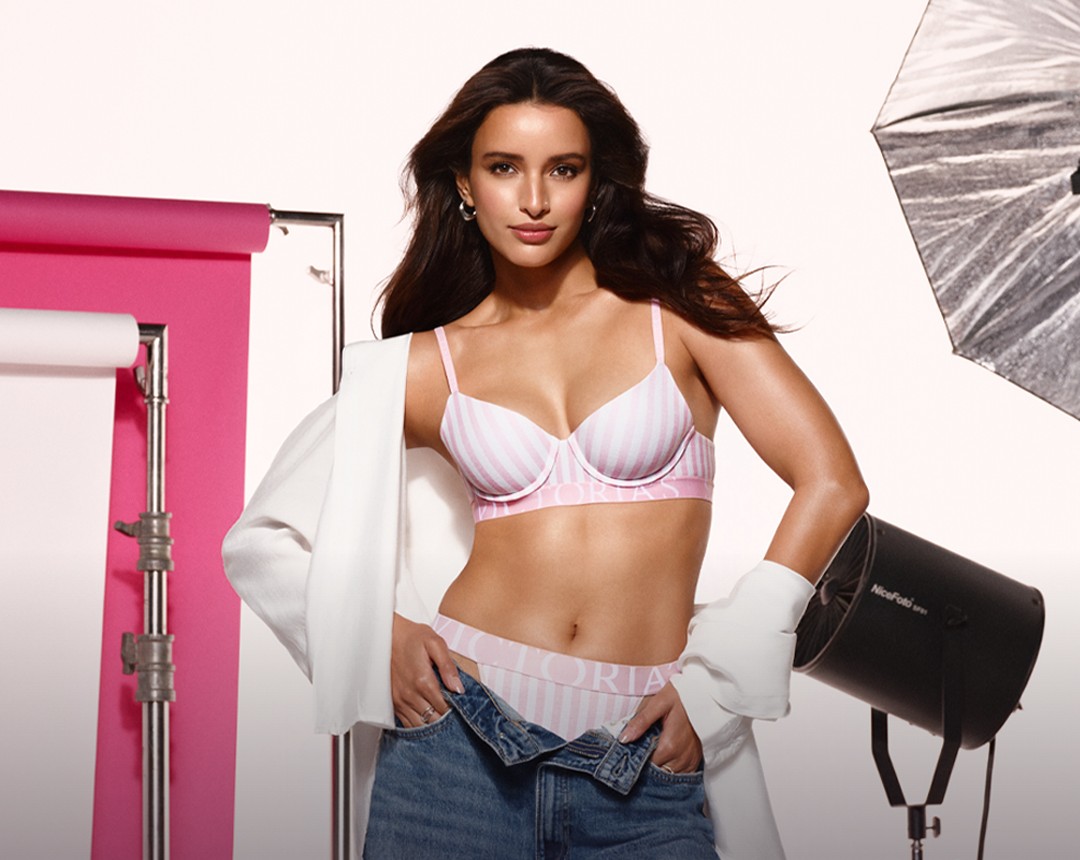
Victoria's Secret has always known something beyond what the rest of the fashion industry took decades to accept: the face of a brand beyond a mere decoration. It is a strategy. Every ambassador the label has ever appointed, from Tyra Banks strapping on the first pair of angel wings in the late 1990s to Adriana Lima walking her final runway in 2018 after nearly two decades, was chosen because they embodied something the brand needed to say at that precise moment in time. So when Victoria's Secret announced Triptii Dimri as its first-ever Indian brand ambassador on April 9, 2026, it was worth pausing less on the word 'Indian' and rather on the far more deliberate word 'chose'.
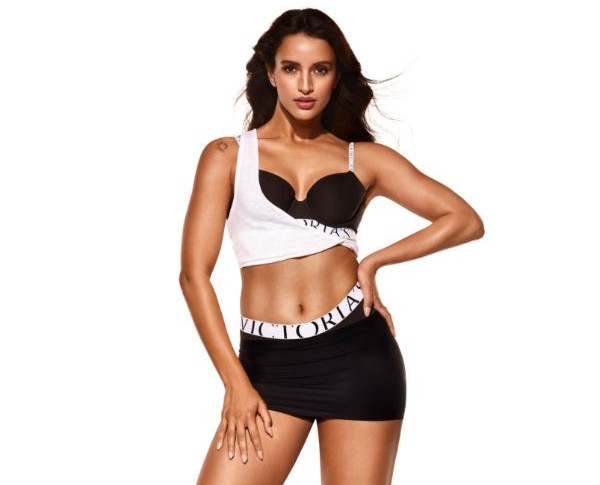
The appointment, made alongside the launch of the brand's Summer Signature campaign, places Dimri at the centre of a story about comfort, self-expression, and a confidence that is imperfect by design.
"Confidence isn't about appearance. It's about being sure of yourself — accepting the bad parts. Not every day is perfect, but having your own back on those days — that's what it means to me."
— TRIPTII DIMRI
Victoria’s Secret’s brand architecture
The significance of this moment is to be carefully understood by understanding the architecture of Victoria's Secret's ambassador strategy because the brand has never been cavalier about it. In 1997, when the label coined the term "Angel" for its contracted spokesmodels, it was doing something quietly radical: turning lingerie into mythology. Tyra Banks, who wore the original angel wings and broke boundaries as the brand's first Black supermodel, was not simply a pretty face but showcased cultural proof that the brand's vision of beauty had a wider aperture than the industry assumed. Heidi Klum, who walked for the brand for 13 years, transformed from runway fixture to household name largely because of the visibility Victoria's Secret afforded her. She once recalled how the show "made her a household name" seemingly overnight.
Then came the Brazilian wave: Gisele Bündchen, Alessandra Ambrosio, and Adriana Lima, each of whom brought not just beauty but a cultural warmth and magnetism that made the brand feel desirable rather than simply exclusive. Lima, who walked from 1999 to 2018, remains the longest-serving Angel in the brand's history, wearing the coveted Fantasy Bra three times. She was not just a model; she was the brand's living philosophy made flesh. When Liu Wen became the first Chinese model to walk the Victoria's Secret runway in 2009, the fashion world read it correctly: the brand was not being inclusive for applause; it had decided to follow the geography of aspiration.
Restructuring the narrative
Victoria's Secret's more recent chapter has been, by its own admission, one of reinvention. The annual fashion show, once one of the most-watched events in the history of television, went dark in 2019 after sustained criticism around its narrow definition of beauty and a lack of diversity. When it returned in 2024, it did so on markedly different terms: the first transgender models walked the runway, and the show's focus visibly shifted toward representation and cultural breadth. In 2025, professional athletes Angel Reese and Sunisa Lee made their runway debuts. The brand's way of announcing that the body it celebrates is no longer just one shape, one background, or one story.

This is the new grammar of Victoria's Secret. It is precisely the grammar that Triptii Dimri speaks fluently. In place of the old Angel mystique, which is renowned for being aspirational, untouchable, and aerially perfect, the brand has been thriving on a fresh language of confidence as something internally calibrated, not externally performed. Dimri has spoken about exactly this. Her version of confidence is not a destination; it is a practice, and sometimes a struggle. For a brand whose entire repositioning rests on this evolved messaging, this alignment is not merely coincidental.
WHY INDIA, WHY NOW
Victoria's Secret currently operates 13 stores across seven Indian cities, which are in Mumbai, Delhi/NCR, Bengaluru, Hyderabad, Kochi, and most recently Chennai. This is purely a positioning play. At a certain scale, international brand awareness alone is no longer sufficient currency. The brand needed local cultural equity, a reason for Indian consumers to feel a genuine relationship with Victoria's Secret rather than a remote recognition of a name they would have seen abroad. An ambassador is precisely that mechanism: the bridge between aspiration and affinity.
Dimri is 31, trained at FTII, Pune, and her last four films collectively crossed ₹1,510 crores at the global box office. In December 2024, IMDb ranked her the most popular Indian movie star of the year ahead of Shah Rukh Khan, Deepika Padukone, and Alia Bhatt. That is not a niche following. That is mass-market reach paired with a credible artistic identity. The brand styled her across three distinct campaign looks, from satin striped loungewear to a bold black-and-white ensemble, with renowned fashion stylist Anaita Shroff Adjania, ensuring the visual language felt global while the face was unmistakably rooted.
While Indian-origin models have walked the Victoria's Secret runway before. Neelam Gill became the first Punjabi model to do so in 2024, but the label has never before appointed a brand ambassador from India. That distinction matters not because of geography, but because of intent. An ambassador is not invited; an ambassador is elected. Victoria's Secret looked at the Indian market, looked at its own evolving identity, and chose a face that could hold both simultaneously. In Tripti Dimri, the brand has found someone who was already doing exactly that long before the cameras for this campaign were ever switched on.