For decades, the entrance lobby of an Indian apartment building was a space you passed through, not one you noticed. Vitrified tile underfoot, a bench nobody quite sat on, a noticeboard layered with society circulars and pest-control notices, a wall of steel mailboxes, and a security guard behind a plain desk with a register and a landline phone. It worked, and that was largely the point.
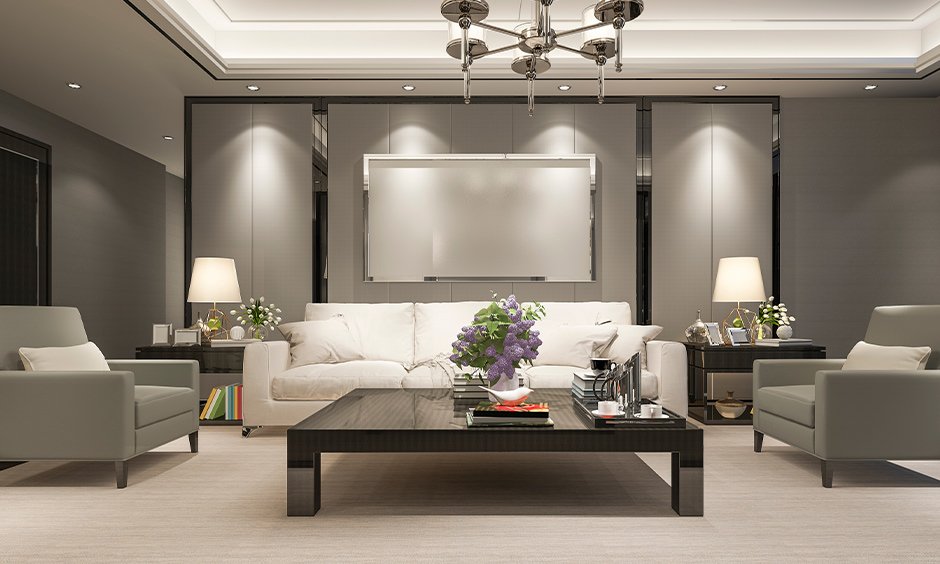
That is no longer the whole story. Walk into a newer residential tower in Mumbai, Bengaluru, Pune or Gurugram and the lobby increasingly looks designed rather than simply provided: stone or marble flooring, a sculptural pendant light, a wall of textured plaster or wood panelling, a cluster of indoor plants, a piece of art, and low lounge seating arranged the way a hotel might arrange it, near a reception-style desk rather than a bare one.
The Hotel Effect
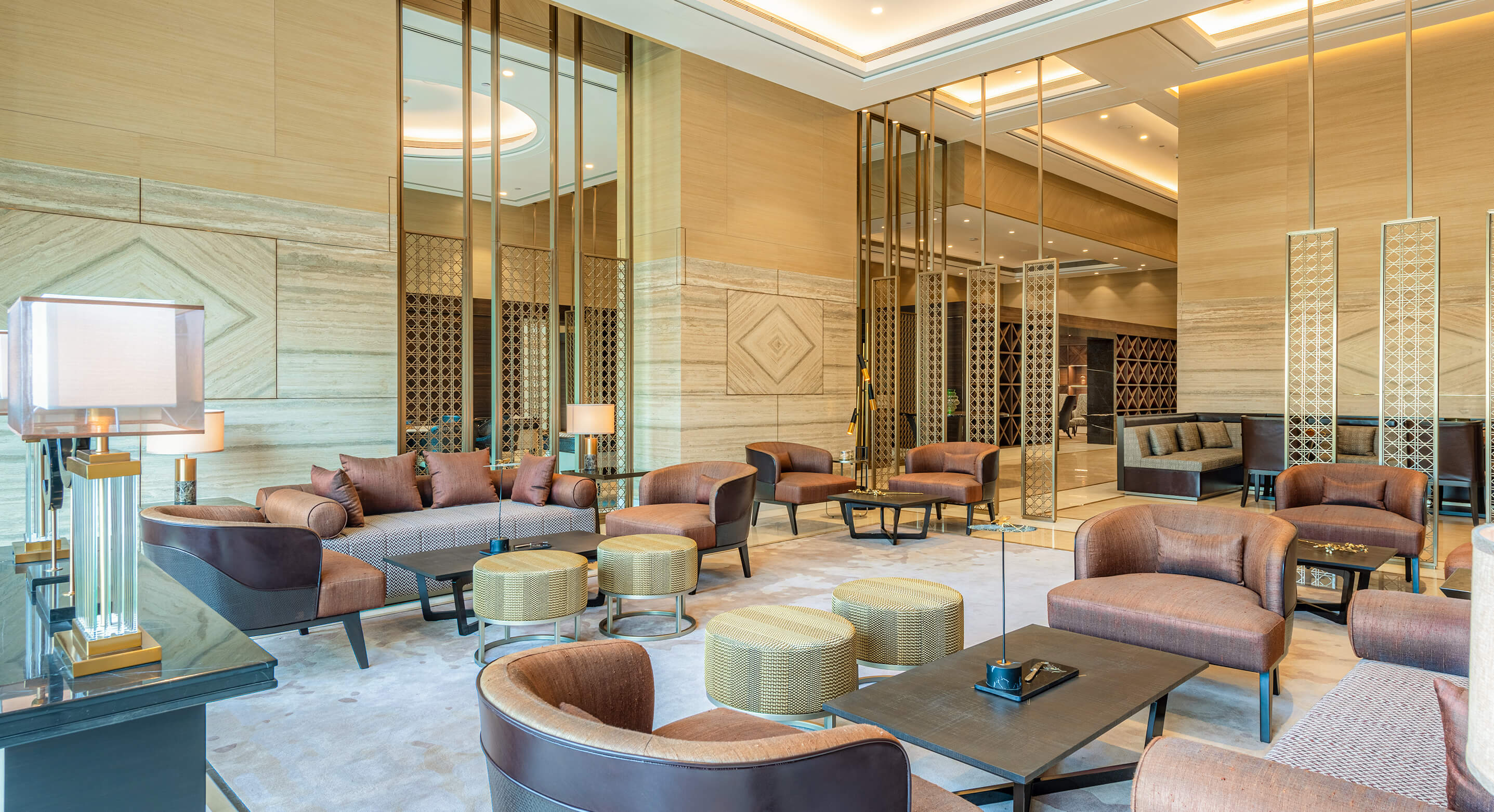
Part of this shift comes down to who developers are hiring. For K Raheja Corp's Artesia tower in Worli, Mumbai, the entrance lobby, show apartment and common areas were designed by the London firm Martin Kemp Design, in its first India project, built around what the studio called a blend of European detail and international style. In Bengaluru, Prestige Group's Hermitage project, which shares its entrance with the Conrad Bengaluru hotel, has a common lobby designed separately by Morph Design Co. In Mumbai, Lodha Altamount's lobby was conceived by Rajiv Saini and Associates as what the developer calls an elegant public living room, and includes an original 1937 Pablo Picasso work bought at a Christie's auction. In Pune, the lobby of the 219 BoatClub project, designed by Studio Hinge, is built around a sculpture of 361 hand-blown LED lights. In Delhi, the Italian fashion house Versace has lent its interior language, through Versace Home, to a residential project with developer Unity Group, where the lobby carries the same design vocabulary as the apartments. These are the more visible end of a wider pattern: developers treating the lobby, and not only the apartment, as the first impression a buyer forms of the building.
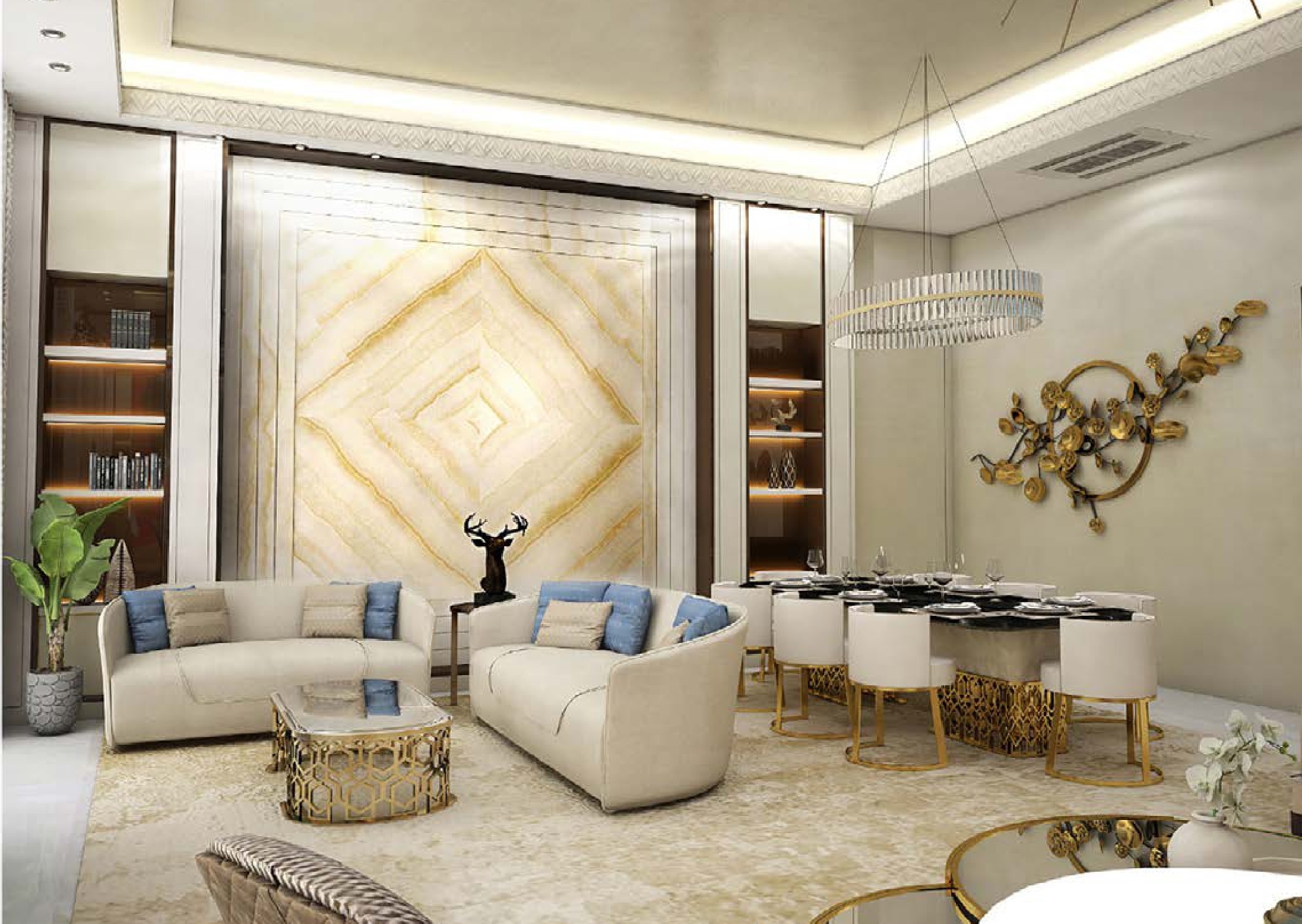
Interior studios working across the broader premium segment describe a similar instinct further down the market. The BNK Group, a Mumbai-based practice, counts the show apartment, sales lounge and lobby of Godrej Avenue Eleven in Mumbai among its work, built around exotic marbles, gold metallic accents and curated art pieces. Design studios such as CeeBee Design Studio, meanwhile, describe premium today as less a matter of square footage than of experience, pointing to natural light, open layouts and considered materials as the newer markers of a high-end home.
Practical Life, Reimagined
The complication is that an Indian apartment lobby has to do work a hotel lobby rarely does. It is where deliveries are logged, drivers and domestic staff wait, visitors are screened, and residents collect couriers. Many housing societies have replaced the paper visitor register with apps such as MyGate or NoBrokerHood, where a guard scans a QR code or photographs an ID before a boom barrier lifts. That single change has already altered the shape of the security desk, from a logbook counter to something closer to a small control station with a screen and a camera built in.
Newer lobbies are trying to absorb these functions rather than hide them, rather than pretend they do not exist. A shoe rack and a small waiting bench are tucked to one side for staff and drivers. A separate parcel counter sits near the entrance so delivery agents do not cut through the main seating area. The society noticeboard reappears as a framed digital display. The security desk itself is finished in the same stone as the floor, so it reads as furniture rather than a checkpoint, without losing the sightlines a guard actually needs.
Grand or Just Gleaming?
The tension designers describe most often is between a lobby that photographs well and one that survives daily use by a few hundred families, their staff, their guests and their courier deliveries. Marble scratches, plants need light and upkeep, and a lounge sofa in a high-footfall space wears out fast. The buildings that get this right tend to be the ones where the design was worked out alongside the building's actual traffic, its delivery hours and its visitor volumes, rather than laid over the space afterward. In those lobbies, the impression of luxury and the demands of daily life end up sharing the same room instead of competing for it.
What has really changed, then, is not just the finish on the floor. It is the idea that the entrance to an apartment building says something about the building itself, in the same way a hotel lobby has always been understood to say something about the hotel.