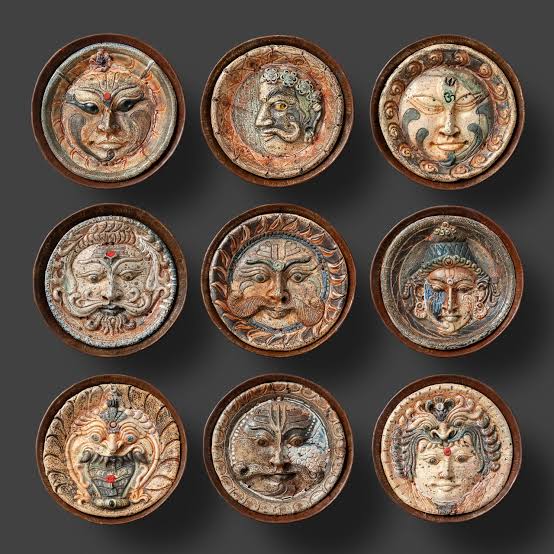
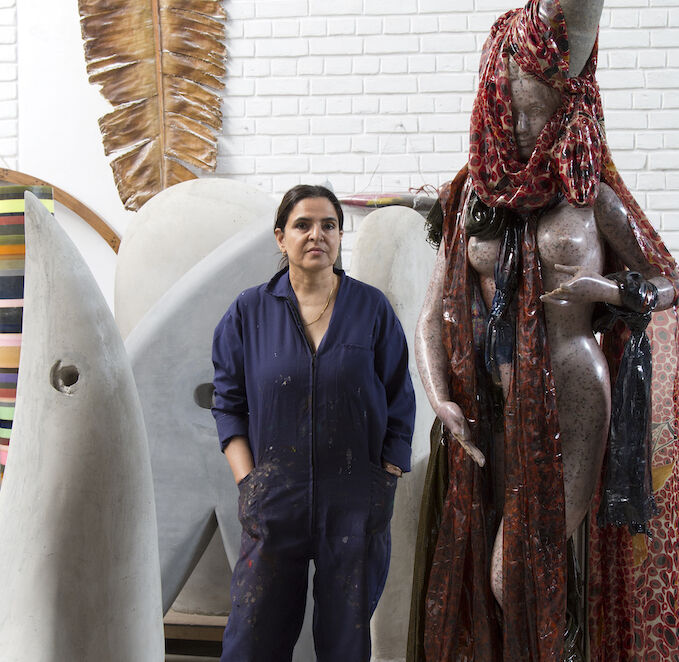
In 1995, walking through a market in India, Bharti Kher noticed a woman wearing a bindi shaped like a sperm. She asked where it came from, found the shop and asked for all the serpent-shaped bindis they had. She has been using them ever since.
The word bindi comes from the Sanskrit bindu, a dot or a point. Traditionally a mark of pigment on the forehead, it has been tied to the Hindu idea of the third eye and to marriage. Many bindis are now manufactured stickers. Kher treats them as a material, the way a painter treats paint.
The Elephant on the Floor
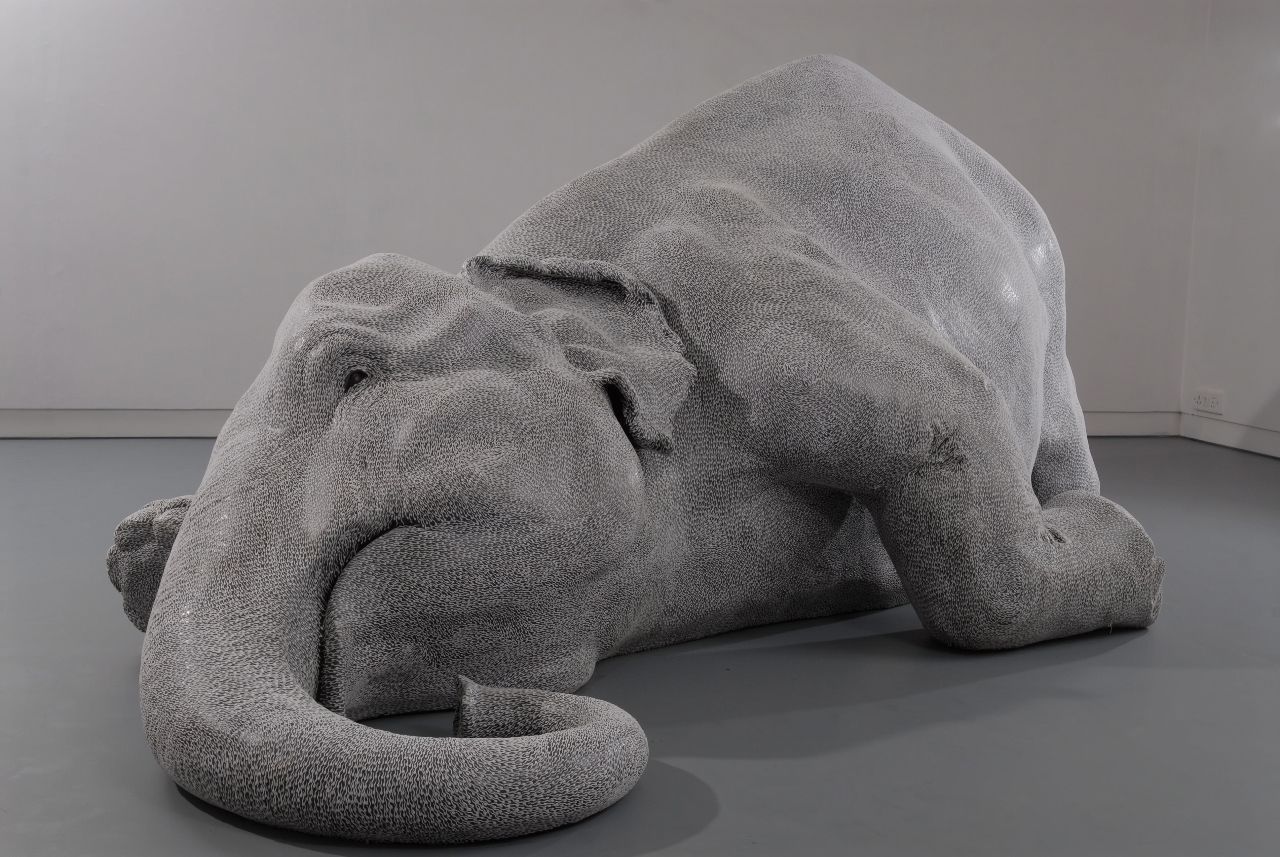
Her best-known result is The Skin Speaks a Language Not Its Own (2006), a life-size white fibreglass elephant on a gallery floor, her head resting on a front foot. She is covered in thousands of white bindis, and the work took Kher ten months to make. Asleep or dying? The elephant is revered in India, and Ganesha has an elephant’s head, yet this one is down on the gallery floor with us. Kher chose the sperm-shaped kind, an odd fit for a traditionally female accessory, and laid it over a female animal. Queensland Art Gallery, which owns a version, reads the work as a comment on consumerism and mass media. Sotheby’s, which offered another version at auction in 2010, described the bindis as a second skin and noted three unique variants plus an artist’s proof.
From Forehead to Wall to Heart
One bindi sits on one face. Thousands cover an elephant. In her paintings, Kher lays stick-on dots into dense fields that Artforum likened to pointillism and Op art. In Not All Who Wander Are Lost, she filled an enlarged 1960s atlas map with bindi dots. In Target Queen (2024), she put bindi circles about three metres wide on two sides of London’s Hayward Gallery, which calls the result an emblem of the goddess on a brutalist building.
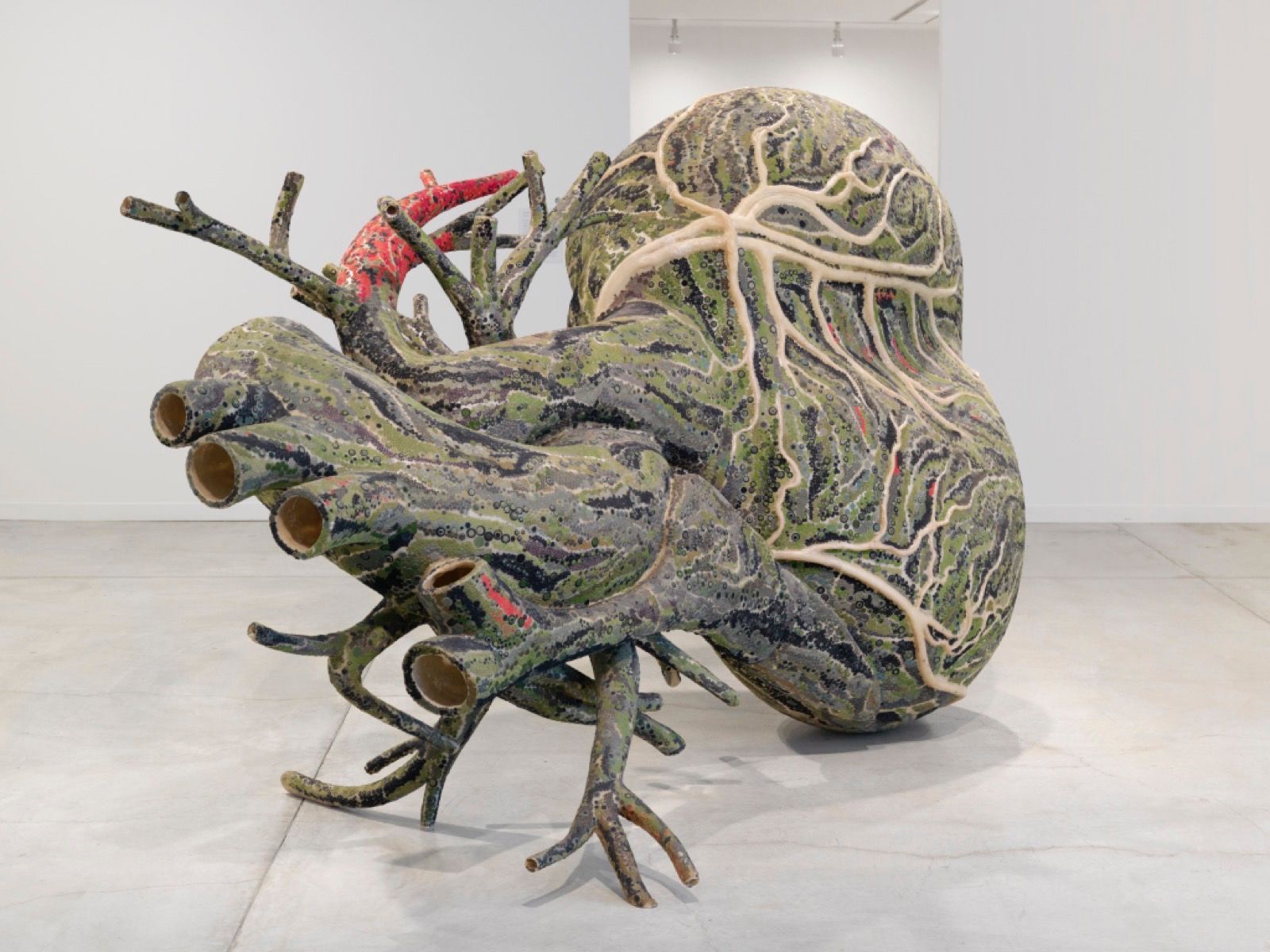
She has also taken the bindi inside the body. An Absence of Assignable Cause (2007) is an enormous fibreglass whale’s heart, its veins and arteries decorated with coloured bindis. A mark made for the forehead ends up on an organ.
Thirty Years in Dots
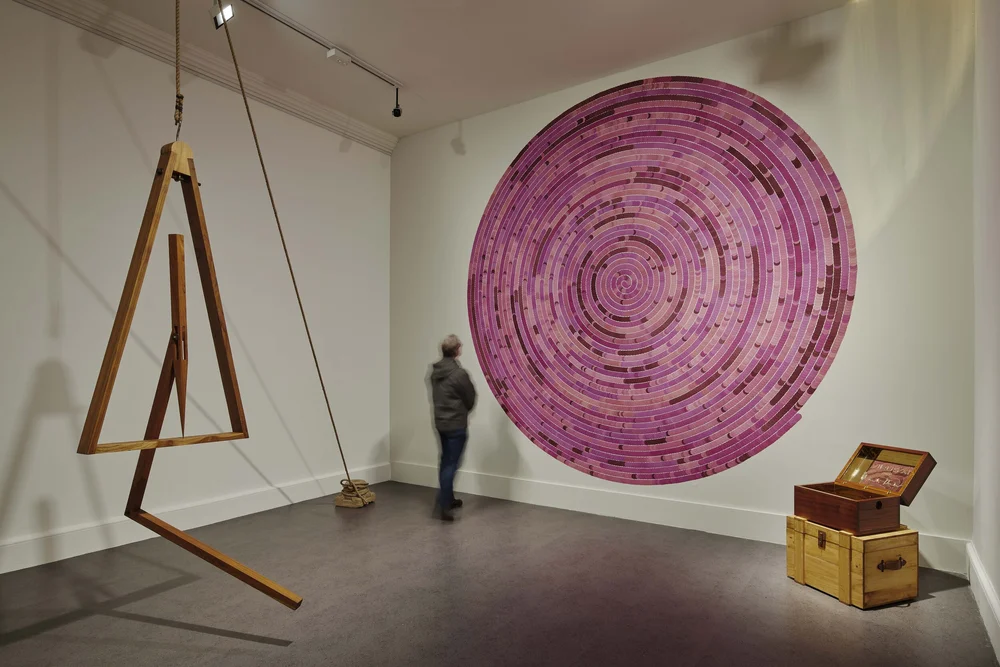
Then there is time. Virus, begun in 2010, is planned to run until 2039. Each year Kher makes one bindi painting and a text that mixes predictions with her own life. Every year’s text ends with her age, since the only certainty, she says, is that she has become a year older. A mark many women wear for a day becomes a way of counting years.
What the Dot Carries Now
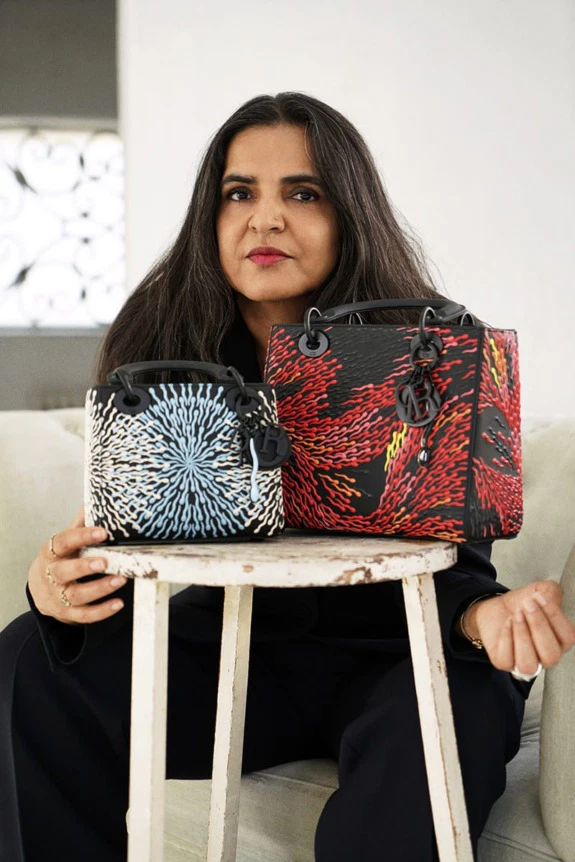
What happens to the old meanings? Sotheby’s notes that the old associations have faded as bindis became mass-produced stickers. Kher does not restore them so much as tangle them together. The third eye, the wedding mark and the shop-bought accessory all sit in one dot. Femininity is no longer a single face. It is an elephant, a wall, a building. The body is missing, yet every dot still points back to it. Even fashion noticed. Dior’s Lady Art project invited Kher to turn the Lady Dior handbag into a bindi piece, with colourful snake-shaped dots rippling across it.
Perhaps that is what Kher shows us. A bindi is easy to stop seeing, until it is stuck on an elephant, a map or a gallery wall. Then it is odd again, and we have to ask what it was carrying all along.