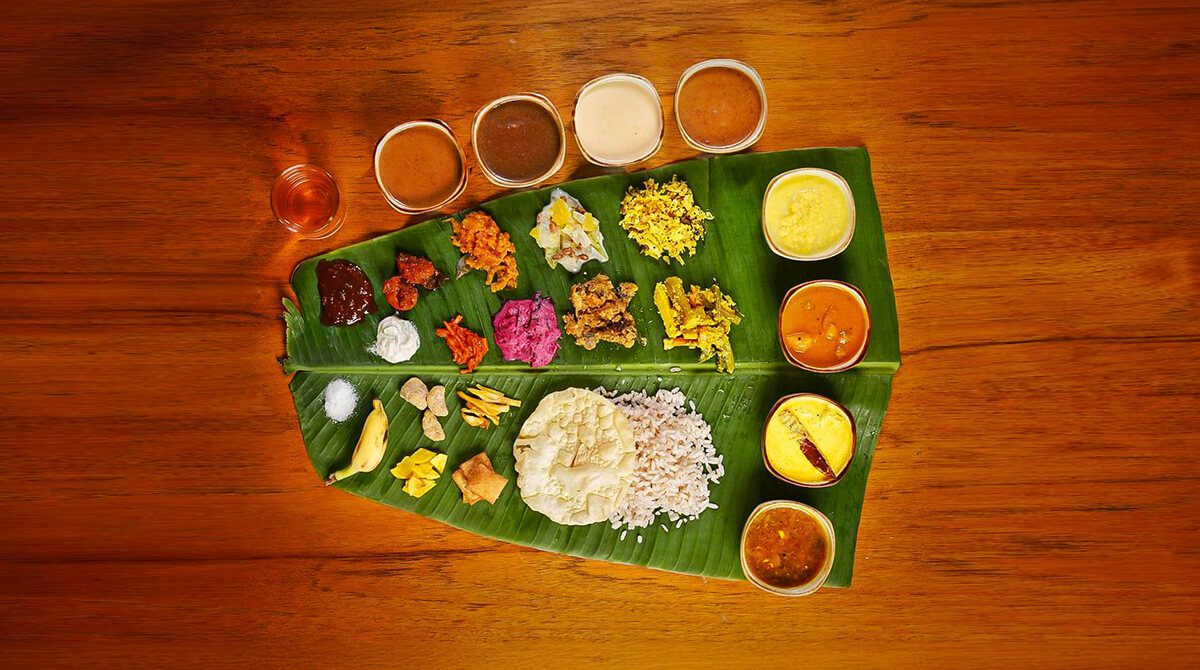
Onam in Kerala is not only a harvest festival. It is a festival that unites families and communities in the celebration of food, tradition and the promise of abundance. Central to these celebrations is the Onam Sadya, an elaborate vegetarian feast that turns a simple banana leaf into a colourful spread of flavours, textures and aromas.
Sadya is a traditional dish prepared during the 10-day Onam festival in the Malayalam month of Chingam. It is as much about the experience as it is about the food. From the way the dishes are arranged to the way they are eaten, there is a story behind every detail. Here are some fun facts about this much-loved Kerala feast.
Sadya – The Centerpiece Of Onam Festivities
Onam is a ten-day festival celebrated around August and September with festivities. Families prepare elaborate meals, visit their loved ones and invite friends and relatives to share a Sadya.
The feast is closely associated with Thiruvonam, the most important day of the festival when homes are filled with food, flowers and celebrations.
It could have more than 20 dishes
Onam Sadya is not a single dish but a lavish spread of vegetarian dishes. A traditional Sadya may consist of 20 to 26 or more dishes depending on the household, community or restaurant.
The spread may consist of favourites like avial, kalan, thoran, sambar, olan, pachadi, kichadi and a variety of pickles and accompaniments. The meal ends with desserts, especially payasam.
Served on a banana leaf
Sadya is most famous for its traditional presentation. The meal is served on a fresh banana leaf instead of plates. The broad leaf provides ample space for the many dishes and brings a unique visual and cultural element to the meal.
Having a Sadya on a banana leaf is an essential part of the Onam experience for many Malayalis.
Method of arrangement
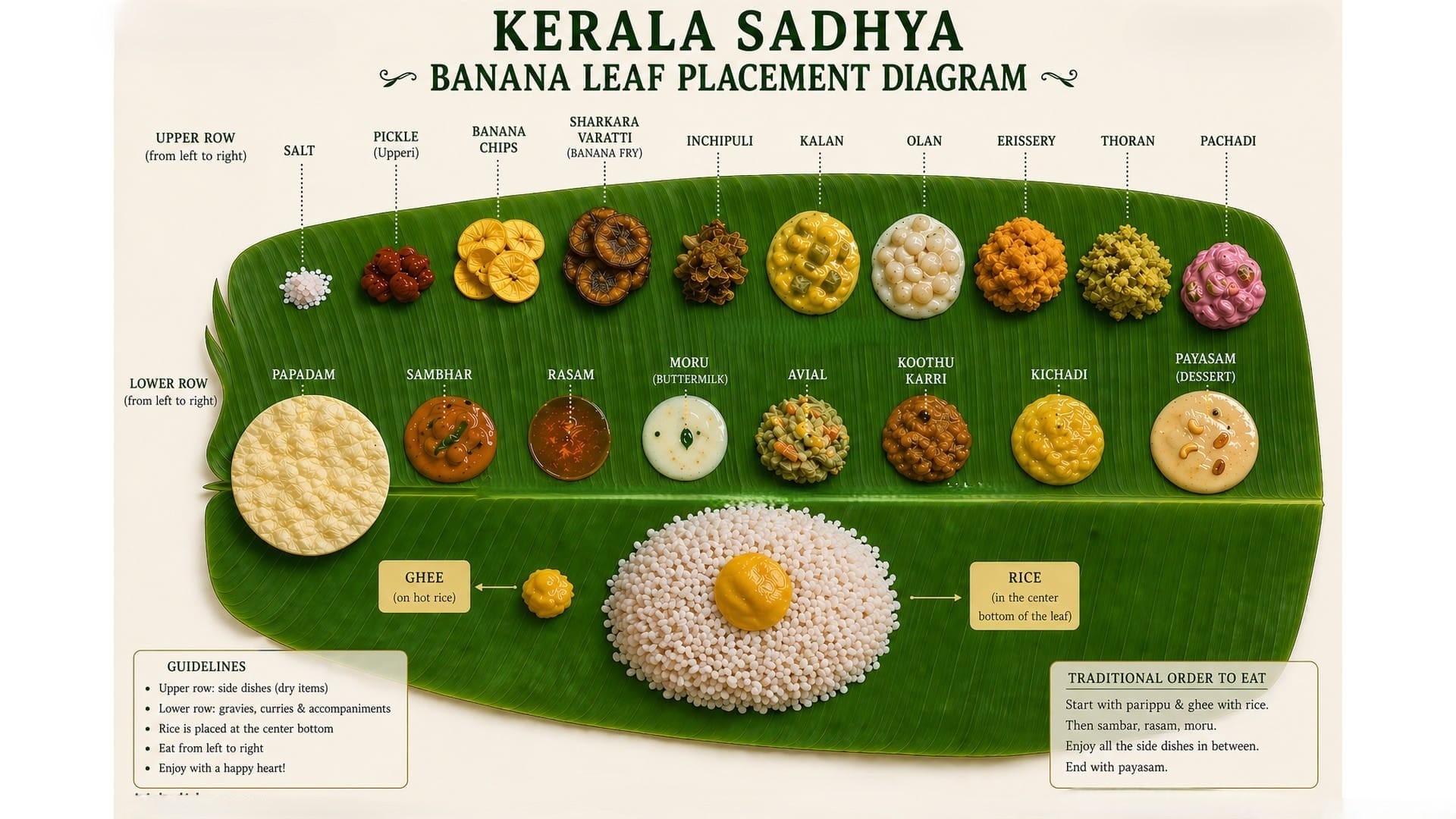
The dishes in a Sadya are traditionally placed on specific areas of the banana leaf. Rice is served on the leaf and small servings of pickles, vegetables and accompaniments are placed around it.There is also a traditional order for eating the meal so that diners can experience the different flavors as they evolve. This is not random, but the structure and ritual of the feast.
It has a variety of flavors
One reason Sadya feels so elaborate is the sheer diversity of tastes it offers. The meal brings together sweet, salty, sour, bitter, spicy and savory flavours, often in the same mouthful. Tangy pickles, coconut-based creamy preparations, spicy curries and sweet payasam provide a constantly varying combination of tastes and textures. This balance is a defining feature of a traditional Sadya.
Sadya is generally eaten with hands
Customarily, Sadya is eaten with hands, not cutlery. It is a practice deeply embedded in Indian food culture, letting diners combine rice with different curries and tailor each mouthful to their liking. The tactile experience also makes the meal more communal and interactive.
Claims that eating with the hands directly activates digestive enzymes should be taken with a pinch of salt; the more compelling explanation is that eating with the hands is an established cultural practice that helps diners combine and portion the food traditionally.
Pickles play an important role in the spread
Pickles are sharp, salty and tangy, and contrast with the milder vegetable preparations and rice. Sadya pickles are mostly prepared using traditional preservation methods with seasonal ingredients. Their strong flavors mean that a little goes a long way in adding contrast to the meal.
Payasam, the sweet ending
A Sadya without a payasam is incomplete. This traditional Kerala dessert has many variations and can be prepared with rice, lentils, jaggery, coconut milk or dairy depending on the recipe. Some Sadya celebrations present more than one type of payasam, making dessert another highlight of the feast.
Onam Sadya is not just a meal
Sadya is one of the many Onam customs.Pookkalam is a beautiful floral arrangement made on the floor which decorates homes and public spaces. Celebrations may also include Vallamkali, the famous snake boat races, Onakalikal (traditional games), and Pulikali, a colorful display where participants dress as tigers and hunters. These customs combined make Onam a celebration of Kerala's cultural heritage.
A feast together
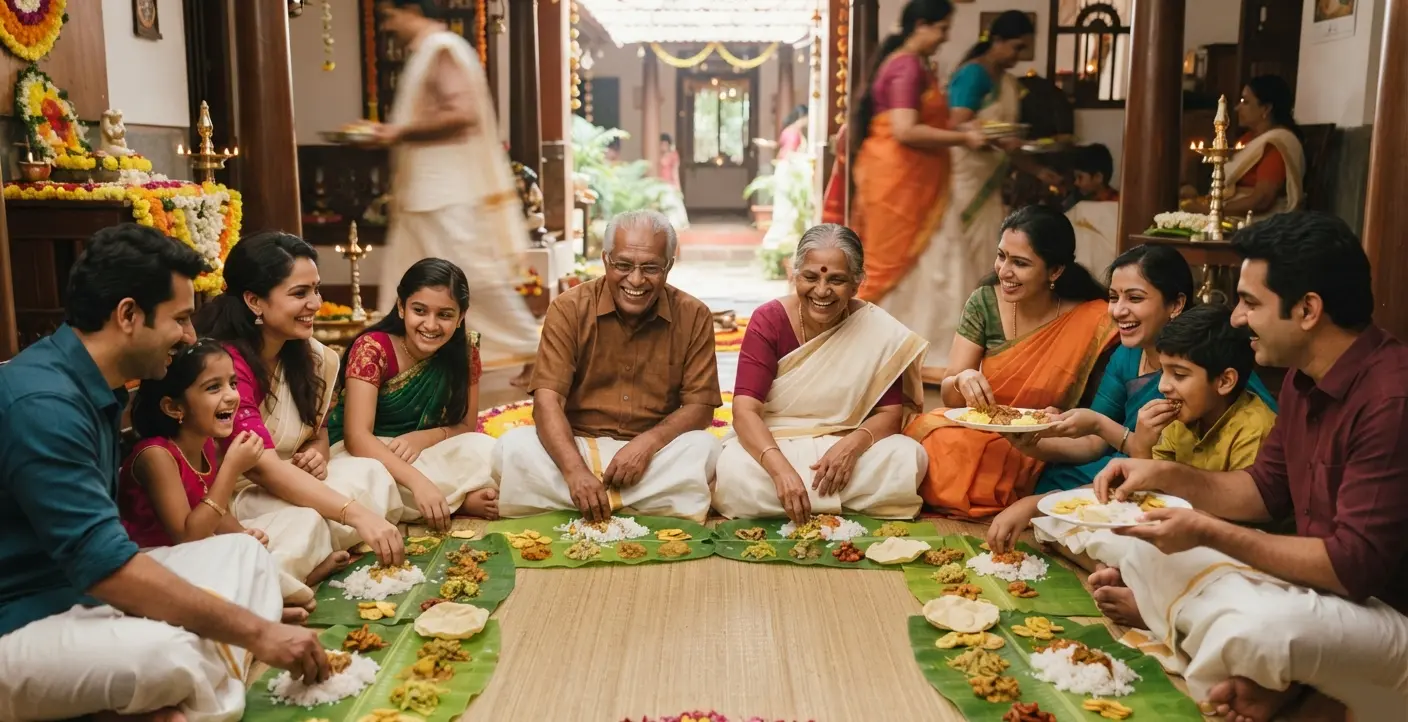
Perhaps the most noteworthy tradition of Sadya is the communalism of it. It’s a meal to enjoy together, with family, friends, neighbors and guests often sitting side by side. Traditionally diners might sit on the floor to eat, but modern celebrations might use dining tables or other arrangements as well.
Sadya isn’t about how many dishes are on the leaf at the end of the day. It is all about hospitality, abundance and togetherness – the very qualities that make Onam one of Kerala’s most loved festivals.