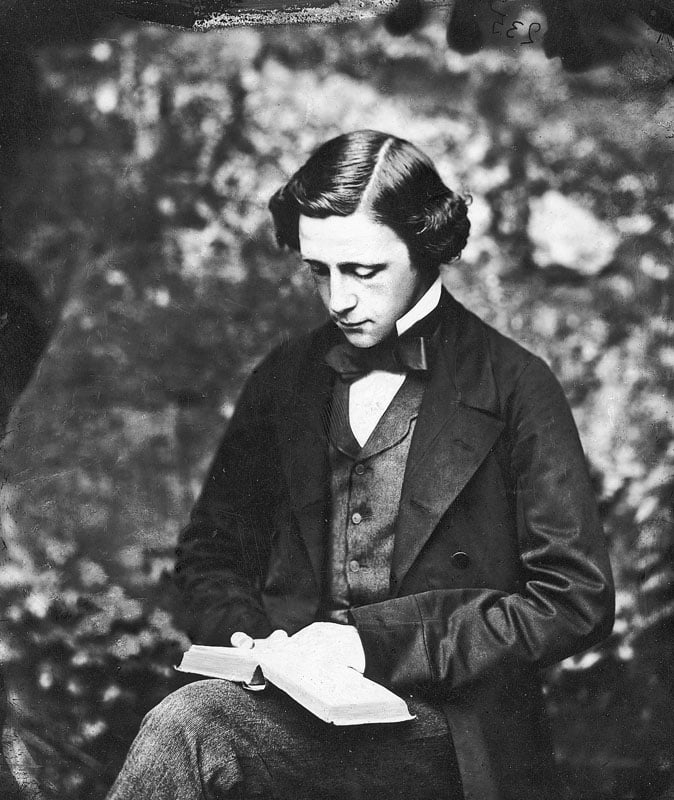
In March 1856 a poem called “Solitude” appeared in a magazine named The Train, signed with a new name, Lewis Carroll. That same month Charles Dodgson, a 24-year-old mathematics lecturer at Christ Church, Oxford, ordered a camera from a London firm for fifteen pounds. It reached him in May. Alice’s Adventures in Wonderland came nine years later and made the pen name famous. The camera kept him busy for twenty-four years.
A fiddly craft
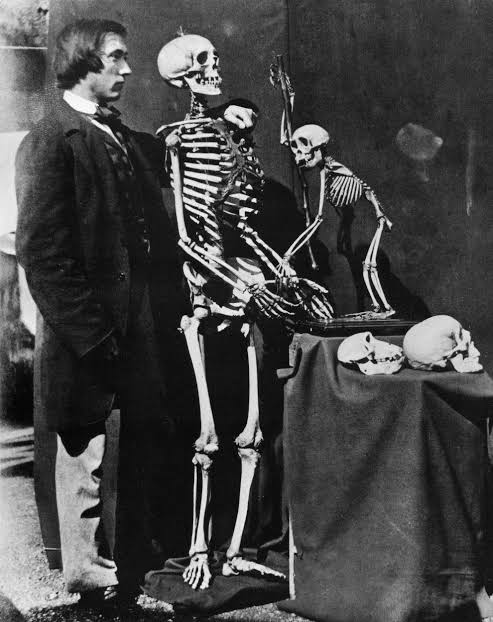
His uncle Skeffington Lutwidge was the first influence, and an Oxford friend, Reginald Southey, was the second. The wet collodion process left no room for error. A glass plate was coated, sensitized, exposed while still damp and developed before it could dry, so Dodgson travelled with a folding darkroom and its chemicals. His brother Skeffington posed with fishing gear in August 1856. In June 1857 he photographed Southey, then a medical student, posed with the skeletons of a human and a monkey.
Famous sitters
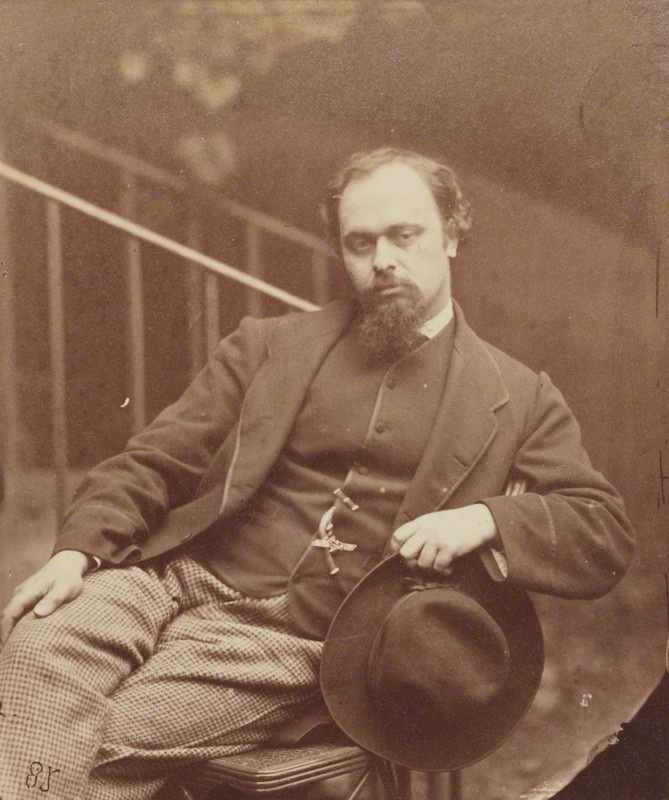
Tennyson sat for him in 1857. In October 1863 he spent four days at Dante Gabriel Rossetti’s house in Chelsea, photographing the painter, his family and his friends in the garden, including Rossetti himself beside the steps that led down to it. Rossetti’s sister Christina and their mother sat for him as well. The actress Ellen Terry was another sitter. The National Portrait Gallery in London holds prints from the Rossetti sessions.
Children in costume
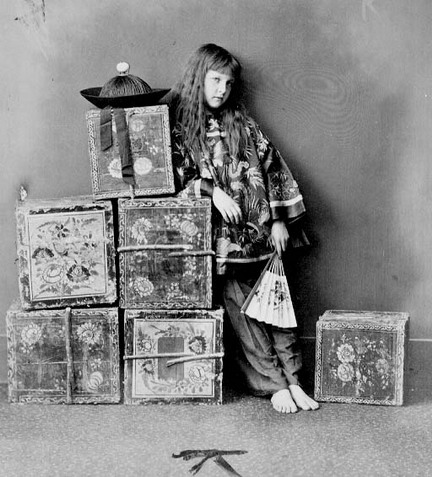
Some of his best-known pictures show children. He had become friends with the family of Henry Liddell, the Dean of Christ Church, in 1856. Around 1858 he photographed the Dean’s daughter Alice in the Deanery garden, dressed as a beggar maid. In 1873 a colleague’s daughter, Xie Kitchin, who appeared regularly in his pictures through the 1870s, sat on a stack of tea chests dressed as a Chinese tea merchant, and in 1875 she posed as a captive princess. His studio held trunks of toys and costumes from Drury Lane Theatre.
The glass house
By 1872 he had a glass-roofed studio above his rooms at Christ Church, so he could work even in poor weather. The sequel to Alice, Through the Looking-Glass, appeared in late 1871, dated 1872. He stopped photographing in 1880. Of the roughly 3,000 pictures he made, about 1,000 survive. Princeton University Library keeps four volumes of them in the Parrish Collection.