
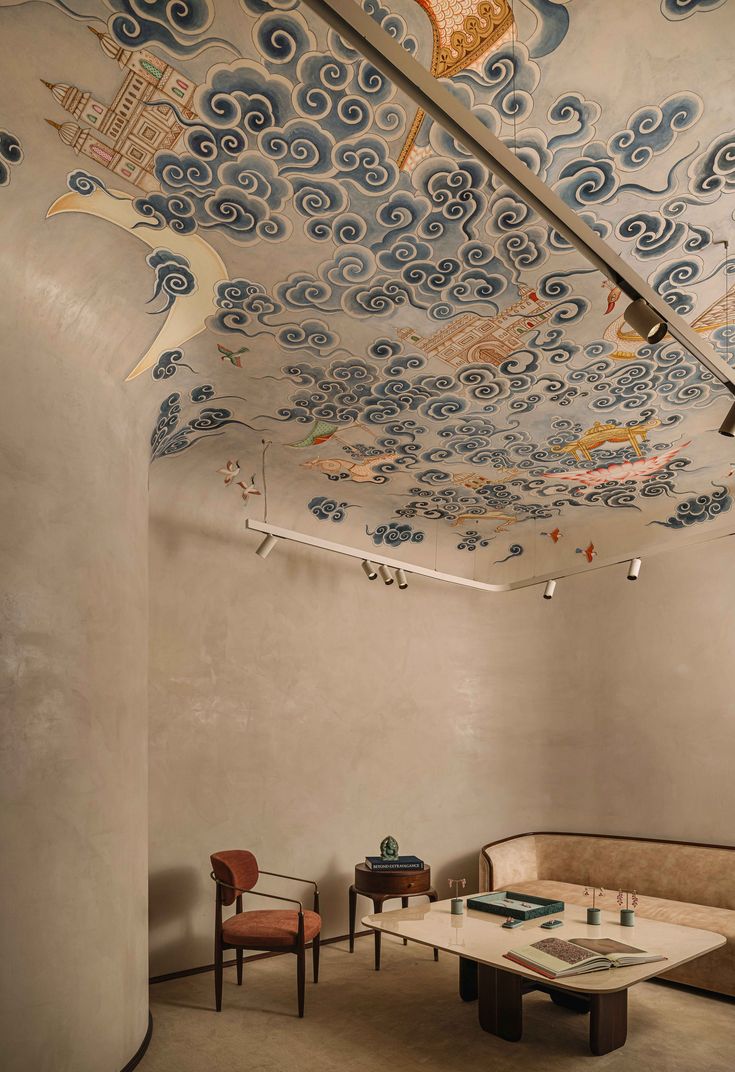
For years, the ceiling was the room everyone forgot. A plain white surface, occasionally home to a fan or a light fitting, was left completely alone while all the decorating energy went to walls, floors, and furniture. In 2026, that has changed. Designers and homeowners alike are turning their attention upward, and what they are doing up there is genuinely exciting.
Why the Ceiling, and Why Now
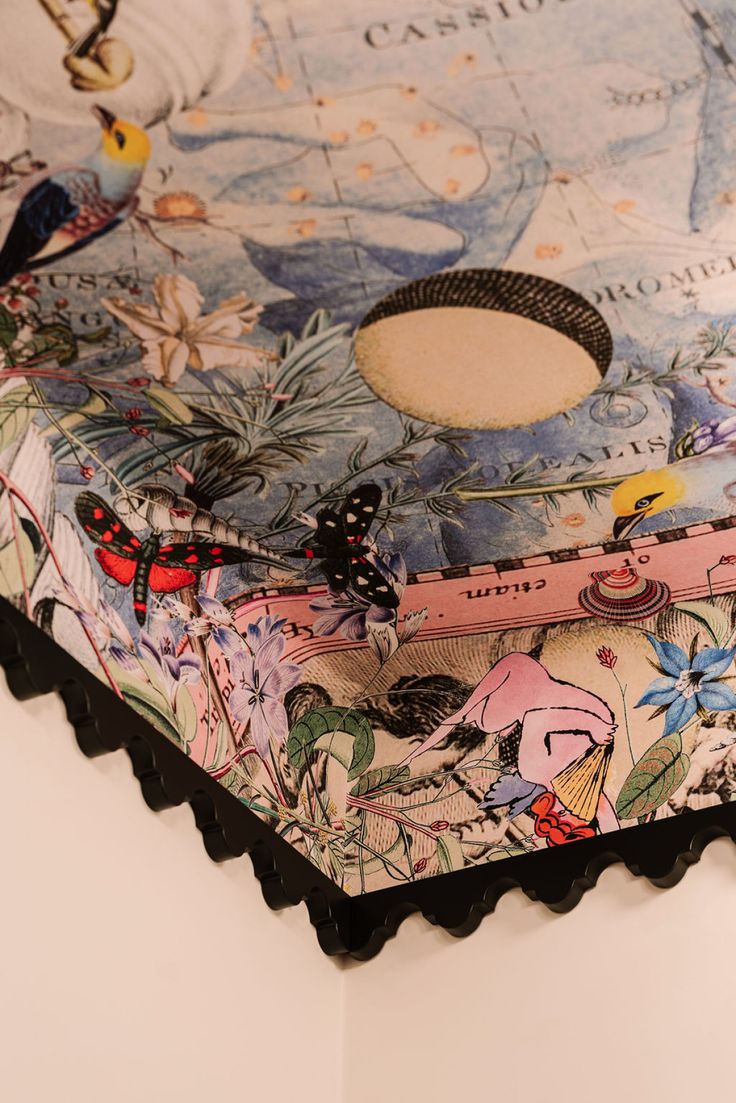
Interior designers have started calling it the fifth wall, and the name is catching on. The idea is simple. Your home has four walls, yes, but it also has a ceiling, and ignoring it means leaving one of the largest surfaces in the room completely blank. As homes have started to feel more like personal retreats, especially after years of spending more time indoors, people want rooms that feel finished and full. The ceiling is the last piece of that puzzle.
There is also a wider shift happening in interiors away from the pale, minimal, everything-white aesthetic that dominated for most of the last decade. Rooms in 2026 are moodier, more layered, and more personal. Bringing colour and texture to the ceiling is a natural extension of that.
Colour Drenching and Bold Hues
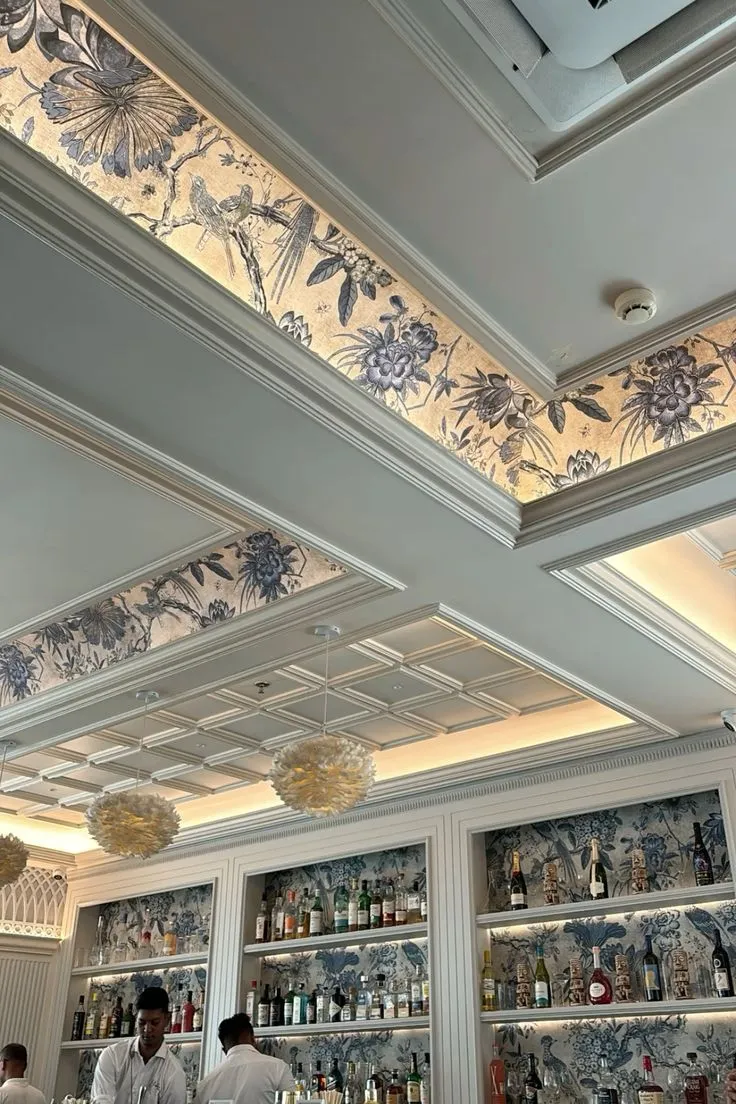
One of the biggest looks right now is colour drenching, where you paint the ceiling the same shade as the walls to wrap the entire room in one rich tone. Deep navy, forest green, burgundy, chocolate brown. These are the colours showing up most in interiors this year. In a dining room or bedroom, a dark ceiling does not make the space feel smaller. Done well, it makes the space feel cocooned and intimate, like the room is holding you rather than just containing you.
For those who want something less dramatic, a soft tonal version of the wall colour on the ceiling adds sophistication without overwhelming the space. Even a warm cream or a barely-there blush can lift a room that has been feeling a little flat.
Wallpaper, Texture, and Architectural Detail
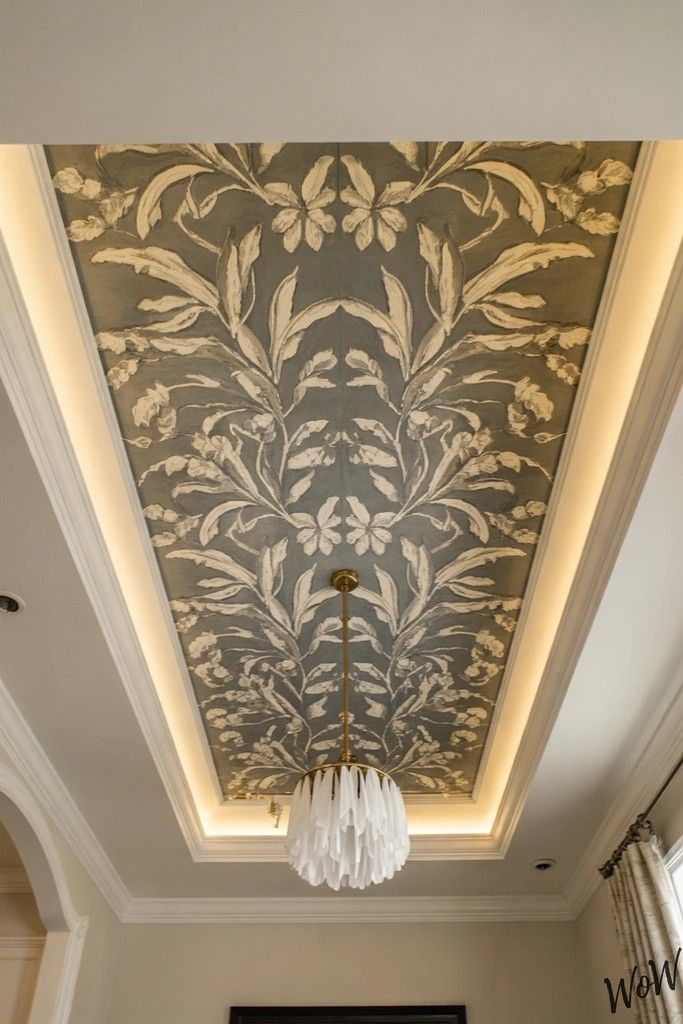
Ceiling wallpaper is also having a serious moment. Botanicals, geometric prints, hand-painted murals, and moody sky effects are all being used overhead to add depth and draw the eye upward in a way that makes even a low-ceilinged room feel more considered. Powder rooms and small dining spaces are particularly good places to try this, because a smaller area means less material and a more contained canvas.
Architectural detail is another route. Coffered ceilings, tray ceilings, decorative beams, and crown moulding are all coming back, but with a twist. The 2026 approach is to use unexpected shapes, unusual proportions, or contrasting colours within the detailing itself, so it reads as intentional rather than inherited.
Where to Start if You Want to Try It
If the idea of committing to a dark ceiling across your whole living room feels like too much, start smaller. A powder room is the easiest place to experiment. It is a compact space, visitors will notice it, and because you are not spending long stretches of time in there, a bolder choice feels lower-stakes.
A sculptural pendant light is another way in. It draws the eye upward without requiring any paint or wallpaper, and it can completely change how a room reads. Good lighting and an interesting ceiling work together. When there is something worth looking at overhead, the whole room feels more alive.