India's bridal fashion landscape is witnessing a revolutionary change that is redefining couture through breathable fabrics, minimal accessories, sustainability and silhouette. Taking a leap from conventional setups, contemporary wedding wear is now focused on more mindful choices that represent personal identity rather than mindless embellishment. It showcases a shift toward couture tailored to the bride's individual needs — highlighting her personality while keeping the look effortless without compromising on beauty.
The 7 Bridal Fashion Trends India Is Witnessing
1. Fabric — Breathable Yet Beautiful
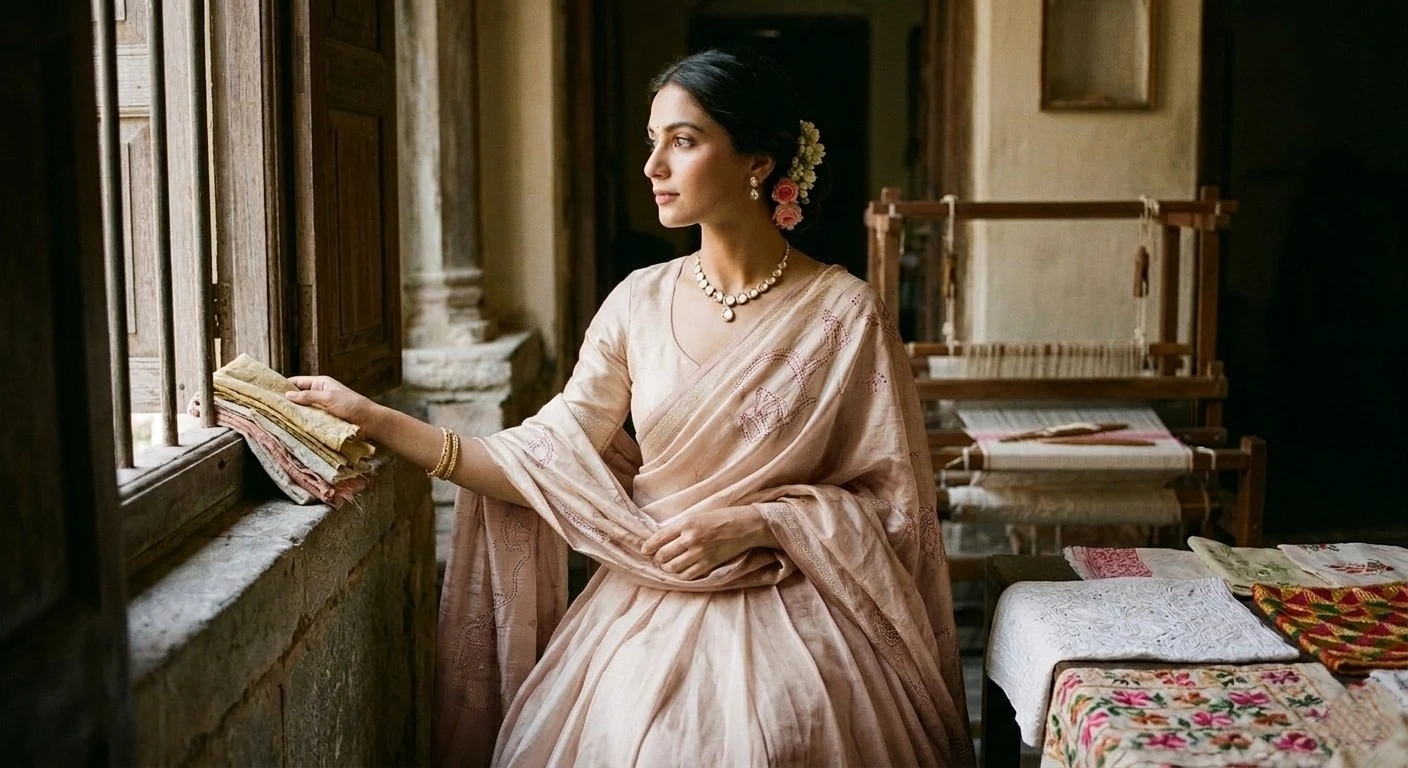
Unlike conventional weddings where bridal couture was expected to be heavy and embroidered with dense embellishment, today's brides are aligning their fabric choices with breathability and mobility over rigid structure. Tissue silk, organza, satin and Chanderi have become the preferred choices — offering a structured silhouette and translucent effect while keeping the overall weight light enough to wear comfortably through long ceremonies and celebrations.
2. Silhouette — A Blend of Tradition and Contemporary Choice
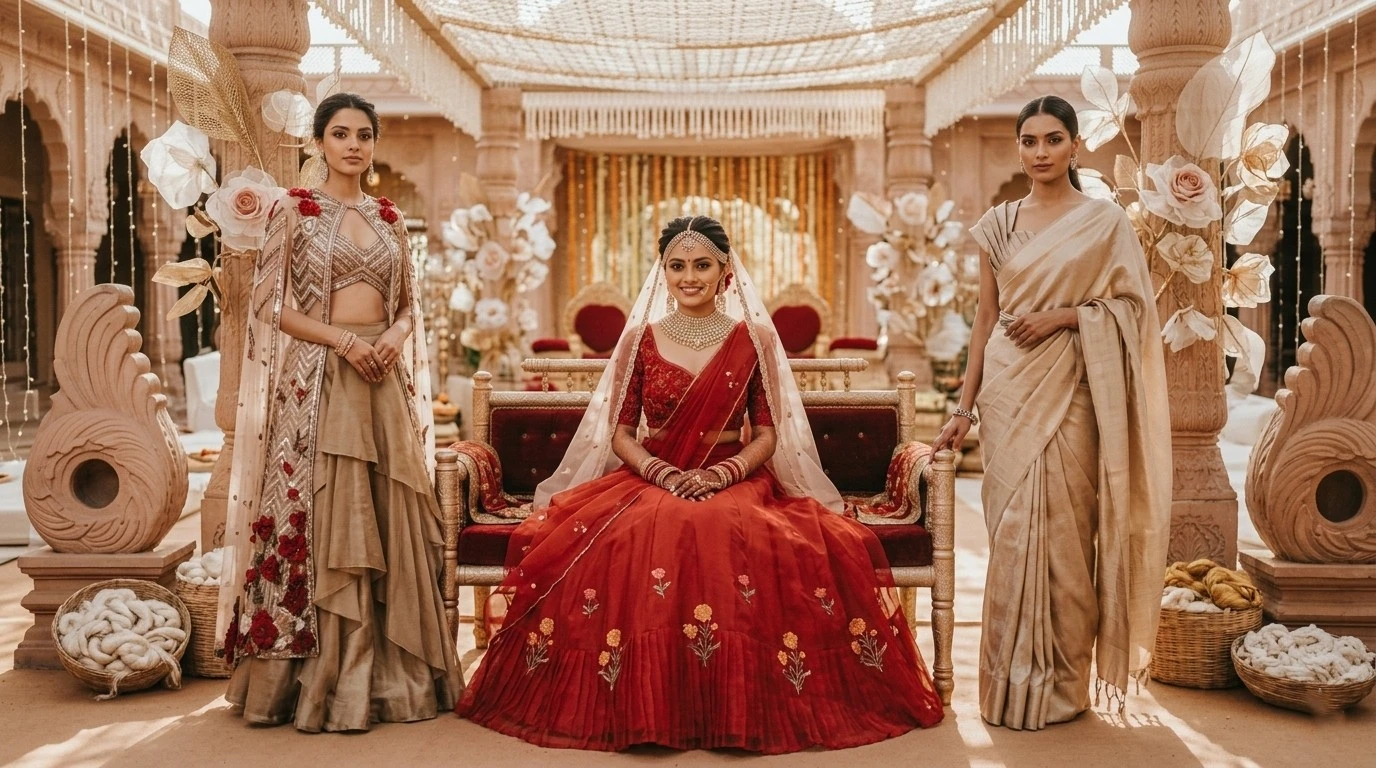
Gone are the days when only the saree or lehenga seemed appropriate for a wedding. The exchange of fashion trends at an international level has prompted an intersection of conventional and modern couture in Indian bridal wear. Sheer capes, structured corset bodices, maxi ball-skirt lehengas and pre-draped sarees have now entered the bridal setting — offering newness and freshness while retaining the traditional feel through fluid drape and architectural structure.
3. Sustainability — A Conscious Choice That Has Become the Ultimate Luxury
The modern Indian bride is increasingly aware of where her wedding outfit comes from and what it costs beyond its price tag. Sustainable bridal wear in 2026 means choosing handwoven textiles directly from artisan collectives, selecting natural dyes over synthetic ones, and investing in a single well-crafted outfit worn with intention rather than multiple heavily embellished pieces worn once and discarded. Emerging handloom-forward labels have made sustainable bridal couture a genuine design statement rather than a compromise. For the 2026 bride, choosing a Banarasi handloom saree or a hand-embroidered Chanderi lehenga is not just an ethical decision — it is the most luxurious one available.
4. Designing — Choosing a Craft That Aligns With Personality and Culture
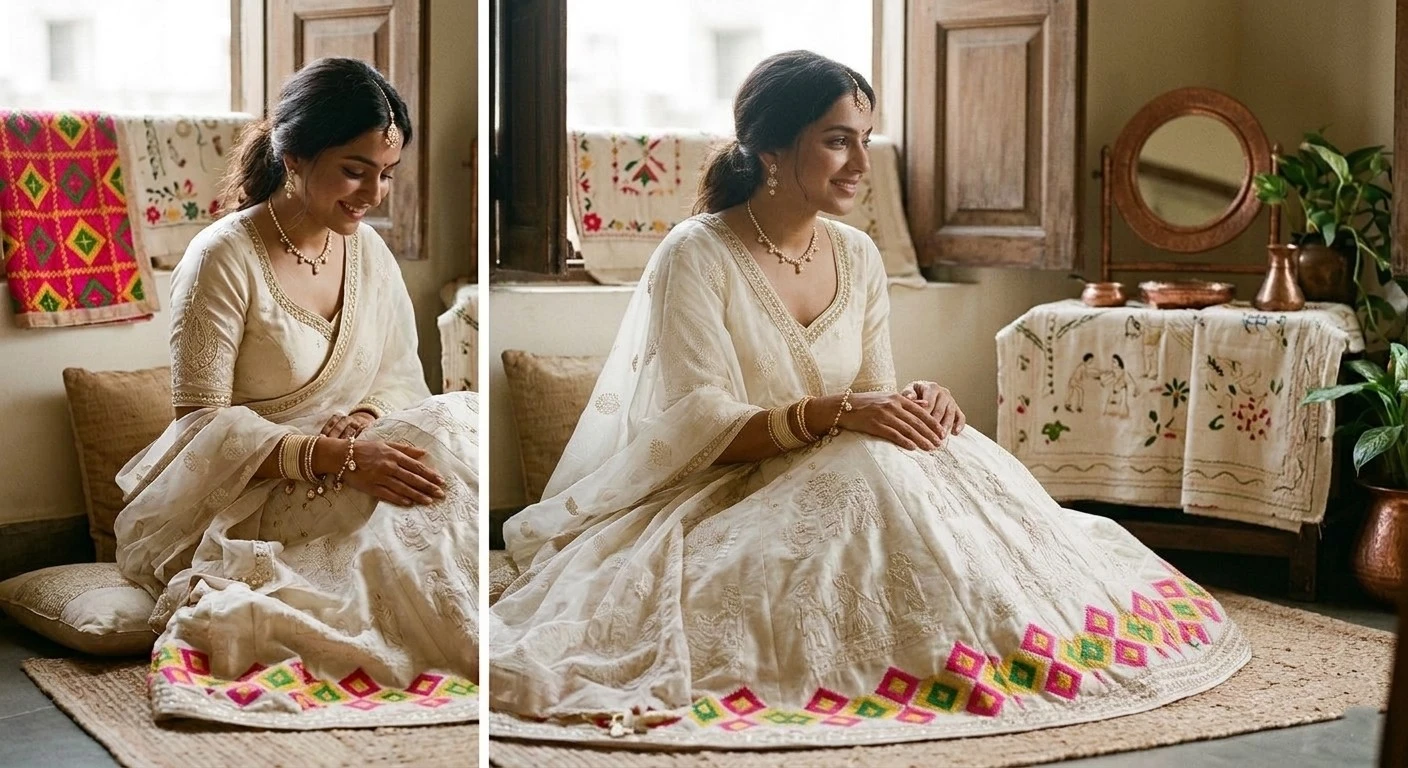
Embroidery in 2026 bridal fashion is no longer about covering every inch of fabric — it is about choosing a craft that tells a specific story. Brides are gravitating toward regional embroidery traditions that carry personal or cultural meaning: Chikankari from Lucknow for its delicate femininity, Kantha from Bengal for its storytelling stitch, Phulkari from Punjab for its vibrant geometric energy, and Zardozi for occasions that call for ceremonial grandeur. The result is a bridal outfit that feels genuinely personal rather than generically opulent — one that reflects where the bride comes from and who she is, not simply how much was spent.
5. Colour — Beyond the Red
Red has long been the default of Indian bridal wear — and while it remains deeply significant in many traditions, 2026 brides are confidently expanding the palette. Dusty rose, ivory, champagne, sage green, deep plum and off-white are among the most sought-after bridal colours this season. Pastel lehengas and ivory tissue silk sarees are appearing at wedding ceremonies across India, particularly among brides who want to wear their reception and mehendi outfits with equal confidence. The shift is not away from tradition but toward a broader definition of what a bridal colour can be — one that flatters, personalises and moves with the bride rather than simply signalling occasion.
6. Accessories — Minimal Yet Elegant
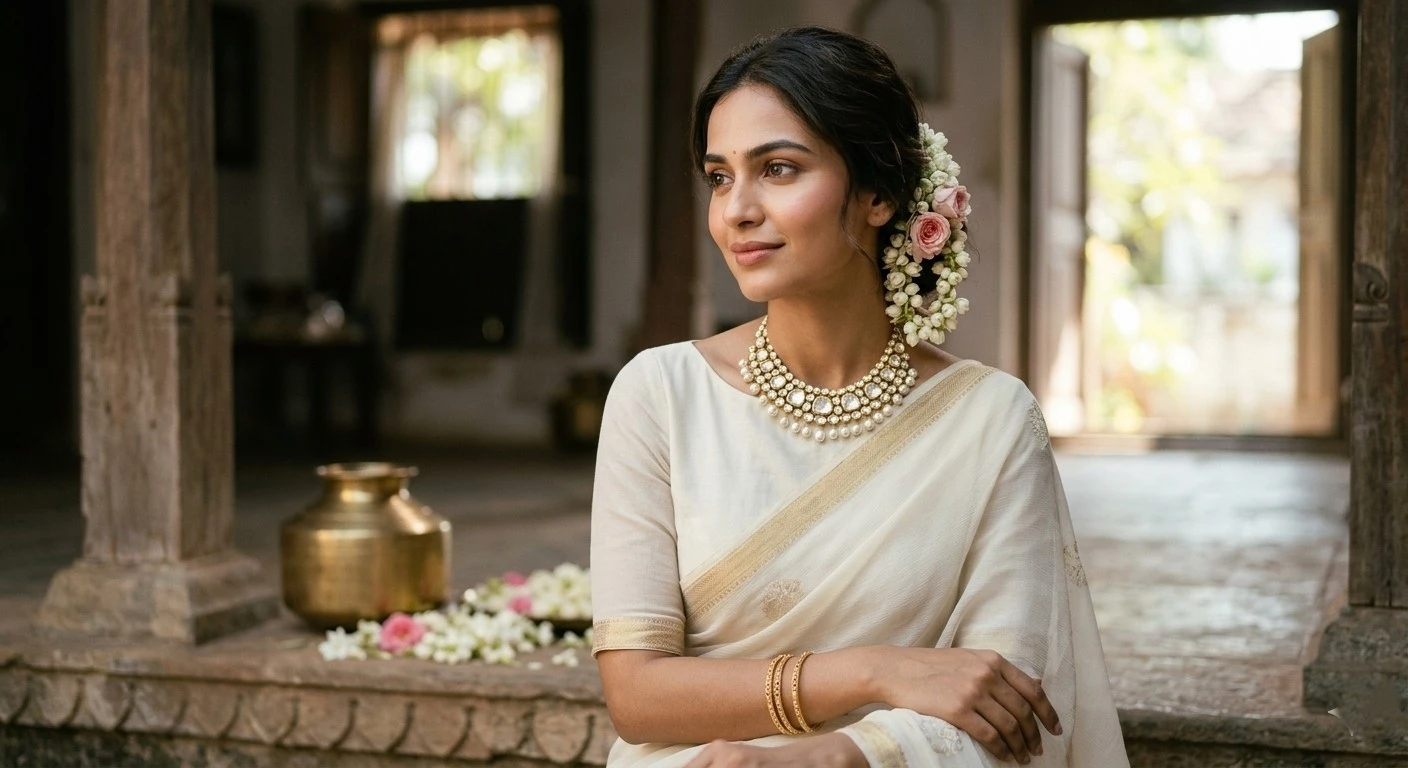
As bridal outfits have moved toward lighter fabrics and quieter embellishment, the accessories have followed. The 2026 bridal accessory edit is built around restraint — a single statement piece rather than layered jewellery competing for attention. Polki necklaces worn alone, uncut diamond earrings without a matching maatha patti, delicate gold bangles instead of stacked heavy sets. The logic is simple: when the fabric and silhouette are doing the work, the jewellery's role is to complement rather than overwhelm. Floral jewellery — fresh mogra and rose arrangements worn as hair accessories or as temporary statement pieces — has also gained significant ground as a sustainable, beautiful and deeply traditional alternative to heavy gold sets.
7. The Bridal Lehenga-Saree Hybrid — The New Icon
Perhaps the most defining silhouette of 2026 bridal fashion is the lehenga-saree — a hybrid garment that drapes like a saree but moves like a lehenga. Offering the best of both forms, it appeals to brides who want the grace of a saree and the practicality of a lehenga skirt through a long wedding day. Designers including Tarun Tahiliani and Anita Dongre have made this silhouette a signature of the season, and it has quickly become the most photographed bridal look of the year.
Final Thought
Indian bridal fashion in 2026 is not abandoning tradition — it is refining it. The bride at the centre of this shift is more intentional, more informed and more confident in her choices than any generation before her. She is choosing fabric for how it feels, colour for how it reflects her, craft for what it means, and accessories for what they add rather than what they announce. The result is a new era of Indian couture that is quieter, more personal and more genuinely beautiful for it.