For most of the twentieth century, an album cover did one job. It kept the record from scratching and told you what you were buying. Somewhere between the mid-1960s and today’s vinyl aisle, that cardboard stopped being packaging and started being the point. Original sleeve artwork now sells at auction for sums that rival fine art. The music hasn’t changed; how seriously we look at the outside has.
From sleeve to statement
Early LP covers were mostly functional: an artist photo, a title, a label logo, until labels realised the 12-inch square was free advertising space shaped like a small canvas.
The Beatles’ Sgt. Pepper’s Lonely Hearts Club Band (1967), designed by pop artist Peter Blake and Jann Haworth, is usually cited as the turning point—a collage dense enough to study as long as the record played. Pink Floyd’s The Dark Side of the Moon (1973), by design studio Hipgnosis with the prism drawn by George Hardie, went further still: one endlessly reproducible image that needed no band photo.
David Bowie’s Aladdin Sane (1973), shot by Brian Duffy with makeup by Pierre La Roche, turned the cover into character design; the lightning bolt became shorthand for glam rock itself. In November 2025 the original photograph sold at Bonhams for £381,400, a new auction record for album artwork.
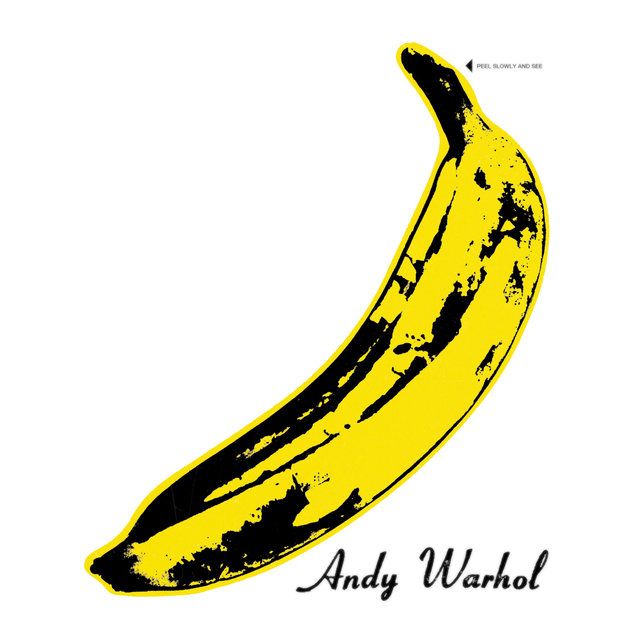
The Velvet Underground & Nico (1967) took the opposite route. Andy Warhol simply signed a yellow banana sticker and let owners peel it, turning the sleeve into interactive art a full year before Sgt. Pepper. Nirvana’s Nevermind (1991), photographed by Kirk Weddle, proved the opposite instinct also worked, one blunt image of a baby chasing a dollar bill has outlasted a decade of glossier rock photography. Radiohead’s OK Computer (1997), built by Stanley Donwood and Thom Yorke from distorted motorway diagrams, made unease itself the subject.
A cover no longer has to sell the record. It has to survive being looked at for thirty years.
Why we frame cardboard
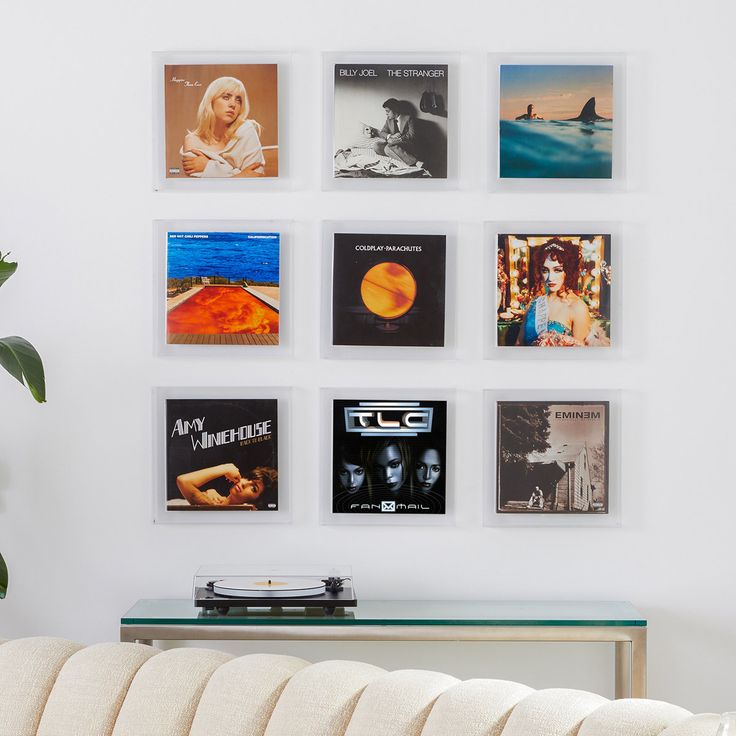
Scarcity drives some of it, since original pressings are finite in a way streaming numbers never are. Design literacy drives more, as a generation raised on Spotify has developed a sharper eye for physical graphic design. Sotheby’s and Bonhams now run dedicated sales for music artwork; Bowie’s Aladdin Sane photograph brought £381,400 in 2025, while Peter Blake and Jann Haworth’s 1967 Sgt. Pepper insert collage sold for £55,250 (about $87,720) at Sotheby’s in 2012.
Vinyl and the return of the object
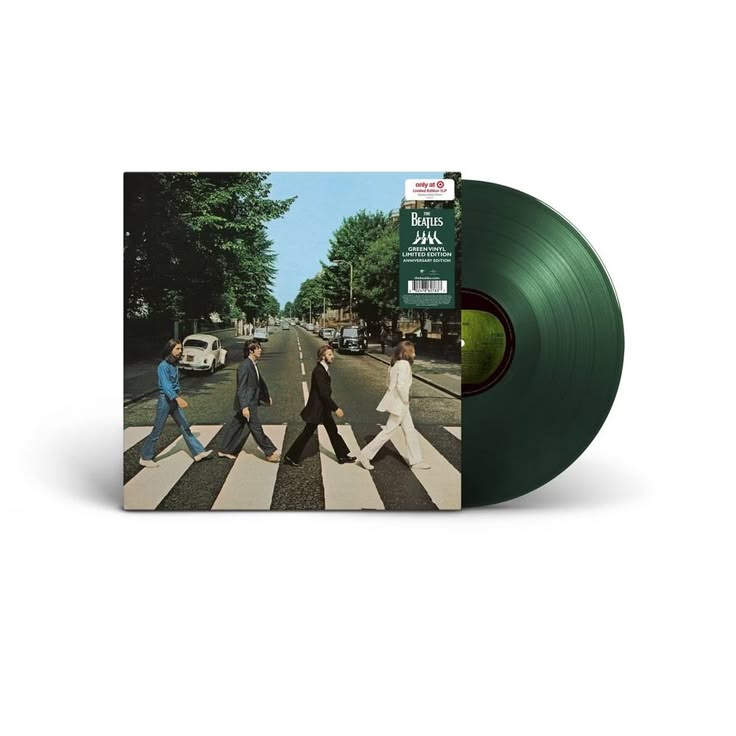
None of this would matter if vinyl itself hadn’t come back. In the US, vinyl sales have grown for 19 consecutive years, per RIAA data, crossing $1 billion in annual revenue for the first time since 1983. Record Store Day, held twice yearly (April and the day after Thanksgiving), runs on exactly this premise: exclusive pressings and artwork that never reach streaming. Independent stores are the physical home of that revival, places to handle a gatefold sleeve before buying it.
Where to buy vinyl in Delhi NCR
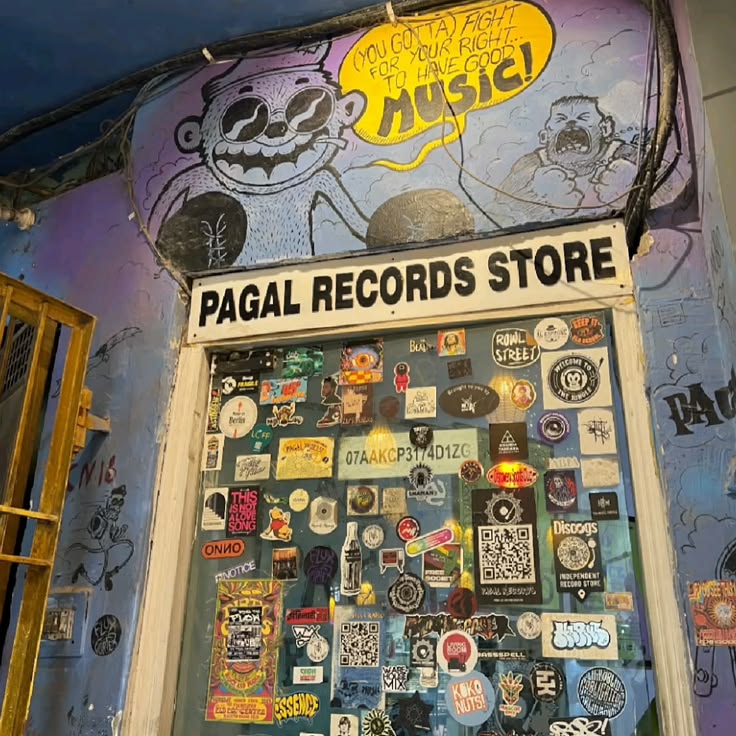
Delhi’s record-collecting scene is small but active. Radio & Gramophone House in Connaught Place, running since 1951 under the same Jain family, is the city’s oldest vinyl address. Digging In India in Shahpur Jat, founded by archivist Nishant Mittal, hunts down obscure South Asian psychedelic and funk. Pagal Records Store in Hauz Khas Village is now run by Abhay Panwar, who bought it from founder Joe Luca Singh in December 2024. Kala Ghoda Records in Vasant Vihar is appointment-only, with close to 5,000 classic rock and jazz records. Shah Music Centre in Daryaganj, running since the 1930s, deals exclusively in LPs and gramophones. For anything missing, The Revolver Club, with physical stores in Mumbai, Goa and Hyderabad rather than Delhi, ships nationally and stocks both The Beatles and Pink Floyd.
The cover outlives the record
What ties the Bowie auction lot, the Warhol banana, and a crate-digging afternoon in Hauz Khas together is a quiet reversal. Album covers were built as disposable packaging for something more important. Increasingly, they are the thing that survives. Streaming took the music out of its sleeve, and collecting put the sleeve back on the wall.