There is a particular kind of loneliness that nobody warns you about in your twenties. It is not the dramatic, movie-worthy kind. It is quieter. It looks like a group chat that has gone silent, a birthday dinner with fewer faces each year, a friend you once spoke to every day who now exists mainly as a name you occasionally like on Instagram. You are not estranged. You are just, somehow, drifting.
Friendship in your twenties is one of the great unspoken challenges of early adulthood. For the better part of our lives, friendships happened almost automatically. School corridors, shared classrooms, college dorms, and canteen tables created effortless proximity. You did not have to try. You simply showed up, and the friends were there.
Then life happens. Graduation arrives, and with it, a scattering. Someone moves to another city for a job. Another leaves the country for a postgraduate degree. Someone gets into a relationship and, slowly, their time reorganises itself around a partner. The convenience that once held friendships together disappears, and what remains requires something most people are too busy or too tired to summon consistently: deliberate effort.
The Geography of Growing Apart

Relocation is perhaps the most obvious culprit. Urban migration has become a defining feature of this generation. Young adults move to cities for opportunity, and those cities are rarely the same ones. A Mumbai upbringing does not guarantee a Mumbai adulthood. Friendships that felt permanent suddenly have to survive distance, time zones, and a growing divergence in daily realities.
Career pressure adds another layer. The early years of professional life are relentlessly demanding. Long hours, performance anxiety, networking obligations, and the constant pressure to build something meaningful leave little room for the slow, unhurried time that real friendship requires. A dinner gets rescheduled once, then twice, and then it quietly stops being planned at all.
Romantic relationships, too, reshape the social landscape. When a serious partnership forms, social energy redistributes. Couple friendships emerge. Old individual friendships require more scheduling. This is not selfishness; it is simply the arithmetic of limited time. But the result, for many, is a gradual narrowing of their social world without them even noticing.
The Illusion of Connection

Social media and digital communication have created a particularly insidious paradox. We are, technically, more connected than any generation before us. We can see what a friend had for breakfast in Berlin or watch someone’s holiday reel in real time. Yet this visibility has become a substitute for closeness rather than an extension of it. We mistake being informed for being present.
Psychologists have long noted that meaningful relationships depend on reciprocal vulnerability and shared experience, neither of which a curated Instagram grid can provide. Reacting to someone’s story with a fire emoji is not the same as sitting with them through a difficult week. We know this instinctively, and yet the habit of digital maintenance has quietly replaced the deeper work of actual friendship.
A Hopeful Recalibration
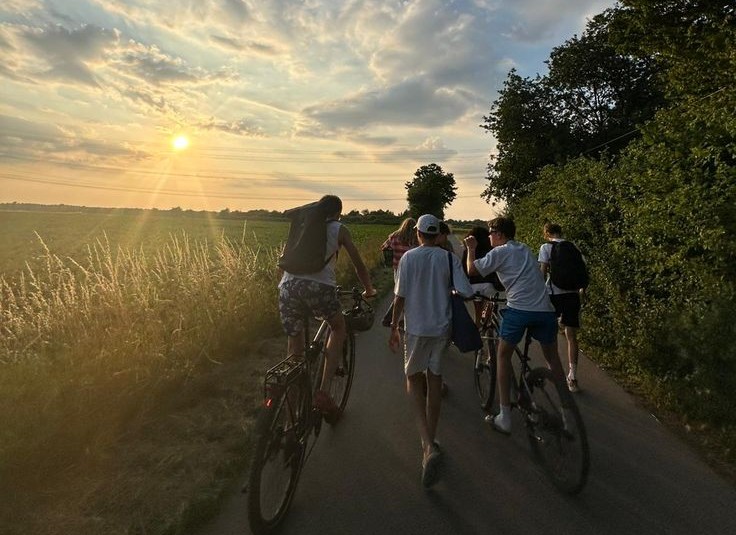
The good news is that recognising the problem is already halfway to solving it. Friendships in adulthood are harder, but they are not impossible. They simply ask for something different from you.
Start by choosing depth over breadth. A handful of people who truly know you is worth infinitely more than a wide social network held together by infrequent group hangs. Invest in those relationships with the same intentionality you bring to your career. Schedule the calls. Book the trip. Show up to the hard conversations, not just the celebrations.
It also helps to build new rituals. A standing monthly dinner, a walking habit with a friend, a book you both read together; these small, repeated commitments are the architecture of closeness. Friendships do not survive on nostalgia alone. They need new experiences to grow.
Finally, resist the shame of reaching out after a long silence. Most people are navigating the same drift and would welcome the message. A friendship is not ruined by a gap. It is kept alive by the willingness to close it.
Your twenties will not hand you friendships the way your school years did. But the ones you build with intention, across distance and busy seasons and changing lives, may well be the most honest and enduring ones you ever have.