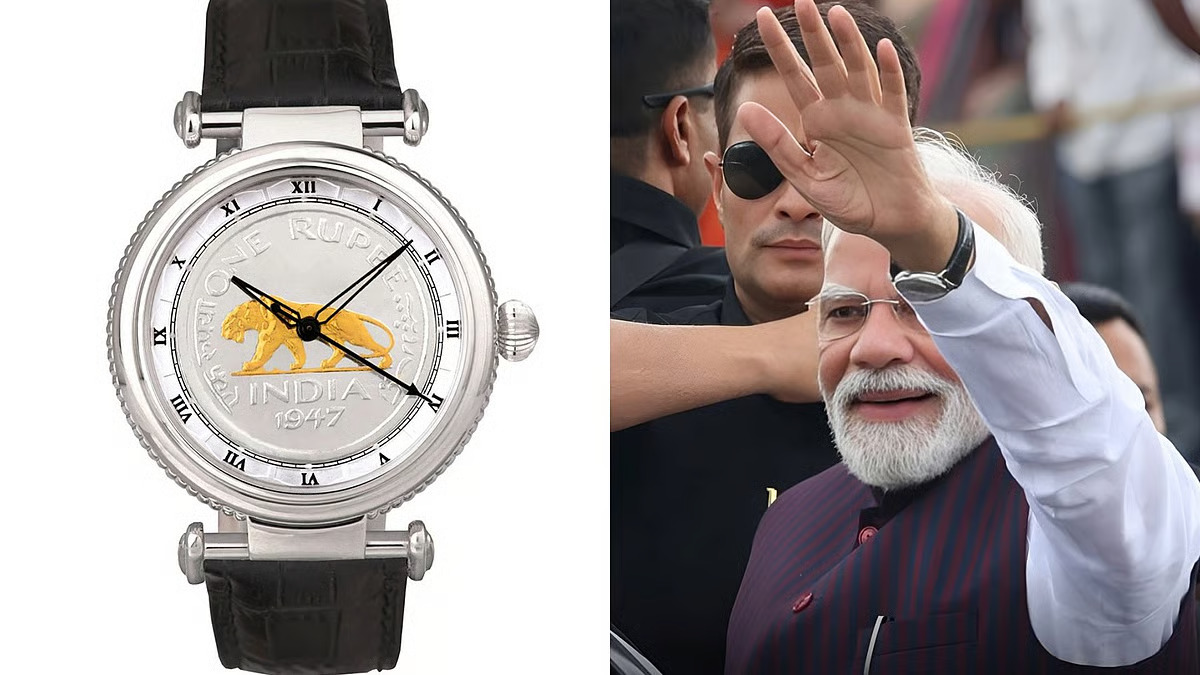
On an ordinary day, Prime Minister Narendra Modi stepping out in his signature white kurta and sleeveless bandi is not unusual. But this time, something on his wrist turned heads. A subtle flash of metal—understated, elegant, and unmistakably Indian—sparked a nationwide conversation. The Prime Minister was seen wearing the Jaipur Watch Company’s Roman Baagh timepiece, and with that single moment, he once again demonstrated that style is not just about fashion—it’s about storytelling, identity, and conscious choice.
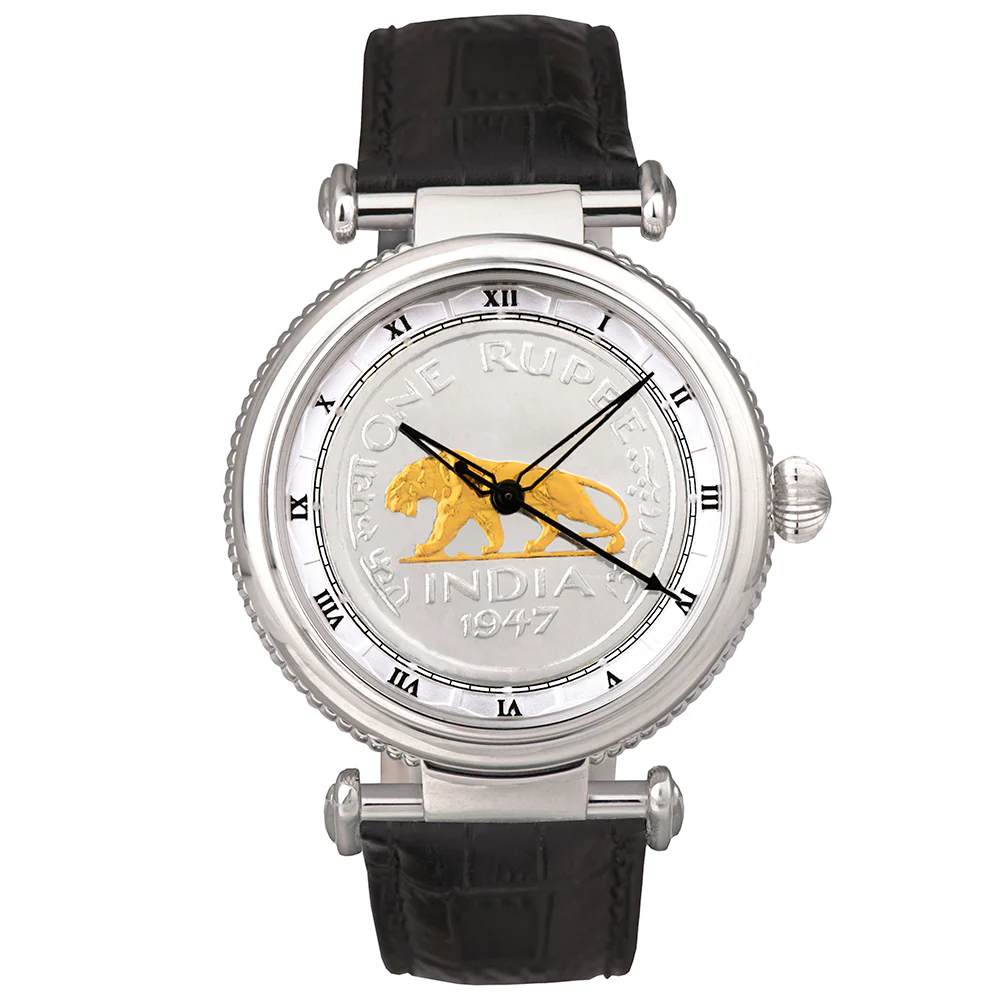
Priced at around 55,000 INR, the Roman Baagh watch is much more than a luxury accessory. It is a symbol of heritage reimagined through modern craftsmanship. The 43mm stainless steel piece houses a rare 1947 one-rupee coin, featuring the iconic walking tiger—an image that holds deep national significance and subtly mirrors the spirit behind the Make in India emblem. The coin itself is historic: 1947 marked the final year of British-era minting in India, making these coins rare and emotionally resonant. The watch, in essence, becomes a miniature time capsule, blending freedom-era nostalgia with contemporary design.
While the Roman Baagh draws heavily from India’s cultural memory, its engineering is firmly modern. Part of the brand’s celebrated Baagh Collection, the watch is powered by the Japanese Miyota 8215 Automatic movement—a reliable mechanism respected by watch enthusiasts worldwide. The collection comes in four variations, each offering either Roman or Devanagari numerals and a choice between golden and silver-toned cases. The premium feel is elevated with sapphire crystal glass featuring internal AR coating, a see-through caseback, and 5 ATM water resistance. These elements make the watch durable enough for daily use, yet refined enough for collectors who value craftsmanship and legacy.
For a head of state, choosing to wear a homegrown brand carries an unspoken message. Whether intentional or instinctive, Modi’s choice reinforces a growing belief: Indian luxury is no longer niche or aspirational—it is credible, contemporary, and globally competitive. In a country where consumers have long perceived foreign brands as markers of prestige, this moment shifts the narrative. It signals that Indian-made products are not only capable of matching global standards but can stand out with authenticity and rooted design.
In the opinion of fashion experts, this is a powerful reminder of what Indian craftsmanship can achieve. It reflects the power of the Swadeshi movement, confidence in Indian luxury, and pride in what Indian artisans can create.
In a world dominated by Swiss, Japanese, and European watchmaking giants, the Roman Baagh’s rise is a milestone. It represents a shift in how the world views Indian craftsmanship—no longer a supporting act, but a contender ready to take centre stage with its own identity. With Modi’s quiet yet powerful endorsement, Jaipur Watch Company has suddenly found itself in the spotlight, capturing the interest of collectors, fashion lovers, and supporters of the Swadeshi movement alike.
The message from this moment is clear: Indian luxury doesn’t need validation. It needs visibility and when it receives that visibility from the nation’s highest office, it underscores what many have long believed: that India’s artistic precision, storytelling traditions, and craftsmanship have the power to define global trends.
Luxury made in India is not just possible, it is distinctive, desirable, and ready to shine on the world stage.