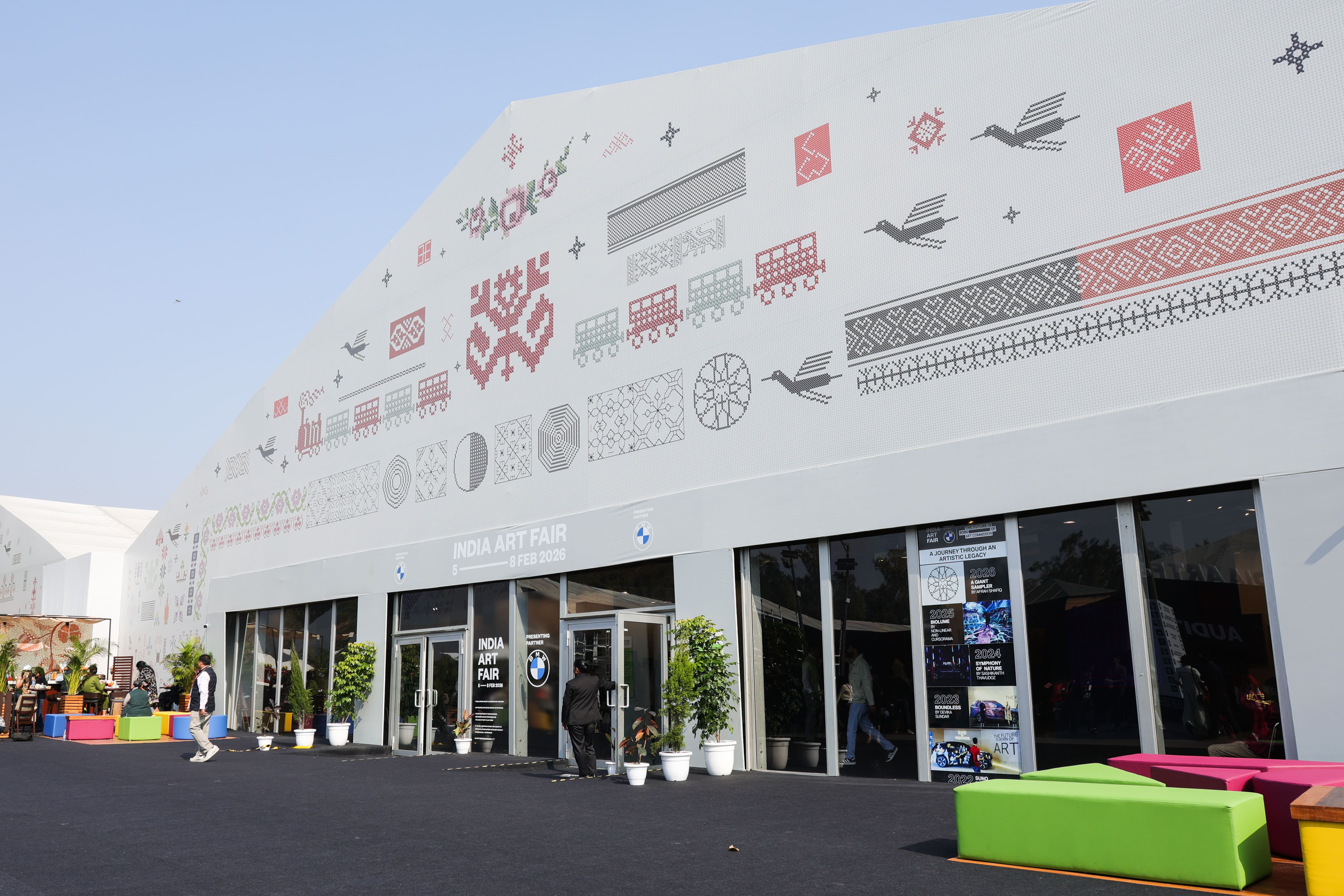
India Art Fair has returned with its 17th edition, breaking all previous records for participants. This year, more than 133 artists’ works are being showcased to art lovers and collectors. Being India’s largest modern and contemporary art fair, it unfolded as a vibrant intersection of modernist legacies, contemporary experimentation, and immersive installations that demanded both time and attention.
First reaction to the art gallery
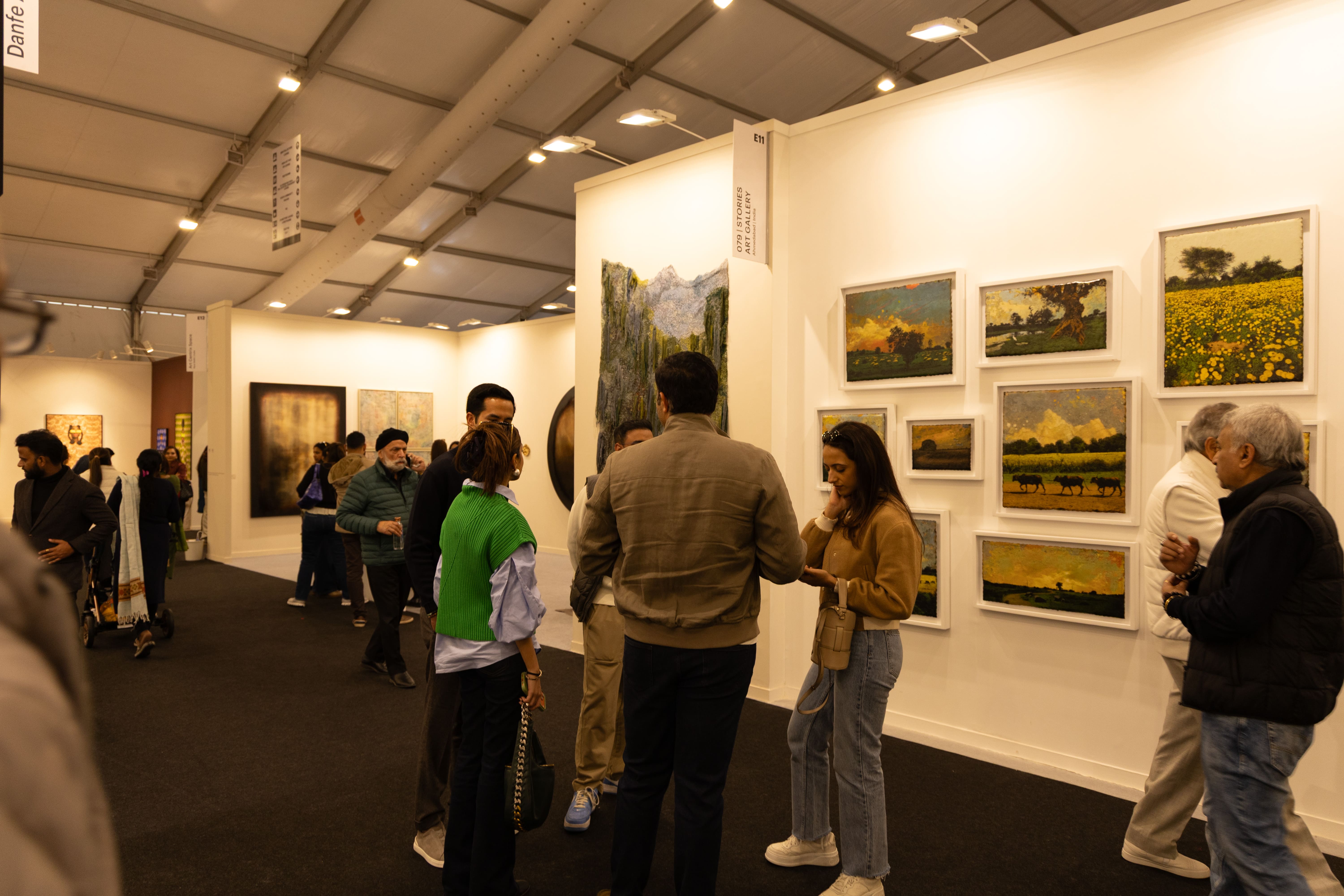
The moment you enter the gallery, the vastness of the hall filled with artists, art, and collectors entices you with underlying stories and discussions. As you come across a stall, each step slows and demands time to delve deeper and interpret the work; as if the vastness of the hall weren’t enough, you must contend with an abyss-like encounter with art. While viewing, even if you feel puzzled, the stall exhibitor or the artist themselves will often enlighten you with the work’s meaning.
Art and artists of different countries
What separates this fair from other events is its diversity. India itself consists of many different cultures, and that is reflected in the fair, but what makes it more democratic is the presence of different international artists showcasing their work. From Kenya to Kathmandu, visitors get an opportunity to explore diverse cultural art traditions in a single fair.
Art in a different form
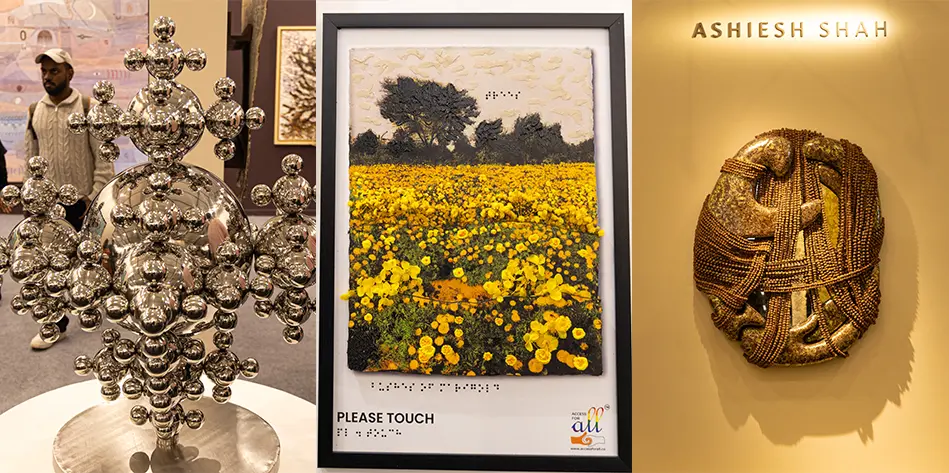
At this fair, we encountered art in many forms — painting, sculpture, textiles, and several other media — presented to reflect society’s ongoing situation. Each artist poured their experience of the world into their work. Some found it resonant, and some were ambivalent, but nearly everyone felt a strong emotional response upon looking at the art.
A modernist presentation of history
A strong presence of South Asian modernism anchored the fair. Carefully curated selections of mid-20th-century works offered moments of visual pause, allowing viewers to trace the lineage between historical abstraction and today’s contemporary practices. These modernist presentations not only provided historical grounding but also highlighted how current artists continue to engage with memory, form, and political identity.
Verdict
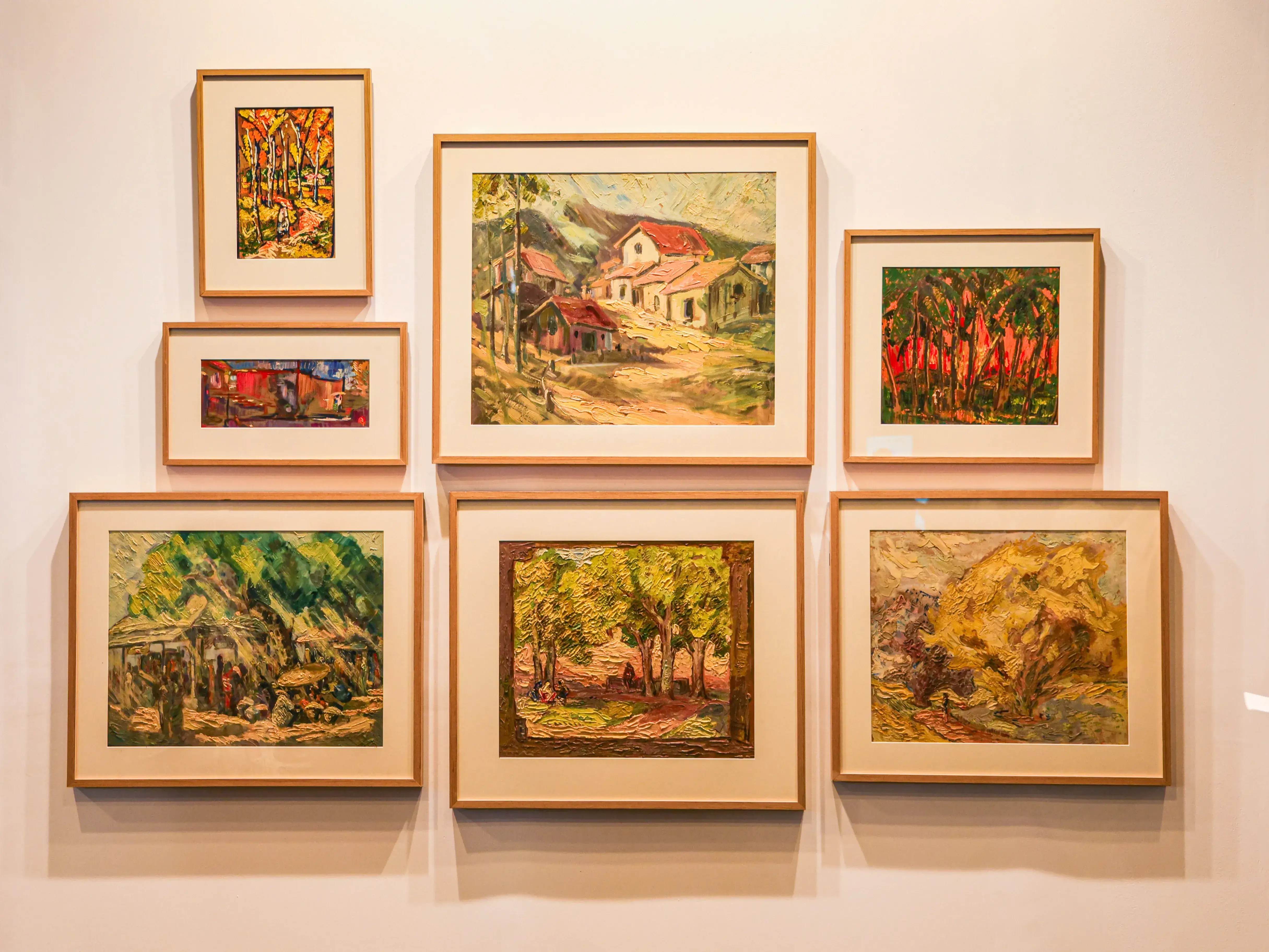
India Art Fair has brought different art and artists under one roof, expanding the horizon by representing art in various forms. It has provided a stage for both artists and art lovers to come together to indulge in and embrace culture in different forms. However, the fair’s vastness and the effort required to explore each stall demanded patience. The density of booths occasionally overwhelmed quieter works, and moments of curatorial clarity were sometimes lost amid visual excess. Still, these challenges are part of the fair’s identity — a reflection of its ambition to present a broad snapshot of the region’s evolving art ecosystem.
As a preview and a pulse-check, the India Art Fair succeeds in capturing the contradictions of contemporary art today: spectacle and subtlety, market and meaning, tradition and experimentation — all coexisting under one expansive roof.
FAQ
Q. When is India Art Fair 2026?
India Art Fair 2026 will take place from 5 to 8 February 2026.
● 5 February: VIP Preview
● 6 February: Select/VIP Preview
● 7–8 February: Open to the public
Q. Where is India Art Fair 2026 being held?
India Art Fair 2026 is being hosted at the NSIC Exhibition Grounds, Okhla, New Delhi.
Q. India Art Fair 2026 tickets price
Public tickets start at ₹800 onwards for general admission; prices vary by day and ticket type – preview/VIP, student, etc.