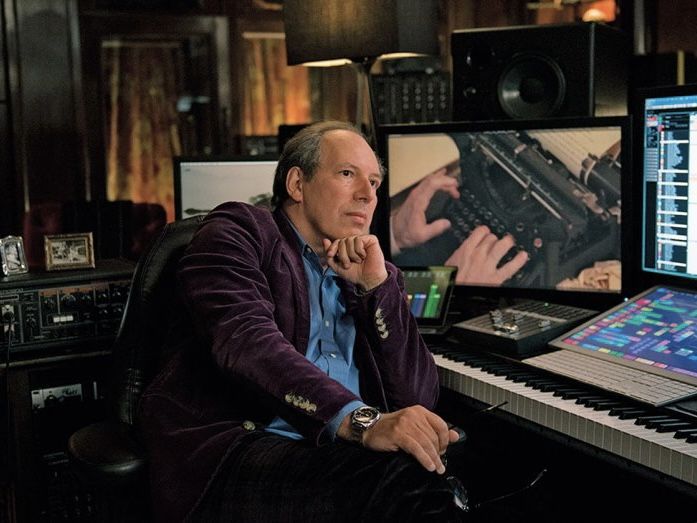
Few composers have shaped the emotional grammar of modern film the way Hans Zimmer has. Over four decades, he has moved from session musician to one of the most recognizable voices in Hollywood, a composer whose scores often feel as essential to a film as its script or cinematography. His work does not sit quietly behind the picture. It pushes the story forward, sets its pulse, and often becomes the thing audiences remember long after the credits roll. His work does not sit quietly behind the picture. It pushes the story forward, sets its pulse, and often becomes the thing audiences remember long after the credits roll.
Zimmer’s breakthrough came with Rain Man in 1988, where he paired synthesizers with a spare, meditative tone that mirrored the film’s unusual rhythm. It was an early sign of his signature approach, using electronic textures not as decoration but as emotional shorthand. A few years later, The Lion King showed a different side of his range, weaving African vocals and orchestral sweep into a score that felt both epic and intimate, and it earned him his first Academy Award.
Building a New Language for Film Music
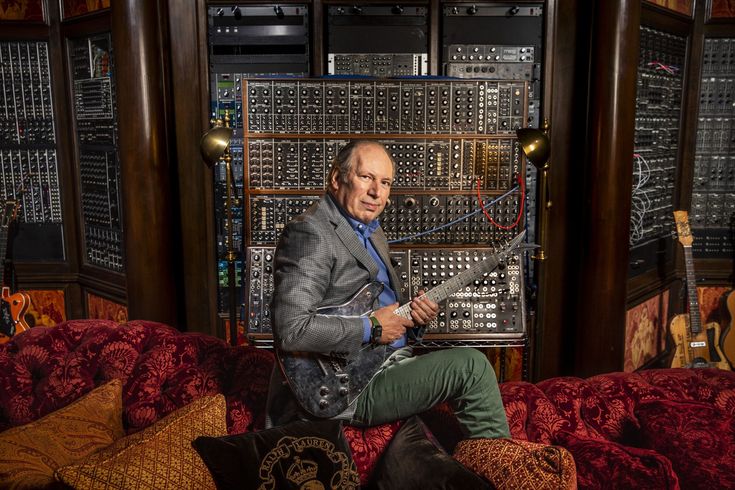
By the time Gladiator arrived in 2000, Zimmer had developed the sound that would define his career: thunderous percussion, minimalist motifs repeated until they felt inevitable, and a blend of orchestral and electronic elements that no longer felt like a novelty but a new standard. That approach reached its fullest expression in his collaborations with Christopher Nolan. The Dark Knight trilogy, scored with James Newton Howard on its first two films before Zimmer took the finale on alone, built its Batman identity around a two-note motif that carried more menace than any line of dialogue. Inception turned a single slowed-down horn note into one of the most imitated musical ideas in modern film. Interstellar leaned on a church organ to suggest something vast and unknowable, matching the film’s questions about time and space. Dunkirk stripped things back further, using a ticking clock as the score’s central instrument, tightening the tension scene by scene.
These were never scores that simply accompanied the story. Each one was built to carry narrative weight on its own, doing work that dialogue could not.
Partnerships That Shaped a Sound
Zimmer’s long collaboration with Nolan is the most discussed, but it is far from his only significant partnership. His work with Ridley Scott stretches back to Gladiator and continues to inform how historical epics are scored today. With Ron Howard, he brought warmth and urgency to films that needed both. Gore Verbinski’s second and third Pirates of the Caribbean films gave Zimmer room to write big, swashbuckling themes that became instantly recognizable outside the cinema. More recently, Denis Villeneuve brought Zimmer in to co-score Blade Runner 2049 alongside Benjamin Wallfisch, then handed him Dune on his own, two scores that lean into low frequencies and industrial textures to build worlds that feel physically overwhelming. Steve McQueen’s 12 Years a Slave showed Zimmer working in a quieter, more restrained register, proving his range extends well beyond scale and spectacle. His work on No Time to Die reintroduced classic Bond sensibilities while keeping his own fingerprints on the score.
Across all these collaborations, certain patterns hold. Zimmer favors repetition over melody for its own sake, letting a single idea evolve rather than introducing new themes constantly. He treats unconventional instruments and sound design as equal partners to the orchestra, whether that means recording a ticking watch or layering synthesizers under a full string section. This approach has influenced a generation of composers who now reach for similar tools when scoring blockbusters.
A New Chapter
Among Zimmer’s current projects, one marks entirely unfamiliar territory. He has joined A.R. Rahman to score Nitesh Tiwari’s Ramayana, an Indian epic starring Ranbir Kapoor, Sai Pallavi and Yash. It is Zimmer’s first major Indian film project, bringing together two of the most celebrated composers working today, one shaped by Hollywood scale and the other by decades of Indian film music. Early released tracks suggest a score built on the same instincts that made Zimmer’s earlier work resonate, blending sweeping orchestration with material rooted in the story’s cultural origins. For many, anticipation for the score has become inseparable from anticipation for the film itself, a rare crossover moment between two major film industries.
Four decades in, Zimmer’s influence is no longer confined to any one genre or industry. He redefined what a film score could do, and with Ramayana, he is showing that reach still has room to grow.