

The world of theatre, literature, and cinema has evolved, with many dramas, themes, and plots which might have worked three or four centuries ago but are no longer relevant in the current time because readers and audiences find it difficult to resonate with those. However, there is one person whose work transcends the boundary of time — work delves deeper to explore a variety of human emotions which frame their character; thus, it is also recognised as an area of study and research even in the contemporary world. Sir William Shakespeare reigns in the world of literature for his plots and innovative language and deep psychological insights revealed through his characters.
The influence of his work is experienced across the globe, from the West to Asia and from Hollywood to Bollywood. In India, a few movies have done a fabulous job of blending Shakespeare's plays with their own story and background. Here are the top 5 Shakespearean-influenced Bollywood movies that effectively portray his stories while keeping their resonance alive for the audience.
Omkara – inspired by Othello (2006)
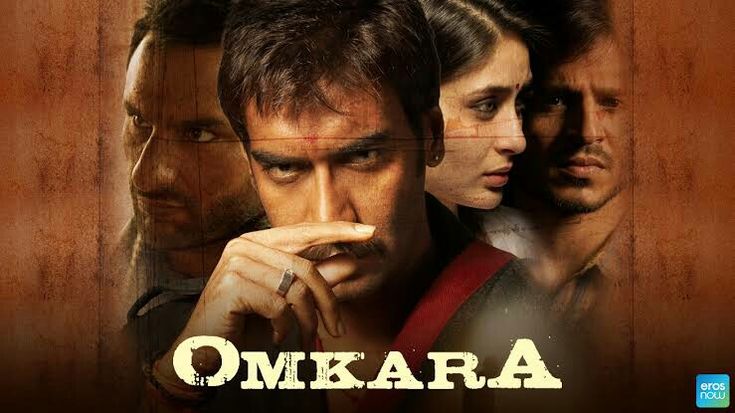
Set in Uttar Pradesh, where gangsters and politics intertwine to run the city, Omkara is majorly influenced by Shakespeare's tragedy Othello. Omkara, a gang leader, plays the Othello figure, while Langda — one of his lieutenants — embodies Iago. The story reaches a tragic ending when Langda, filled with jealousy at not receiving a promotion, manipulates Omkara into believing Dolly's infidelity. Vishal Bhardwaj does an excellent job of portraying the Othello story in the Indian landscape, exploring themes of power, trust, and ambition.
Maqbool – inspired by Macbeth (2003)

Another film from Vishal Bhardwaj's trilogy, Maqbool, is influenced by Shakespeare's Macbeth. It depicts life in Mumbai's underworld, where Maqbool – playing Macbeth – kills Abbaji, his gang leader, to ascend to his throne. His actions are fuelled by Nimmi, Abbaji's mistress, who harbours a love interest in Maqbool and wants Abbaji out of the way. His guilt eventually takes over his mind and leads him to his downfall. The portrayal of unchecked ambition and guilt truly mirrors the essence of Macbeth while remaining rooted to the ground reality of Mumbai.
Haider – Inspired by Hamlet (2014)

The final film in Vishal Bhardwaj's trilogy, Haider, stars Shahid Kapoor, Tabu, and Kay Kay Menon. It heavily resembles Shakespeare's Hamlet, where Haider returns to Kashmir and discovers his father's disappearance. His investigation reveals the involvement of his uncle Khurram Meer — the Claudius figure — in his father's death. He decides to expose his uncle's crime and seek revenge, but his dilemma and indecisiveness lead to inevitable bloodshed. The backdrop of Kashmir adds a powerful depth to the plot, making it one of the most politically charged adaptations of Hamlet ever made.
Goliyon Ki Raasleela Ram-Leela, inspired by Romeo and Juliet (2013)

Directed by Sanjay Leela Bhansali, the movie is set in Gujarat. Ram-Leela draws its soul from Shakespeare's Romeo and Juliet. Ram and Leela fall passionately in love despite belonging to two rival clans locked in a generations-old blood feud. Their love quickly turns dangerous as family hatred refuses to yield. Bhansali brings the tragedy alive with vivid colours, folk music, and raw emotion – keeping the star-crossed lovers' essence intact while grounding it in the social reality of clan violence in India.
Angoor inspired by The Comedy of Errors (1982)
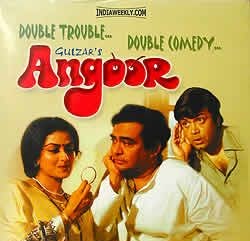
Directed by the legendary Gulzar, Angoor takes inspiration from Shakespeare's The Comedy of Errors. Two sets of identical twins separated at birth and sharing the same names unknowingly end up in the same city. Sanjeev Kumar and Deven Verma each play dual roles, delivering brilliantly timed comic performances. As mistaken identities pile up — wives confusing husbands, strangers being welcomed home — chaos spirals hilariously. Gulzar wraps Shakespeare's farcical genius in a warmth that feels entirely Indian, making Angoor one of the finest comedies Bollywood has ever produced.
Shakespeare’s play beyond the boundary and era
Shakespeare's genius lies in crafting stories so fundamentally human that they feel at home in any era or culture. These films stand as proof that his themes of jealousy, ambition, love, and identity are not bound by time or geography. Indian cinema, at its most thoughtful, can hold a mirror to the world's greatest playwright without losing its own soul.