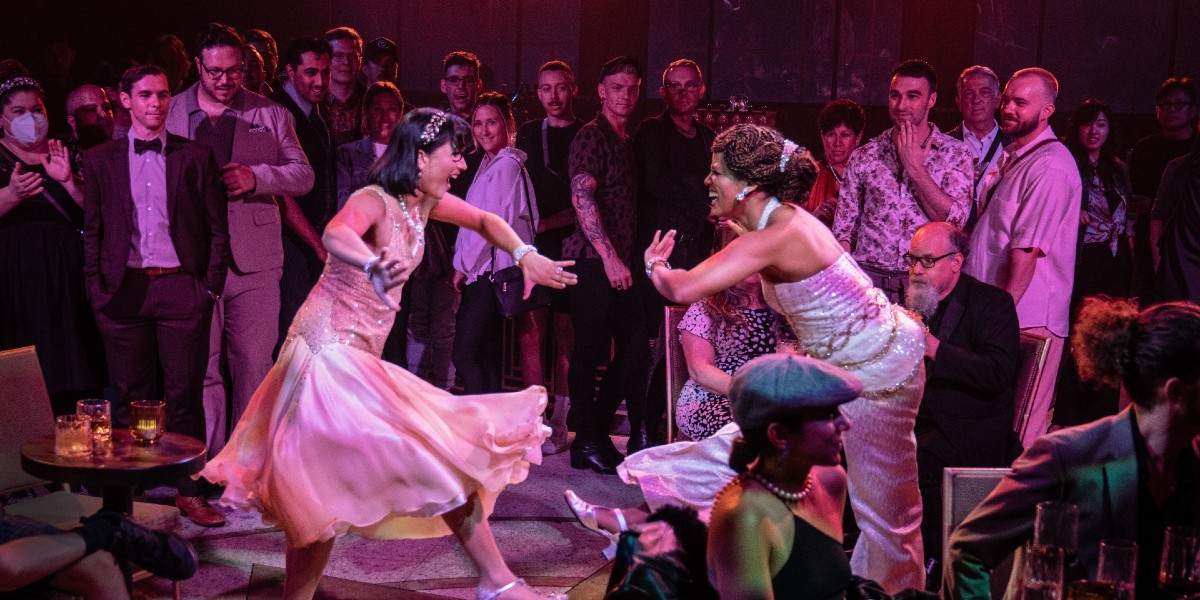
As performances move into galleries, gardens and unconventional spaces, theatre is beginning to ask audiences not just to watch a story but to enter it. For centuries, the basic arrangement of theatre has been remarkably familiar. Actors perform. The audience watches. A stage separates the two. But what happens when that separation begins to disappear? Across contemporary theatre, the stage is no longer always a fixed platform at the front of a darkened auditorium. Performances are entering galleries, heritage spaces, gardens and other unconventional settings, using sound, projections, architecture and movement to make the surroundings part of the storytelling. The result is a form of theatre that asks audiences to do something slightly different: not simply watch, but experience the space around the story.
When the Stage Stops Being a Boundary
Traditional theatre gives the audience a particular role. You sit in your seat and look towards the stage while the world of the play unfolds in front of you. Immersive and site-responsive performances can change that relationship.
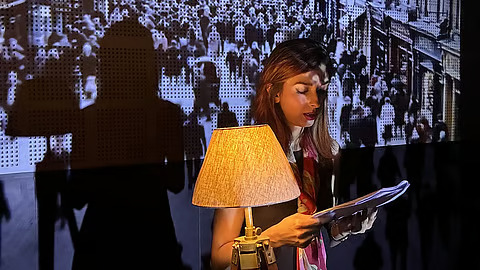
In June, Delhi's Kaivalya Plays presented James Joyce's Dubliners through a format combining dramatised readings with projection mapping, spatial sound and live visuals. Rather than simply illustrating Joyce's stories, the projections and sound were used to express the characters' inner worlds. The audience was therefore not just looking at a performance. The walls, sound and surrounding environment became part of how the story was understood. It is a subtle but important shift.
When the Location Becomes a Character
Sometimes, the physical location does more than provide atmosphere. It becomes part of the production itself. That idea is particularly visible in site-responsive theatre, where a performance is created in conversation with the space in which it takes place.
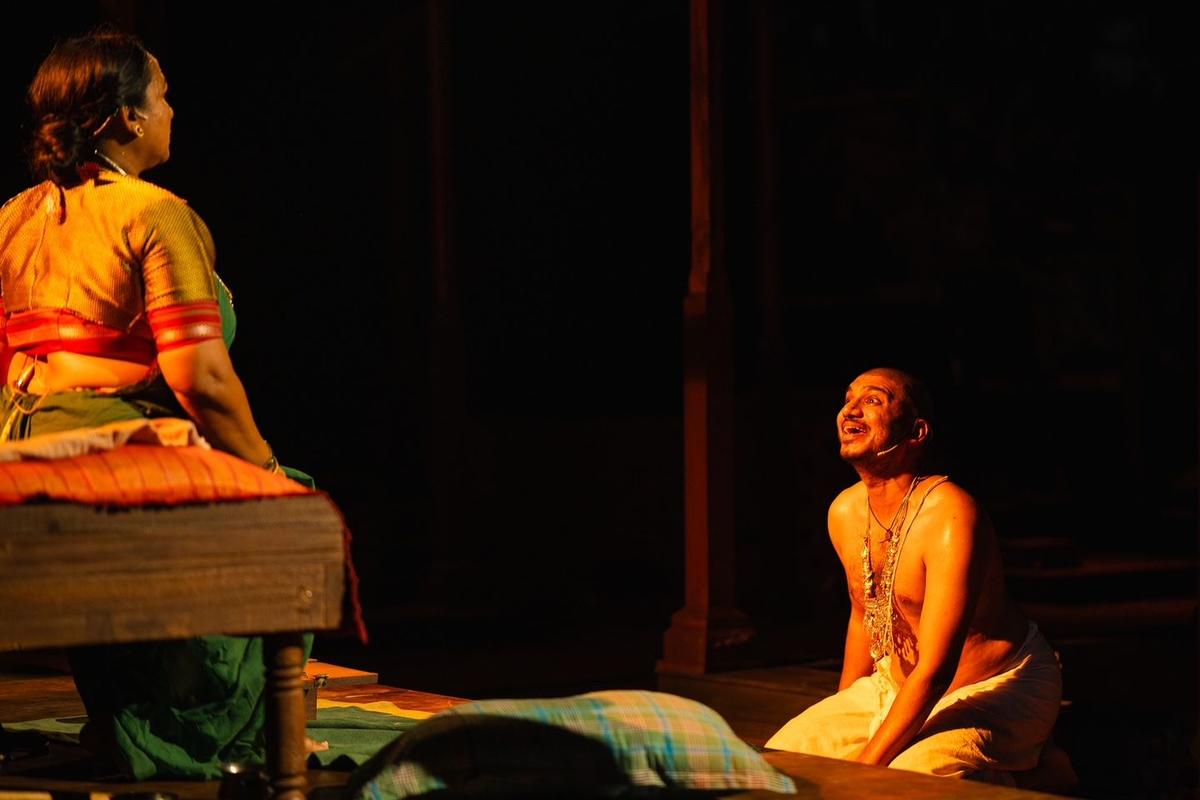
Delhi's current production, Virasat, for instance, brings Mahesh Elkunchwar's Wada trilogy together as a single performance at Sunder Nursery from September 24 to 27. Directed by Anuradha Kapur, the production works with scenographer and theatre-maker Deepan Sivaraman, whose practice is known for reimagining theatrical space through immersive, site-responsive scenography. Here, the setting isn't simply somewhere the audience happens to sit. The landscape becomes part of the theatrical experience. And that can change how a story feels. A garden, an old building or a gallery carries its own history, textures and atmosphere before an actor even enters the space.
Why Audiences Are Looking for Something More
There is also something particularly interesting about this development at a time when so much entertainment is consumed through screens. A film can be paused. A series can be binge-watched. A performance can be recorded and shared. Live theatre cannot offer quite the same distance. You are physically present. Other people are sitting around you. The actors are responding to the same room. Something is happening once, in front of you, and then it is gone. That sense of presence may be part of the renewed appeal.
The team behind the Dubliners project described its immersive approach as an attempt to bring audiences back into a shared experience after people became accustomed to experiencing art individually through screens. Theatre, in this form, becomes less about consuming a finished product and more about being present for an event.
The Audience Is No Longer Invisible
Perhaps the most interesting change is what happens to the audience. In conventional theatre, audiences are expected to remain relatively invisible. Immersive performances can make their presence more noticeable, sometimes even allowing them to move through or interact with the performance environment.
That doesn't necessarily mean audience members become performers. It simply means the boundary between observer and environment becomes softer. You notice the room. You notice where you are sitting. You notice the sound coming from somewhere behind you rather than directly from the stage. You become conscious of the fact that everyone around you is experiencing the same moment. The theatre becomes a shared physical space rather than merely a place where a story is displayed.
When Theatre Becomes a Place, Not Just a Performance
Theatre has always been about more than actors delivering lines. It is also about atmosphere, movement, silence, architecture and the relationship between people in a room. What is changing is the willingness to make those elements more visible. As performances move beyond conventional stages, the question is no longer simply “What story are we watching?” It can also be: “Where are we while the story is happening?”
And perhaps that is what makes theatre uniquely suited to this moment. In a world where almost everything can be watched from almost anywhere, theatre is reminding us of the value of being somewhere. Sometimes, the stage does not need four walls and a curtain. Sometimes, the entire space can become part of the story.