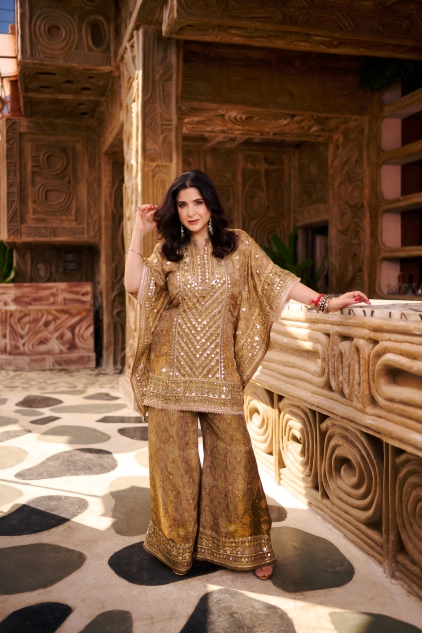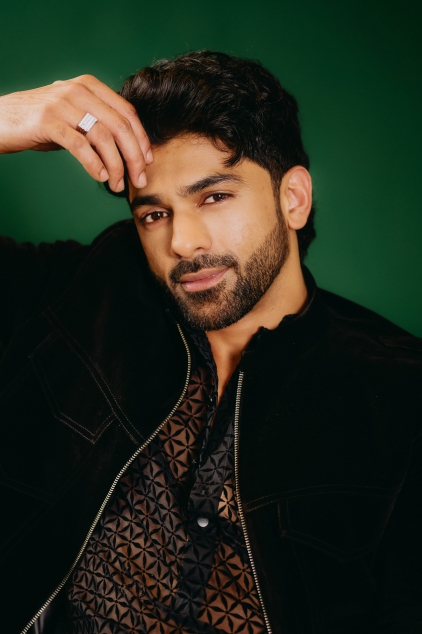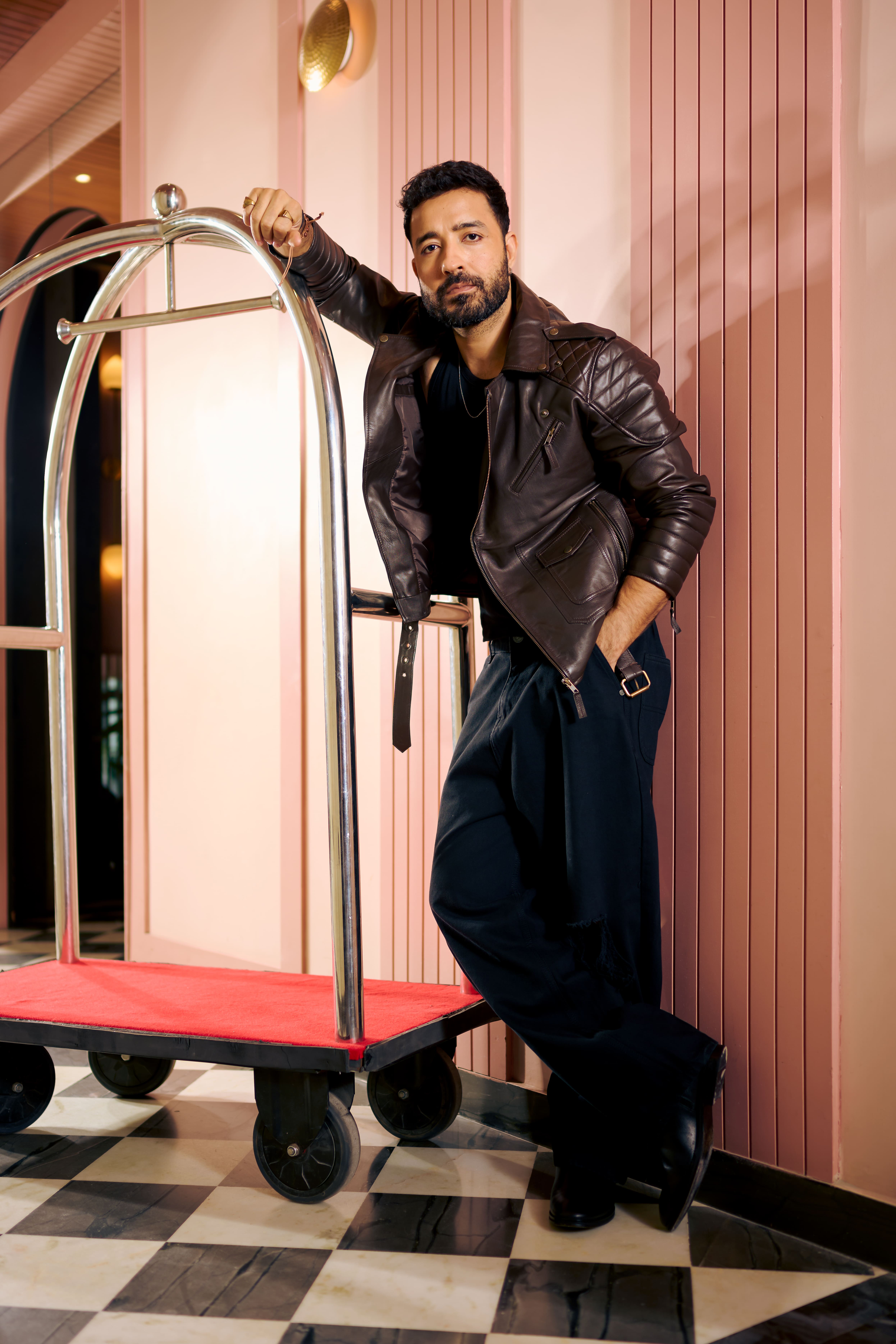
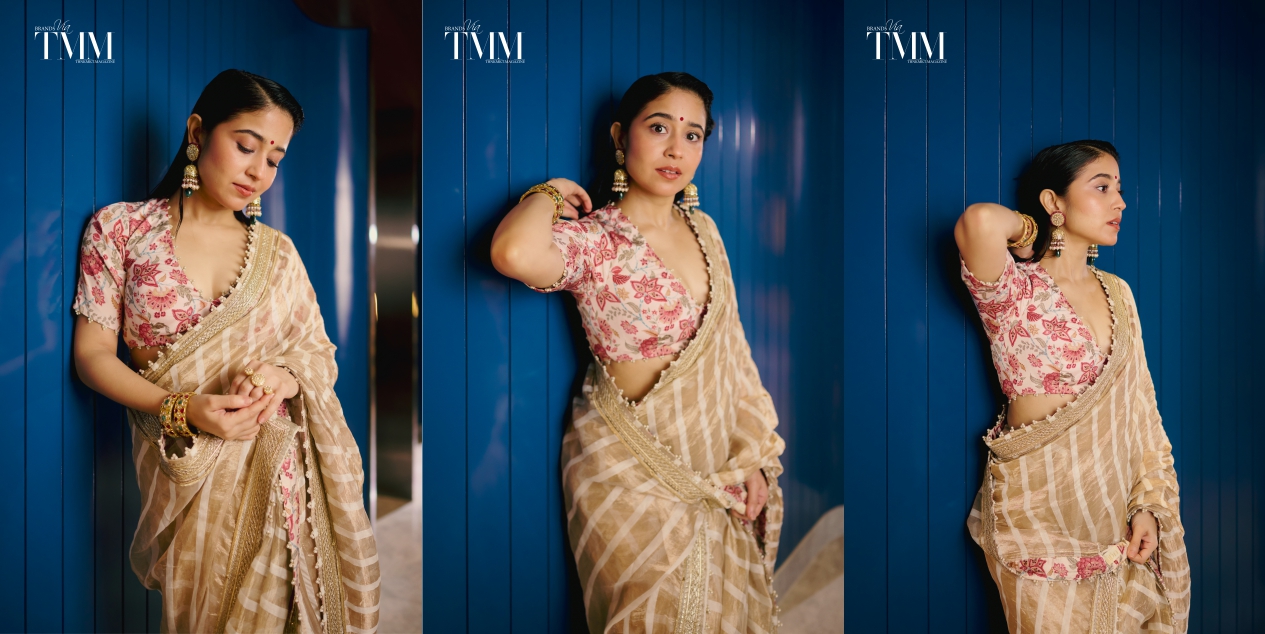
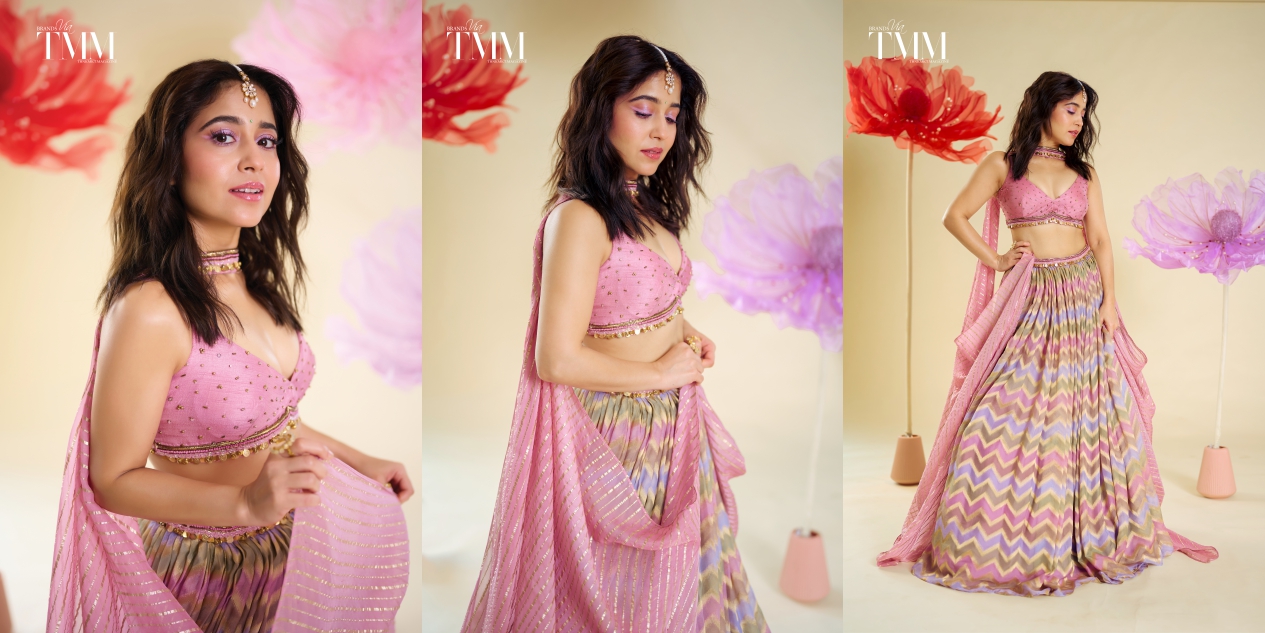
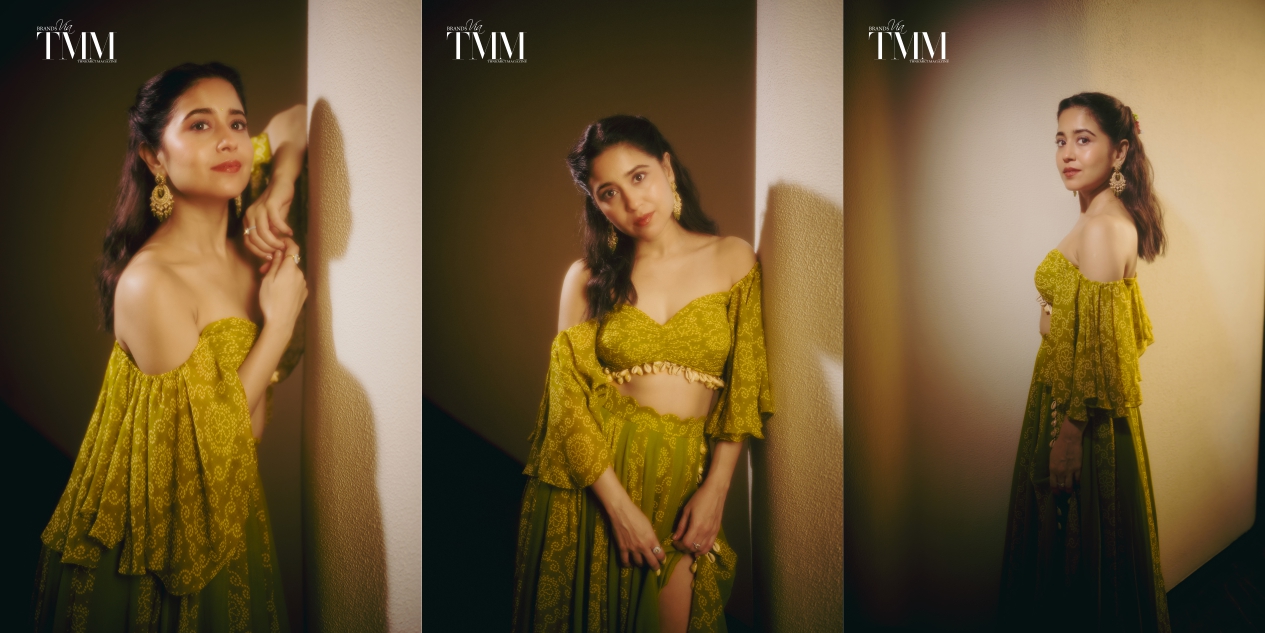
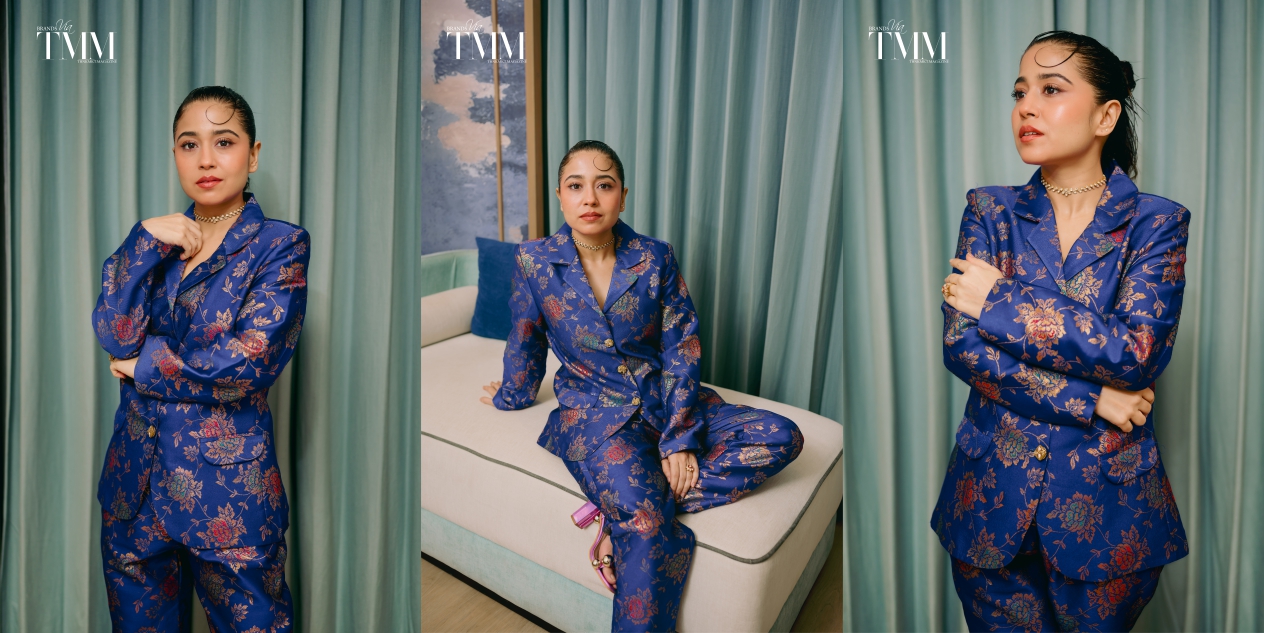
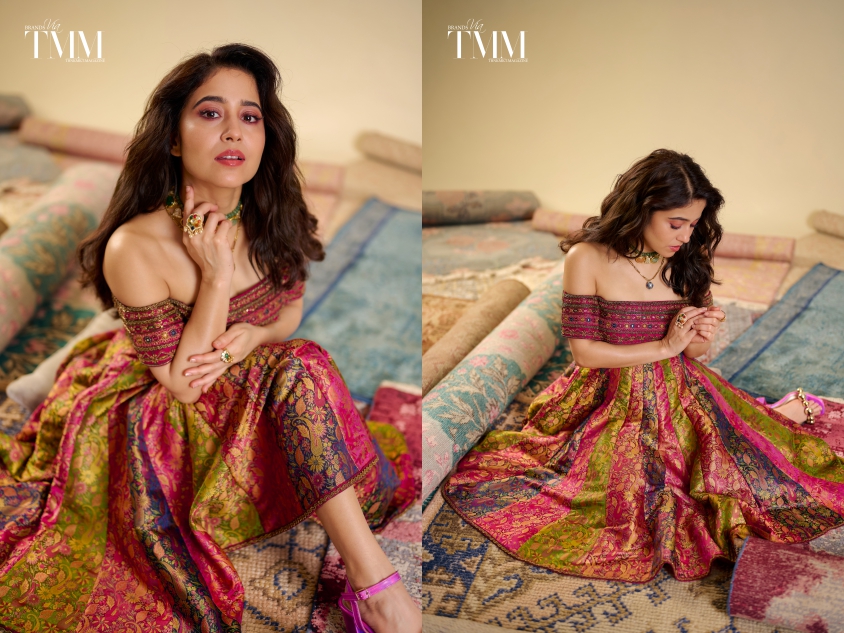
Between quick outfit changes, touch-ups, and the strobe of cameras, Shweta Tripathi is in the middle of her cover shoot for TMM Magazine. Yet, even as she shifts effortlessly from one look to another, she finds space for reflection. There’s a disarming warmth to her presence. She doesn’t just answer questions—she thinks aloud, meanders through ideas, and comes back with insights that feel as real as her performances. Much like her characters, Shweta is never one-dimensional. She is layered, curious, and unafraid to dive into the uncomfortable grey areas of life.
The OTT Buffet
For Shweta, the rise of OTT platforms has been nothing short of transformative. “OTT has given audiences, creators, and artists a buffet of choices,” she says with a smile, adjusting her look before the next shot. “Earlier, we had just two hours to tell a story. Now, even characters who appear briefly can shine.”
She likens OTT to a dining spread. “It’s like a menu—whether you’re craving Indian food, Chinese, or even world cinema, everything is right there. You can pick and choose, from Money Heist to Squid Game to something in a regional language. It has opened up so much variety, not just for the audience, but for us as actors too.”
Shweta is equally passionate as a viewer. She recalls evenings when she oscillates between Netflix’s Wednesday and the courtroom drama Mamda Legal with the same enthusiasm. “World cinema used to feel distant—like something you had to hunt for. Now, it’s literally in our hands. That access has shaped me not just as an actor, but also as an audience member.”
The Creative Urge to Disturb
What drives Shweta, however, goes far beyond opportunity. “At the root of creativity, I want to disturb. I want to ask a question. I want to unsettle,” she says, her eyes lighting up with conviction. For her, art is not about comfort—it’s about curiosity. “Creative minds should reveal deeper truths than facts. They should push people to explore, whether emotionally, culturally, or artistically. I think it’s very important to do something. That ‘something’ depends on you—but it has to shake you up.”
The visual medium, she believes, has unmatched influence. “Most of our senses are rooted in what we see. That’s why visuals have such power—whether you’re watching on a big screen, a laptop, or your phone. Stories shape how we feel, how we think, how we connect. That’s why I’m grateful to be part of this medium.”
Breaking the Good Girl–Bad Girl Binary
When it comes to roles, Shweta gravitates toward complexity. “I like characters who perform well under difficult circumstances, who carry moral ambiguity. For the longest time, we’ve boxed women into categories: if she’s like this, she’s a ‘good girl,’ if not, she’s ‘bad.’ But life doesn’t work that way. People have colours and flavours. Characters should too.”
She pauses, then adds, “I want my characters to dare to show up as they are. Because we’re so eager to judge nowadays, to jump to conclusions. What if we didn’t? What if we just tried to understand why a human—irrespective of gender—behaves the way they do?”
For Shweta, acting is as much about empathy as it is about expression. “This profession forces me to ask relevant and poignant questions. I think I’m blessed for that.”
The Need for Variety
Variety, for her, is not optional—it’s essential. “It’s like food. No matter how nutritious something is, you can’t eat the same dish every day. At some point, you crave variety. It’s the same with roles. I don’t want to be stuck in one emotional lane. My career should be a mix—different shades, different challenges.”
She believes this hunger for variety keeps her work fresh and keeps audiences invested. “When you explore different characters, you grow—not just as an artist, but as a person.”
Anchored in Authenticity
Despite her bold choices on screen, Shweta’s real-life anchor is authenticity. In today’s age of social media noise, she consciously protects her inner voice. “We give so much importance to others’ opinions that somewhere along the way, we lose ourselves,” she admits. “I’ve started painting recently. I’m not great at it, but it makes me happy. And that’s enough.”
For her, joy lies in simple acts—dancing, sketching, learning something new—not in competing to be the best. “It’s not a competition, bhai. Do the things that make you happy. That’s it.”
She emphasises mental and physical well-being as the foundation of everything. “If we don’t take care of ourselves, we can’t take care of our families, our society, or even our art. It’s the need of the hour.”
Delhi Streets, Mumbai Rains
When the conversation turns to cities, Shweta lights up. “Delhi is all about its food and culture—especially the street food. Too good!” she laughs, reminiscing. “Mumbai, on the other hand, is its people and its baarish. And of course, the batata vada. Both cities hold pieces of me.”
It’s clear that for her, geography is not just about places—it’s about people, flavours, and emotions.
On Compliments and Challenges
Interestingly, Shweta isn’t someone who dwells on praise. “Honestly, I don’t like remembering compliments. They’re meant to be received in the moment, enjoyed, and then let go—like a red balloon drifting away. Otherwise, you get stuck.”
What she does chase, however, are challenges. “I know it sounds like a cliché, but I genuinely look for projects that challenge me. Characters that are different from not just me, but also from each other. I want to tell stories that reflect the conflicting times we live in. Stories that are tougher, edgier, morally hazy.”
She leans in as if emphasising a secret: “Because people aren’t black or white. Even the good can slip, even the evil can be shaped by circumstances. I want my stories to reflect that reality. To be emotionally engaging, to make people feel, not just watch.”
Living Between Roles and Realities
At the heart of it all, Shweta is an artist who wants her audience to feel immense satisfaction—not from her, but from the stories themselves. “I want them to feel while watching. That’s it. If they feel, I’ve done my job.”
As the shoot wraps up and the crew signals for her next look, Shweta flashes an easy smile, the kind that feels like an extension of her words. Between the chaos of a cover shoot and the calm of conversation, one truth shines through: she is committed to being real—on screen and off it.
With her appetite for variety, her refusal to fit into boxes, and her insistence on authenticity, Shweta Tripathi stands as one of the most exciting voices in Indian storytelling today. Fearless, questioning, and endlessly evolving, she is not just playing characters—she’s living them, and through them, making us reflect on our own.
Team Credits:
Creative Director & Stylist: Pooja Gupta, Spectrum Styles
Photographer: Shivam Vashisht
Designers/Brands: Kalki Fashion, Reeti Arneja, Ahi Clothing, Ishin Fashions, Ugna by Unnati, Chalk Studio
Carpet: Obeetee Carpets
MUAH: Sofie Sherpa
Location Partner: Four Points by Sheraton Navi Mumbai
Assistant Stylist: Gunjan Durgapal
Styling Interns: Shikha Shah, Ruhani