Walk into a home in Bombay or Bangalore now and the dinner plates were probably not bought off a shelf. They likely came from a small studio, often started by someone who left a corporate job to work with clay instead. Indian ceramics has quietly built an ecosystem of makers who treat a bowl or a mug as a real design problem, not just a container. Some lean into imperfection, some chase Japanese restraint, some just want their tableware to make you smile at breakfast. Here are five names shaping what that looks like.
Adil Writer, Mandala Pottery
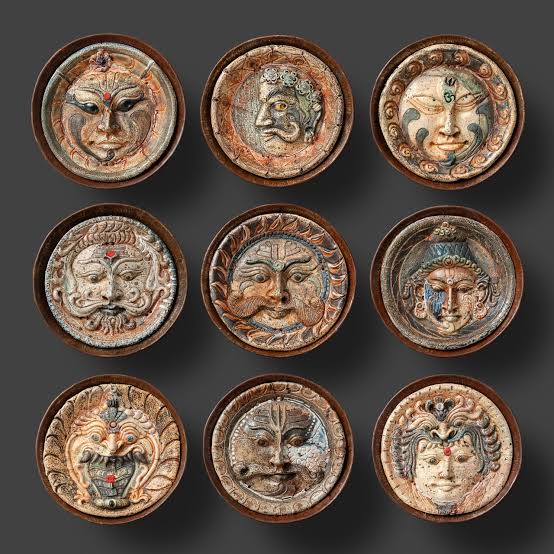
Adil Writer trained as an architect in Houston and practised in Bombay before a course at Pondicherry's Golden Bridge Pottery changed the direction of his life. By 2000 he had left architecture to become a partner at Mandala Pottery in Auroville, one of India's largest handmade functional tableware studios. Mandala's tableware is known for what the studio calls happy glazing, surfaces that are wild and expressive rather than tidy, keeping the marks of the hand and the flaws of wood and soda firing instead of smoothing them away. Writer has shown his ceramics and paintings in Japan, Indonesia and across India. A plate or bowl from Mandala carries that same restless, hand fired energy, built for daily use but never quite predictable.
Bhairavi Naik and Rohit Kulkarni, Curators of Clay
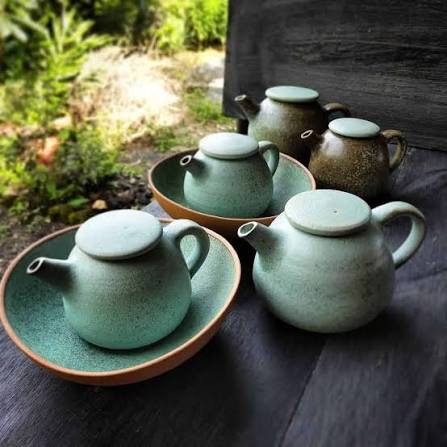
Bhairavi Naik and Rohit Kulkarni left careers in advertising and media, at Saatchi & Saatchi and Disney-UTV Motion Pictures, to become full time potters. They run Curators of Clay out of Bhugaon near Pune, making every piece themselves, mixing their own clay and glazes and firing everything in a gas kiln on site. Their aesthetic draws on Japanese and Scandinavian pottery, so expect clean silhouettes, matte surfaces and a restrained palette built around greens and indigo. What sets their work apart is the insistence that ceramics should be used, not displayed, which is why chefs and home cooks keep coming back to their dinnerware.
Manu Randhawa, Earth Fire Clay
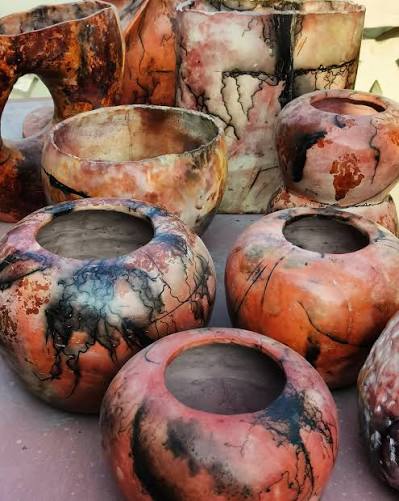
Manu Randhawa runs Earth Fire Clay out of Gurgaon, and her work sits at the opposite end of the spectrum from anything minimal. She works mainly in stoneware, with recent pieces in terracotta too, and her tableware favours one of a kind organic forms and vibrant, mixed hues. She describes herself as an artist still experimenting as she goes, with imperfection as her mainstay rather than something to fix. Her plates, mugs and vases feel handmade in the most literal sense, closer to small sculptures that hold your dinner.
Srishti Sindhu, Studio Nendo
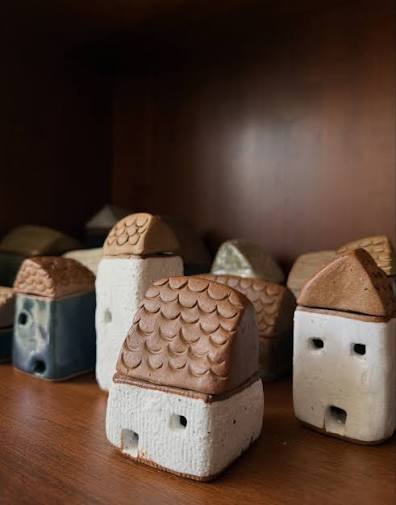
Srishti Sindhu left a career in advertising to start Studio Nendo, working out of Noida. The name comes from the Japanese word for clay, and her tableware has built a following for its drip glazes, where colour is allowed to run and pool down the sides of a bowl or mug. Her signature palette leans on honey mustard and matte blue, and everything is thrown on the wheel and fired twice at high temperature. Her fruit bowls and ramen bowls are her best known pieces, along with tumblers and jugs that keep the same eclectic character running through the range.
Anu Cheeran, The Little Goldfish
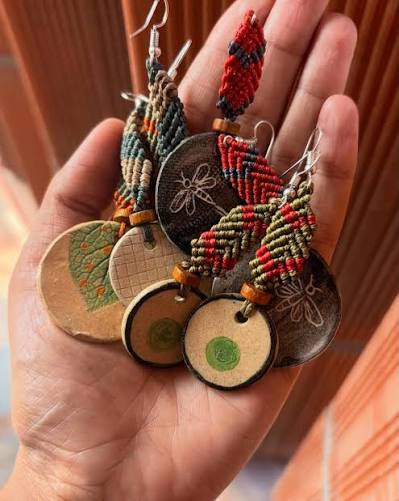
Anu Cheeran studied industrial design at the National Institute of Design in Ahmedabad before returning to Thrissur in Kerala to start The Little Goldfish. Her plates and cups often carry a watercolour like wash of blue across the glaze, along with hand drawn lines that are deliberately not perfectly straight. That small irregularity is part of the charm, since every piece is finished by hand rather than stamped or printed. Cheeran also designs custom cups for restaurants and hotels, scaling her forms to how a client plans to serve. Her tableware has a playful, childlike warmth that sets it apart from the more austere studios here.
Five ways of thinking about clay
What ties these five together is not a shared look but a shared belief that everyday objects deserve real design attention. Writer's restless happy glazing, Naik and Kulkarni's Japanese restraint, Randhawa's love of colour, Sindhu's drip glazes and Cheeran's hand drawn playfulness are five different answers to the same question. What should the things we eat off actually feel like. Indian ceramics right now has room for all of these answers at once, and that range is what makes the field worth watching.