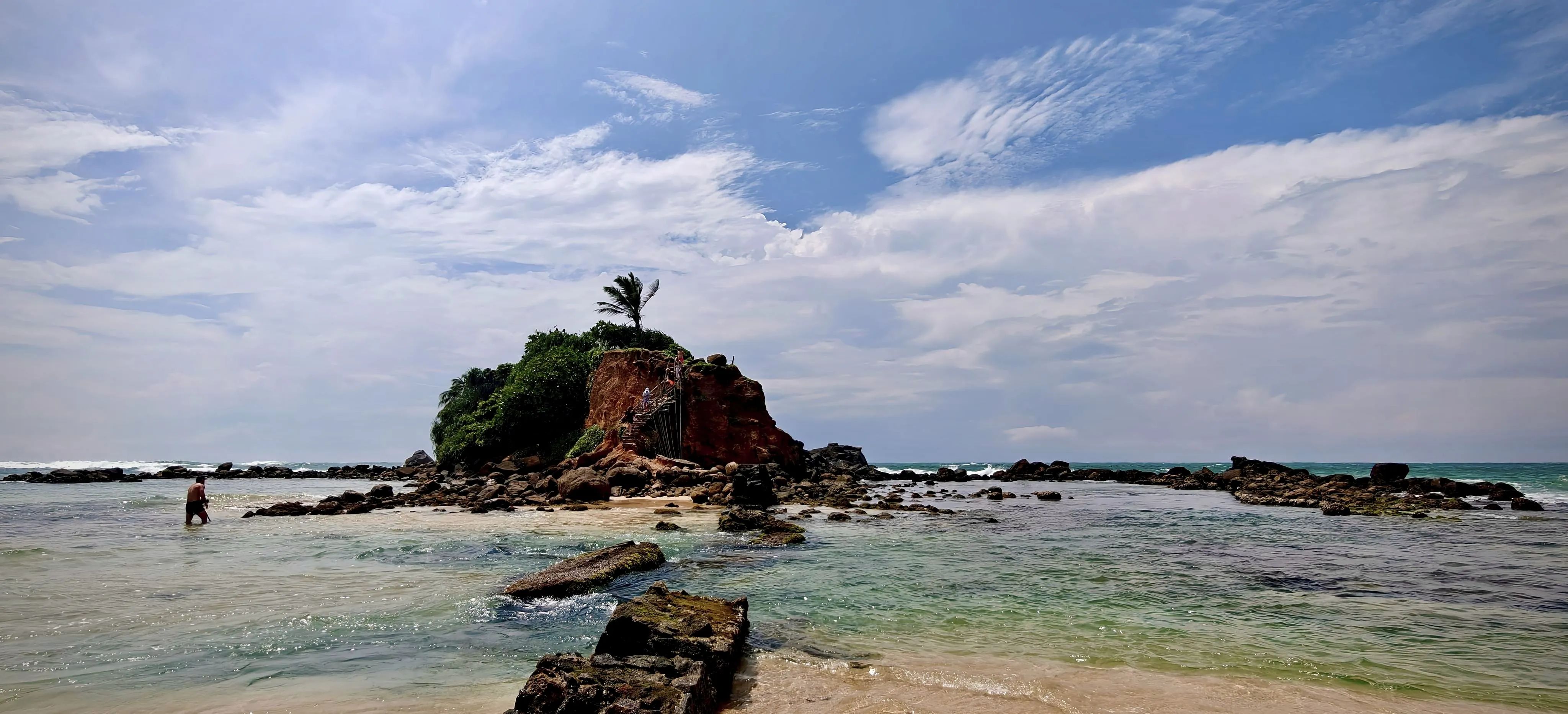
Perched on the southern tip of Sri Lanka, where the turquoise waters of the Indian Ocean surge against the golden sands of Mirissa Beach, lies a rugged, red-hued outcrop that has become an icon of the island’s coastline: Parrot Rock Mirissa.
Parrot Rock Mirissa Beach—the iconic red outcrop on Mirissa Beach in Sri Lanka—is a must-visit for photographers and adventure seekers.
At first, Parrot Rock may seem just a modest mound of earth and stone. Yet this small tidal island holds the promise of one of the region’s most exhilarating and photogenic escapades. Here, the contours of the land blend with the pulse of the tides, crafting a haven for those who crave beauty laced with a hint of adventure.
A Geography of Isolation and Connection
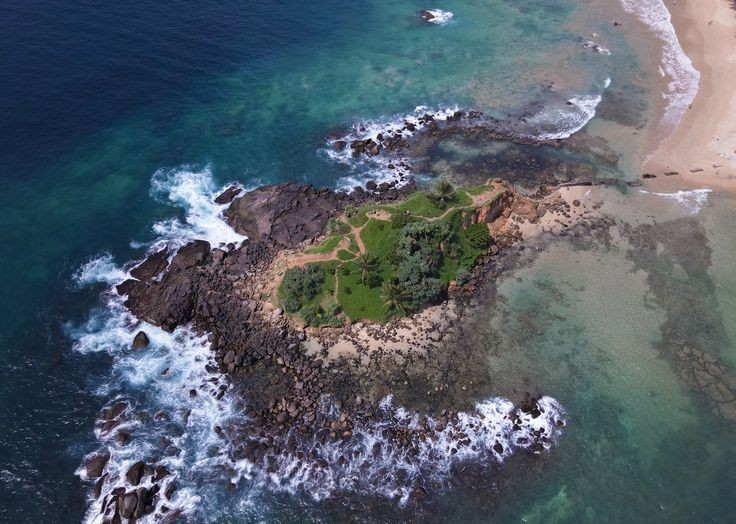
Geographically, Parrot Rock is a tidal island. A piece of land connected to the mainland by a natural sandbar that disappears depending on the whims of the ocean. Formed from metamorphic rock sculpted by millions of years of lashing winds and crashing waves, its existence is a testament to the raw power of nature.
Its location is strategically significant. Standing atop the peak offers a 360-degree view of Mirissa Bay. To the west, you see the famous Coconut Tree Hill silhouetted against the sky; to the east, the bustling fishing harbor. This unique positioning makes it a natural breakwater, protecting the immediate shoreline and creating calm, crystal-clear pools perfect for a midday dip.
The Journey: A Waist-Deep Adventure
The true enchantment for travelers is found in the journey itself. Unlike most landmarks, Parrot Rock cannot be claimed by a simple walk on dry sand. To reach its slopes, you must wade in step with the tides.
How do you get to Parrot Rock, Mirissa?
You reach the rock by wading across the tidal sandbar at low tide, lifting your belongings above the water.
When the tide is low, the water only grazes your ankles, but more often, you’ll be wading through waist-deep, sunlit waves. Lifting your camera or bag above your head to keep them dry infuses the crossing with a playful, castaway energy. This short, saltwater pilgrimage transforms your arrival into a small, hard-won victory.
The Ascent: The Wobbly Wooden Staircase
Once you reach the base of the rock, the challenge shifts from water to wood. To reach the summit, visitors must navigate a narrow, rudimentary wooden staircase that feels like it was plucked from an adventure novel.

Bound tightly with thick rope yet appearing endearingly unsteady, the stairs wind their way up the cliff’s edge. Each gentle sway beneath your feet, accompanied by the whistling sea breeze, adds to the raw, untamed charm. This is the kind of genuine adventure that captures the Sri Lankan spirit: bold, inviting, and a touch untamed.
Is Parrot Rock in Mirissa safe to climb?
Generally yes at low tide—exercise caution on the narrow wooden stairs, especially after rain.
Beyond the View: Why It Captivates the World
Historically, Parrot Rock was a quiet lookout for local fishermen, who tracked weather patterns or schools of fish. Today, it is a global favorite for those in the know.
The Ultimate Parrot Rock Mirissa sunset
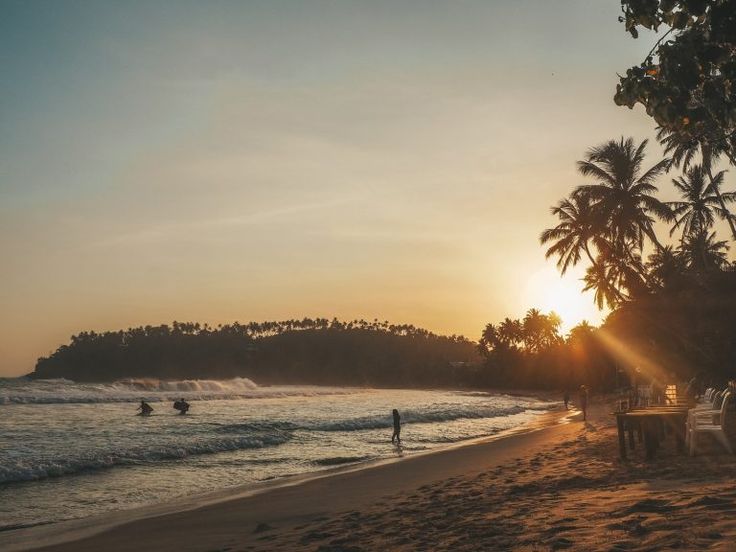
There is no better place in Mirissa to watch the sun dip below the horizon. The elevated view captures orange and purple hues reflecting across the entire bay, a symphony of light.
A Snorkeler’s Secret
Few realize that the rocks surrounding the island are a haven for marine life. In the calm season, the water is so clear you can spot vibrant butterflyfish and shy eels from the stairs themselves.
The Secret Allure
Despite its fame, the physical effort required to cross the water keeps it from feeling like a crowded tourist trap. It remains a place where you can find a quiet corner of grass at the top to simply be.
Planning Your Escape
To make your visit truly memorable, timing is everything.
The Best Season: Visit between December and April. This is the “Golden Season” for Sri Lanka’s south coast. The monsoon has passed, the skies are a reliable sapphire blue, and the ocean is at its calmest, making the walk to the rock much safer.
What is the best time to visit Parrot Rock?
The ideal season is December to April, when the sea is calm and the walk is safest.
The Early Bird’s Reward
Arrive at 5:45 AM. You’ll have the summit to yourself as the first light hits the waves, which is a moment of pure, silent magic before the beach wakes up.
Safety First
Always check the tide charts. At high tide, the current can be strong; if the stairs look too slippery after a rain, admire the view from the shore instead.
Parrot Rock is more than just a viewpoint. It is a tribute to the spirit of exploration. A place where land, sea, and a dash of human imagination unite in wonderfully wobbly harmony.
Image courtesy: Pinterest